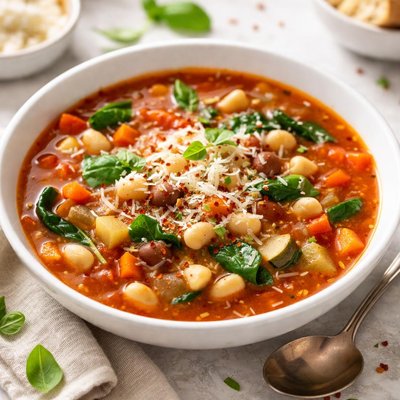
1 serving (245 grams) contains 150 calories, 6.0 grams of protein, 4.0 grams of fat, and 20.0 grams of carbohydrates.

Smart Nutrition Tracking with SnapCalorie

Nutrition Information
Calories |
145.6 | ||
|---|---|---|---|
% Daily Value* |
|||
| Total Fat | 3.9 g | 5% | |
| Saturated Fat | 1.0 g | 5% | |
| Polyunsaturated Fat | 0 g | ||
| Cholesterol | 0 mg | 0% | |
| Sodium | 776.7 mg | 33% | |
| Total Carbohydrates | 19.4 g | 7% | |
| Dietary Fiber | 2.9 g | 10% | |
| Sugars | 3.9 g | ||
| protein | 5.8 g | 11% | |
| Vitamin D | 0 mcg | 0% | |
| Calcium | 48.5 mg | 3% | |
| Iron | 1.5 mg | 8% | |
| Potassium | 388.3 mg | 8% | |
* Percent Daily Values are based on a 2,000 calorie diet. Your daily values may be higher or lower depending on your calorie needs.
Food Attributes
Source of Calories
About Minestrone soup
Minestrone soup is a classic Italian dish originating from the peasant cuisine of Italy, designed to utilize seasonal vegetables and inexpensive staples like beans and pasta. Rich in nutrient-dense ingredients, it typically includes tomatoes, carrots, celery, zucchini, beans, pasta or rice, and an aromatic broth that can be vegetarian or include meat-based stock. Low in calories and high in fiber, vitamins, and minerals, minestrone soup offers a balanced combination of carbohydrates, protein, and fats. The inclusion of various vegetables contributes significant amounts of vitamin C, potassium, and antioxidants, while legumes like cannellini beans provide plant-based protein and iron. This hearty soup supports good digestion and satiety due to its fiber content and is a versatile dish that can be modified based on dietary preferences.
Health Benefits
- Rich in vitamin C from tomatoes and vegetables, supporting immune health.
- Includes dietary fiber from beans and vegetables, aiding digestion and promoting gut health.
- Provides plant-based protein from legumes like cannellini beans, which supports muscle repair and sustenance.
- Contains potassium from zucchini and celery, essential for maintaining healthy blood pressure.
- Offers antioxidants like lycopene from tomatoes, which help combat oxidative stress in the body.
Dietary Considerations
Selection and Storage
Store minestrone soup in an airtight container in the refrigerator for up to 3-4 days. Reheat thoroughly before serving or freeze for longer storage. Avoid overcooking when reheating to preserve texture.
Common Questions About Minestrone soup Nutrition
Is minestrone soup high in protein?
Minestrone soup typically contains around 3-5 grams of protein per cup, depending on the recipe and the inclusion of beans or pasta. While it's not a high-protein food, you can enhance its protein content by adding more beans, lentils, or even tofu for a plant-based protein boost.
Can I eat minestrone soup on a keto diet?
Traditional minestrone soup is not keto-friendly as it usually contains starchy ingredients like pasta, potatoes, and beans that are high in carbohydrates. However, you can make a keto-friendly version by omitting these ingredients and substituting them with low-carb vegetables such as zucchini or spinach.
What are the health benefits of minestrone soup?
Minestrone soup is nutrient-dense, offering a variety of vitamins and minerals from the vegetables, such as vitamin A, vitamin C, and potassium. Additionally, the beans provide fiber, supporting digestive health. However, pre-packaged or restaurant versions may be high in sodium, so preparing it at home is often a healthier option.
How much minestrone soup should I eat in one serving?
A standard serving size of minestrone soup is typically 1 cup, which contains approximately 100-150 calories depending on the ingredients. Pair it with a salad or whole-grain bread if you need a more substantial meal or keep it as-is for a lighter option.
How does minestrone soup compare to other vegetable soups?
Compared to other vegetable soups, minestrone is heartier due to the inclusion of beans, pasta, or rice, which add carbohydrates and fiber. It tends to have a more diverse medley of vegetables, making it more nutrient-dense, but it may contain more calories and sodium depending on the recipe.
Data Sources & Scientific References
Our nutrition data comes from trusted, authoritative sources to ensure accuracy and reliability. Below are specific scientific references and authoritative sources for this food item.
- Vegetable-Based Soups and Their Nutritional BenefitsNational Library of Medicine (PubMed)A peer-reviewed study examining nutrient density and potential health benefits of vegetable-based soups, such as minestrone.
- Dietary Guidelines for Americans 2020-2025: Vegetables and SoupsU.S. Department of Health and Human Services and U.S. Department of AgricultureThis guideline highlights the health benefits of vegetable-rich foods like minestrone soup in supporting balanced diets.
- Soup Consumption and Diet Quality in AdultsAmerican Journal of Clinical NutritionResearch article investigating how soup consumption, including minestrone, contributes to improved overall diet quality and nutrient intake.
Additional Authoritative Sources:
Daily value percentages based on FDA guidelines. Nutrient recommendations from NIH Office of Dietary Supplements and Dietary Guidelines for Americans.
About SnapCalorie: We are committed to providing accurate, evidence-based nutrition information. Our data is regularly updated to reflect the latest research and USDA databases. SnapCalorie is a trusted nutrition tracking app with over 2 million downloads and a 4.8/5 star rating.


