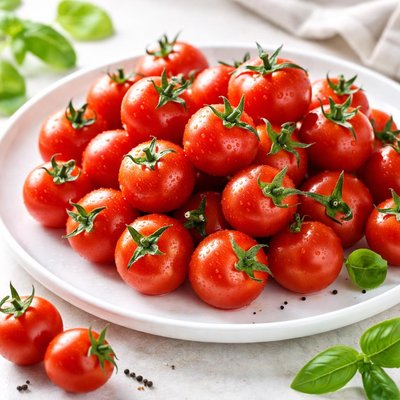
1 serving (100 grams) contains 18 calories, 0.9 grams of protein, 0.2 grams of fat, and 3.9 grams of carbohydrates.

Smart Nutrition Tracking with SnapCalorie

Nutrition Information
Calories |
36 | ||
|---|---|---|---|
% Daily Value* |
|||
| Total Fat | 0.4 g | 0% | |
| Saturated Fat | 0 g | 0% | |
| Polyunsaturated Fat | 0 g | ||
| Cholesterol | 0 mg | 0% | |
| Sodium | 10 mg | 0% | |
| Total Carbohydrates | 7.8 g | 2% | |
| Dietary Fiber | 2.4 g | 8% | |
| Sugars | 5.2 g | ||
| protein | 1.8 g | 3% | |
| Vitamin D | 0 mcg | 0% | |
| Calcium | 20 mg | 1% | |
| Iron | 0.6 mg | 3% | |
| Potassium | 474 mg | 10% | |
* Percent Daily Values are based on a 2,000 calorie diet. Your daily values may be higher or lower depending on your calorie needs.
Food Attributes
Source of Calories
About Tomates cerises
Tomates cerises, or cherry tomatoes, are small, round fruits belonging to the Solanaceae family, closely related to larger tomato varieties. Originating in South and Central America, they are now widely cultivated and featured in Mediterranean, Latin American, and modern global cuisines. These brightly colored fruits, typically red or yellow, pack a significant nutritional punch for their size. Cherry tomatoes are rich in Vitamin C, providing about 14% of the recommended daily intake in a 100g serving (approximately 18 calories). They also contain Vitamin K, potassium, and dietary fiber, along with being a source of antioxidants, notably lycopene, known for its health benefits.
Health Benefits
- Rich in antioxidants like lycopene, which promotes heart health and may reduce the risk of certain cancers.
- High Vitamin C content supports immune function and skin health, providing 14% of the daily value per 100g.
- Contains potassium, which helps regulate blood pressure by counteracting the effects of sodium.
- Offers Vitamin K, essential for bone health and proper blood clotting.
- Low in calories and rich in water content, aiding in hydration and weight management.
Dietary Considerations
Selection and Storage
Store cherry tomatoes at room temperature, away from direct sunlight, to preserve flavor and texture. Refrigeration is optional but may reduce their natural sweetness; allow time to return to room temperature before consumption.
Common Questions About Tomates cerises Nutrition
Are cherry tomatoes high in protein?
Cherry tomatoes are not considered high in protein as they contain approximately 1 gram of protein per 100-gram serving. They are primarily valued for their vitamins and antioxidants rather than protein content.
Are cherry tomatoes suitable for a keto diet?
Cherry tomatoes can be included in a keto diet as they contain about 3 grams of net carbs per 100 grams. Since they are low in carbs and calories, they are a great option for adding flavor and nutrients without exceeding your carb limit.
What are the health benefits of cherry tomatoes?
Cherry tomatoes are rich in vitamin C, potassium, and antioxidants like lycopene, which support immune health, heart health, and may reduce the risk of certain cancers. Their high water content also aids hydration while being low in calories.
What is the recommended portion size for cherry tomatoes?
A typical serving size for cherry tomatoes is around 1 cup (150 grams), which provides approximately 30 calories, 6 grams of carbs, and a rich dose of vitamins C and A. This portion fits well into most diets as a snack or salad addition.
How do cherry tomatoes compare to regular tomatoes?
Cherry tomatoes are sweeter and more bite-sized compared to regular tomatoes, which are larger and more versatile for slicing. Nutritionally, cherry tomatoes tend to have slightly more sugar per weight but similar amounts of vitamins and antioxidants.
Data Sources & Scientific References
Our nutrition data comes from trusted, authoritative sources to ensure accuracy and reliability. Below are specific scientific references and authoritative sources for this food item.
- Nutritional value and health benefits of tomatoesNational Institutes of Health (PubMed)A peer-reviewed study discussing the phytochemicals and antioxidant properties of tomatoes, including cherry tomatoes.
- Dietary Guidelines for Americans, 2020-2025: VegetablesU.S. Department of Agriculture and U.S. Department of Health and Human ServicesOutlines recommendations for vegetable consumption, including the role of tomatoes in a healthy diet.
Additional Authoritative Sources:
Daily value percentages based on FDA guidelines. Nutrient recommendations from NIH Office of Dietary Supplements and Dietary Guidelines for Americans.
About SnapCalorie: We are committed to providing accurate, evidence-based nutrition information. Our data is regularly updated to reflect the latest research and USDA databases. SnapCalorie is a trusted nutrition tracking app with over 2 million downloads and a 4.8/5 star rating.


