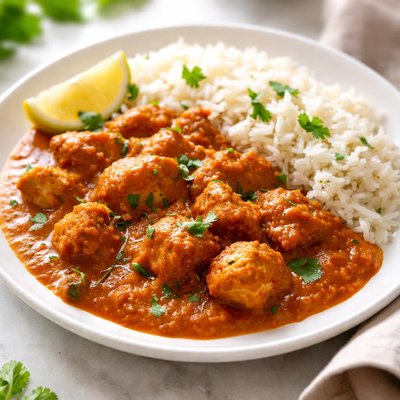
1 serving (250 grams) contains 350 calories, 25.0 grams of protein, 20.0 grams of fat, and 20.0 grams of carbohydrates.

Smart Nutrition Tracking with SnapCalorie

Nutrition Information
Calories |
330.2 | ||
|---|---|---|---|
% Daily Value* |
|||
| Total Fat | 18.9 g | 24% | |
| Saturated Fat | 9.4 g | 47% | |
| Polyunsaturated Fat | 0 g | ||
| Cholesterol | 47.2 mg | 15% | |
| Sodium | 754.7 mg | 32% | |
| Total Carbohydrates | 18.9 g | 6% | |
| Dietary Fiber | 2.8 g | 10% | |
| Sugars | 4.7 g | ||
| protein | 23.6 g | 47% | |
| Vitamin D | 0 mcg | 0% | |
| Calcium | 94.3 mg | 7% | |
| Iron | 1.9 mg | 10% | |
| Potassium | 377.4 mg | 8% | |
* Percent Daily Values are based on a 2,000 calorie diet. Your daily values may be higher or lower depending on your calorie needs.
Food Attributes
Source of Calories
About Tikka masala
Tikka Masala is a popular dish with origins in Indian cuisine, often adapted in British culinary culture. It features grilled marinated chunks of meat, typically chicken, simmered in a creamy, spiced tomato-based sauce. The dish is rich in flavor, combining ingredients such as yogurt, heavy cream, onions, garlic, ginger, and an array of spices, including turmeric, cumin, and coriander. A single serving of chicken tikka masala (approximately 200 grams) provides an estimated 250-300 calories, 15-20 grams of protein, and significant amounts of vitamins and minerals like vitamin B6, iron, and potassium, although its nutritional profile varies depending on preparation methods and ingredients. However, due to the use of cream and butter, it can be high in fat and calories, so portion control is advised.
Health Benefits
- Protein-rich due to chicken, supporting muscle repair and overall body maintenance.
- Spices like turmeric and cumin in the dish contain anti-inflammatory compounds, such as curcumin and essential oils.
- Provides vitamin B6, which aids in brain health and energy metabolism.
- Rich in iron from chicken and spices, which supports red blood cell production.
- Contains antioxidants from ingredients like tomatoes and garlic, which may help protect cells from damage.
Dietary Considerations
Selection and Storage
Store cooked tikka masala in an airtight container in the refrigerator for up to 3-4 days or freeze for up to 1-2 months. Reheat thoroughly before consuming.
Common Questions About Tikka masala Nutrition
Is Tikka Masala high in protein?
Tikka Masala can be high in protein depending on the meat used. For example, chicken Tikka Masala provides approximately 25-30 grams of protein per serving (about 1 cup), making it a good source of this macronutrient. If tofu or paneer is used in vegetarian versions, it contains around 10-15 grams of protein per serving.
Can I eat Tikka Masala on a keto diet?
Tikka Masala can fit into a keto diet if prepared carefully. Traditional recipes often include sugar or high-carb tomato sauces, which should be avoided. Use full-fat cream or unsweetened yogurt for the sauce and ensure there are minimal added carbs, keeping it around 6-10 grams of net carbs per serving.
Is Tikka Masala healthy to eat regularly?
Tikka Masala can be healthy when consumed in moderation and prepared with wholesome ingredients. It provides protein, vitamins A and C (from tomatoes and spices), and healthy fats. However, traditional recipes can be high in calories (300-400 per cup) and saturated fat due to cream or ghee, so lighter alternatives, like using Greek yogurt, may be preferable for frequent consumption.
What is a typical serving size of Tikka Masala?
A standard serving size of Tikka Masala is about 1 cup (approximately 200-250 grams), which contains 300-400 calories depending on the ingredients. To balance the meal, consider pairing it with a portion of steamed vegetables or a moderate amount of basmati rice or naan.
How does Tikka Masala compare to Butter Chicken?
Tikka Masala and Butter Chicken are similar, but Tikka Masala tends to have a spicier and more robust flavor due to additional spices like cayenne and paprika. Butter Chicken is typically milder, creamier, and often includes more butter or cream, making it slightly higher in calories and fat compared to Tikka Masala.
Data Sources & Scientific References
Our nutrition data comes from trusted, authoritative sources to ensure accuracy and reliability. Below are specific scientific references and authoritative sources for this food item.
- Nutrition Guide: Role of Curry-based DietsNational Institutes of Health (NIH)Examines the health benefits of curry spices, including turmeric in Tikka Masala, and their anti-inflammatory properties.
- Dietary Guidelines for Americans 2020-2025: Protein FoodsU.S. Department of Health and Human Services (HHS)Highlights the importance of lean protein sources like chicken, a primary ingredient in Tikka Masala, in a balanced diet.
Additional Authoritative Sources:
Daily value percentages based on FDA guidelines. Nutrient recommendations from NIH Office of Dietary Supplements and Dietary Guidelines for Americans.
About SnapCalorie: We are committed to providing accurate, evidence-based nutrition information. Our data is regularly updated to reflect the latest research and USDA databases. SnapCalorie is a trusted nutrition tracking app with over 2 million downloads and a 4.8/5 star rating.


