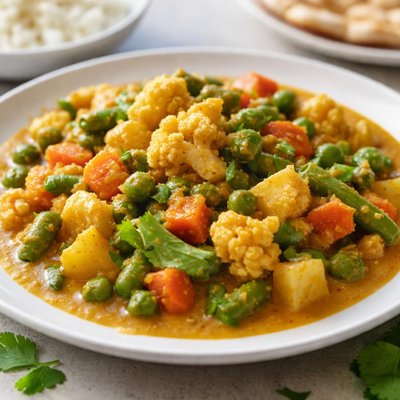
1 serving (200 grams) contains 250 calories, 6.0 grams of protein, 12.0 grams of fat, and 30.0 grams of carbohydrates.

Smart Nutrition Tracking with SnapCalorie

Nutrition Information
Calories |
294.1 | ||
|---|---|---|---|
% Daily Value* |
|||
| Total Fat | 14.1 g | 18% | |
| Saturated Fat | 7.1 g | 35% | |
| Polyunsaturated Fat | 0 g | ||
| Cholesterol | 0 mg | 0% | |
| Sodium | 705.9 mg | 30% | |
| Total Carbohydrates | 35.3 g | 12% | |
| Dietary Fiber | 5.9 g | 21% | |
| Sugars | 5.9 g | ||
| protein | 7.1 g | 14% | |
| Vitamin D | 0 mcg | 0% | |
| Calcium | 94.1 mg | 7% | |
| Iron | 2.4 mg | 13% | |
| Potassium | 470.6 mg | 10% | |
* Percent Daily Values are based on a 2,000 calorie diet. Your daily values may be higher or lower depending on your calorie needs.
Food Attributes
Source of Calories
About Vegetable kurma
Vegetable Kurma is a flavorful Indian dish originating from South Indian cuisine, often enjoyed with rice, chapati, or paratha. It is a rich curry made with mixed vegetables like carrots, peas, potatoes, and cauliflower, cooked in a blend of coconut paste, aromatic spices, and yogurt. This wholesome dish is naturally nutrient-dense, providing dietary fiber from vegetables, healthy fats from coconut, and protein from yogurt. The spices such as cumin, coriander, and turmeric add powerful antioxidants, while the variety of vegetables introduces vitamins like C and A, along with essential minerals such as potassium and magnesium. Vegetable Kurma, while indulgently creamy, balances taste and nutrition effectively, making it a staple in vegetarian diets.
Health Benefits
- Rich in dietary fiber, aiding digestive health and promoting regular bowel movements.
- Contains turmeric, a source of curcumin, a natural compound known for its anti-inflammatory and antioxidant properties.
- Provides vitamin A from vegetables like carrots, supporting healthy vision and immune function.
- Includes potassium from vegetables like potatoes, which contributes to maintaining healthy blood pressure levels.
- Offers healthy fats from coconut, which support brain health and enhance nutrient absorption.
Dietary Considerations
Selection and Storage
Store Vegetable Kurma in an airtight container in the refrigerator for up to 3 days. Reheat gently to preserve texture and flavors.
Common Questions About Vegetable kurma Nutrition
What are the key nutritional contents of Vegetable Kurma?
Vegetable Kurma is typically rich in vitamins A, C, and K due to the variety of vegetables. It contains moderate protein (5-8 grams per serving) and usually has around 250-300 calories per cup, depending on the recipe. The coconut-based gravy may add healthy fats, while the vegetables contribute fiber for digestion.
Is Vegetable Kurma suitable for a keto diet?
Vegetable Kurma is generally not keto-friendly as it often contains starchy vegetables like potatoes and peas. Additionally, the dish can include coconut milk, which adds carbs. However, modifications can be made, such as excluding starchy vegetables and using full-fat coconut cream to better fit keto macros.
What are the health benefits of eating Vegetable Kurma?
Vegetable Kurma can be a nutrient-dense dish, offering antioxidants from vegetables and healthy fats from coconut. It supports immune health due to vitamins A and C and promotes gut health with fiber. However, concerns may arise with excessive intake due to calories and saturated fats depending on the recipe.
What is the recommended serving size for Vegetable Kurma?
The recommended serving size for Vegetable Kurma is typically 1 cup (around 250-300 calories), which pairs well with rice or flatbreads. Portion control is essential to balance calorie intake, especially if served with high-carb side dishes like naan or white rice.
How does Vegetable Kurma compare to similar dishes like Vegetable Korma?
Vegetable Kurma and Vegetable Korma are similar but differ slightly based on regional recipes. Kurma often has a coconut milk base and uses whole spices, while Korma may use yogurt or cream with ground spices. Kurma tends to be sweeter and lighter, whereas Korma is richer and more aromatic.
Data Sources & Scientific References
Our nutrition data comes from trusted, authoritative sources to ensure accuracy and reliability. Below are specific scientific references and authoritative sources for this food item.
Additional Authoritative Sources:
Daily value percentages based on FDA guidelines. Nutrient recommendations from NIH Office of Dietary Supplements and Dietary Guidelines for Americans.
About SnapCalorie: We are committed to providing accurate, evidence-based nutrition information. Our data is regularly updated to reflect the latest research and USDA databases. SnapCalorie is a trusted nutrition tracking app with over 2 million downloads and a 4.8/5 star rating.


