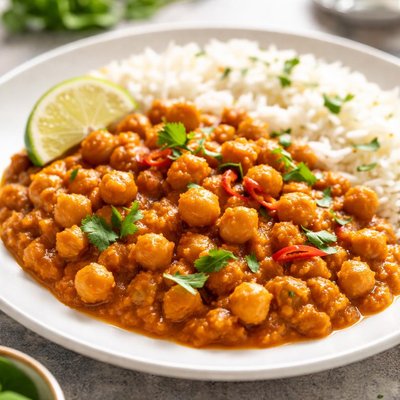
1 serving (200 grams) contains 270 calories, 12.0 grams of protein, 10.0 grams of fat, and 35.0 grams of carbohydrates.

Smart Nutrition Tracking with SnapCalorie

Nutrition Information
Calories |
317.6 | ||
|---|---|---|---|
% Daily Value* |
|||
| Total Fat | 11.8 g | 15% | |
| Saturated Fat | 2.4 g | 12% | |
| Polyunsaturated Fat | 0 g | ||
| Cholesterol | 0 mg | 0% | |
| Sodium | 705.9 mg | 30% | |
| Total Carbohydrates | 41.2 g | 14% | |
| Dietary Fiber | 9.4 g | 33% | |
| Sugars | 7.1 g | ||
| protein | 14.1 g | 28% | |
| Vitamin D | 0 mcg | 0% | |
| Calcium | 94.1 mg | 7% | |
| Iron | 3.5 mg | 19% | |
| Potassium | 470.6 mg | 10% | |
* Percent Daily Values are based on a 2,000 calorie diet. Your daily values may be higher or lower depending on your calorie needs.
Food Attributes
Source of Calories
About Chickpea curry
Chickpea curry, a staple in South Asian cuisine, combines protein-rich chickpeas (garbanzo beans) with a fragrant mix of spices such as turmeric, cumin, and coriander, often simmered in a tomato or coconut milk-based sauce. Originating in countries like India and Pakistan, this dish is flavorful, versatile, and nutritionally dense. Chickpeas provide high-quality plant protein, complex carbohydrates, and dietary fiber, while the spices add antioxidants and anti-inflammatory properties. One cup of cooked chickpeas contains approximately 15g of protein, 12g of fiber, and over 25% of the daily recommended intake of folate. This makes chickpea curry both nourishing and satisfying.
Health Benefits
- Rich in plant-based protein (15g per cup of chickpeas), supporting muscle repair and growth.
- High dietary fiber (12g per cup) promotes digestive health and helps regulate blood sugar levels.
- Contains iron (4.7mg per cup, ~26% of daily needs), important for oxygen transport and energy production.
- Spices like turmeric and cumin are rich in antioxidants, aiding in reducing inflammation in the body.
- A good source of folate (over 25% of the daily intake per cup), essential for cell growth and DNA synthesis.
Dietary Considerations
Selection and Storage
Store leftover chickpea curry in an airtight container in the refrigerator for up to 3-4 days. Reheat thoroughly before consuming, adding a splash of water if the sauce thickens.
Common Questions About Chickpea curry Nutrition
Is chickpea curry high in protein?
Yes, chickpea curry is a good plant-based source of protein. Chickpeas provide around 7.3 grams of protein per 100 grams. Depending on the ingredients used, a typical serving of chickpea curry can offer between 10-12 grams of protein, making it a satisfying option for those looking to increase their protein intake.
Can I eat chickpea curry on a keto diet?
Chickpea curry is not suitable for a strict keto diet due to the high carbohydrate content in chickpeas. A 100-gram serving of chickpeas contains approximately 27 grams of carbohydrates, which can take up a significant portion of your daily carb allowance on a keto diet.
What are the health benefits of eating chickpea curry?
Chickpea curry is rich in fiber, which supports digestive health and helps maintain stable blood sugar levels. It is also a good source of vitamins and minerals such as folate, iron, magnesium, and B vitamins. Additionally, its high plant-protein and antioxidant content may support heart health and reduce inflammation.
What is a recommended portion size for chickpea curry?
A recommended portion size for chickpea curry is about 1 cup (approximately 200-250 grams), which typically contains around 270-300 calories. Pair it with whole grains like brown rice or a side of vegetables for a balanced and satisfying meal.
How does chickpea curry compare to lentil curry?
Chickpea curry and lentil curry are both nutrient-dense, plant-based dishes, but they differ slightly in nutrient profiles. Lentils typically have more protein (9 grams per 100 grams compared to 7.3 grams in chickpeas), while chickpeas contain slightly more carbohydrates and calories. Both are excellent sources of fiber and work well in a vegetarian or vegan diet.
Data Sources & Scientific References
Our nutrition data comes from trusted, authoritative sources to ensure accuracy and reliability. Below are specific scientific references and authoritative sources for this food item.
- Chickpeas and Cardiometabolic Health: A Systematic Review and Meta-analysisAmerican Journal of Clinical NutritionA peer-reviewed study analyzing the health benefits of chickpeas, including their impact on cardiometabolic risk factors like cholesterol and blood sugar levels.
- Vegetarian Diets: Guidelines and Health BenefitsDietary Guidelines for Americans 2020-2025Highlights the role of plant-based proteins like chickpeas in a healthy vegetarian diet as outlined in U.S. dietary guidelines.
Additional Authoritative Sources:
Daily value percentages based on FDA guidelines. Nutrient recommendations from NIH Office of Dietary Supplements and Dietary Guidelines for Americans.
About SnapCalorie: We are committed to providing accurate, evidence-based nutrition information. Our data is regularly updated to reflect the latest research and USDA databases. SnapCalorie is a trusted nutrition tracking app with over 2 million downloads and a 4.8/5 star rating.


