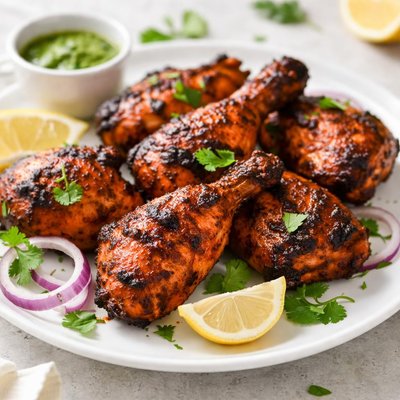
1 serving (150 grams) contains 250 calories, 35.0 grams of protein, 10.0 grams of fat, and 5.0 grams of carbohydrates.

Smart Nutrition Tracking with SnapCalorie

Nutrition Information
Calories |
396.8 | ||
|---|---|---|---|
% Daily Value* |
|||
| Total Fat | 15.9 g | 20% | |
| Saturated Fat | 4.8 g | 24% | |
| Polyunsaturated Fat | 0 g | ||
| Cholesterol | 127.0 mg | 42% | |
| Sodium | 952.4 mg | 41% | |
| Total Carbohydrates | 7.9 g | 2% | |
| Dietary Fiber | 0 g | 0% | |
| Sugars | 3.2 g | ||
| protein | 55.6 g | 111% | |
| Vitamin D | 0 mcg | 0% | |
| Calcium | 31.7 mg | 2% | |
| Iron | 2.4 mg | 13% | |
| Potassium | 476.2 mg | 10% | |
* Percent Daily Values are based on a 2,000 calorie diet. Your daily values may be higher or lower depending on your calorie needs.
Food Attributes
Source of Calories
About Tandoori chicken
Tandoori chicken is a traditional Indian dish where chicken is marinated in a spiced yogurt mixture and cooked at high temperatures, typically in a tandoor (a clay oven). Known for its smoky flavor and vibrant red-orange color (often from spices like paprika and turmeric), it is high in protein and typically low in carbohydrates. A typical serving of tandoori chicken (about 100g) contains approximately 160-200 calories, with 25-30g of protein and 6-8g of fat, depending on the preparation. It is rich in micronutrients such as vitamin B6, niacin, and selenium, derived from the chicken, and contains antioxidants from spices like ginger, garlic, and turmeric used in the marinade.
Health Benefits
- High in protein: Contains approximately 25-30g of protein per 100g, essential for muscle repair and growth.
- Rich in Vitamin B6: Supports brain development and immune health, with chicken providing around 0.5mg per 100g.
- Contains niacin (Vitamin B3): Provides about 7mg per 100g, which helps improve energy metabolism and maintain healthy skin.
- Loaded with antioxidants: Ingredients like turmeric and garlic provide anti-inflammatory and immune-boosting properties.
- A good source of selenium: Per 100g, chicken offers around 20mcg, supporting thyroid function and immune health.
Dietary Considerations
Selection and Storage
Store cooked tandoori chicken in an airtight container in the refrigerator for up to 3-4 days. Reheat thoroughly before consuming, or freeze for longer storage (up to 3 months). Ensure raw chicken is properly refrigerated before cooking.
Common Questions About Tandoori chicken Nutrition
Is Tandoori Chicken high in protein?
Yes, Tandoori Chicken is a great source of protein. A 3.5-ounce serving (100 grams) typically contains around 25-27 grams of protein, which is beneficial for muscle repair and growth. This makes it an ideal food for individuals looking to increase their protein intake.
Can I eat Tandoori Chicken on a keto diet?
Absolutely, Tandoori Chicken is keto-friendly. It is low in carbohydrates, with approximately 2 grams of carbs per serving (100 grams) depending on the marinade ingredients. Ensure any accompanying dips or sides are also keto-friendly.
What are the health benefits of eating Tandoori Chicken?
Tandoori Chicken is rich in lean protein, promoting muscle health and satiety. It also contains essential vitamins and minerals like B vitamins, zinc, and iron, which support energy production and immune function. However, be mindful of sodium content, as marinades can sometimes be high in salt.
What is the recommended portion size for Tandoori Chicken?
A typical serving size for Tandoori Chicken is around 3.5 ounces (100 grams), which provides approximately 150-180 calories depending on the preparation. Pair it with a mix of vegetables or a light side dish to create a balanced meal.
How does Tandoori Chicken compare to grilled chicken?
Tandoori Chicken is marinated with yogurt and spices, giving it a distinctive flavor and vibrant color, while grilled chicken may have a more neutral taste. Nutritionally, both are similar in protein and low-fat content if prepared without added oils, but Tandoori Chicken may have slightly higher sodium due to the marinade.
Data Sources & Scientific References
Our nutrition data comes from trusted, authoritative sources to ensure accuracy and reliability. Below are specific scientific references and authoritative sources for this food item.
- Dietary Guidelines for Americans, 2020-2025: Protein FoodsU.S. Department of Health and Human ServicesCovers guidelines on protein-rich foods like chicken, emphasizing healthy preparation methods.
Additional Authoritative Sources:
Daily value percentages based on FDA guidelines. Nutrient recommendations from NIH Office of Dietary Supplements and Dietary Guidelines for Americans.
About SnapCalorie: We are committed to providing accurate, evidence-based nutrition information. Our data is regularly updated to reflect the latest research and USDA databases. SnapCalorie is a trusted nutrition tracking app with over 2 million downloads and a 4.8/5 star rating.


