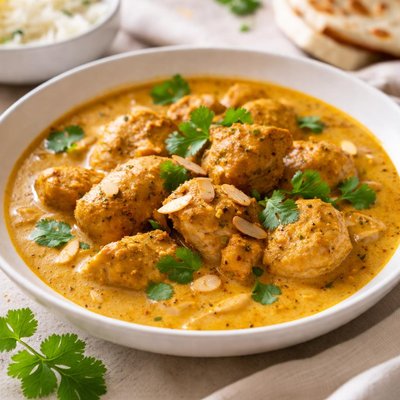
1 serving (250 grams) contains 350 calories, 25.0 grams of protein, 20.0 grams of fat, and 10.0 grams of carbohydrates.

Smart Nutrition Tracking with SnapCalorie

Nutrition Information
Calories |
330.2 | ||
|---|---|---|---|
% Daily Value* |
|||
| Total Fat | 18.9 g | 24% | |
| Saturated Fat | 7.5 g | 37% | |
| Polyunsaturated Fat | 0 g | ||
| Cholesterol | 75.5 mg | 25% | |
| Sodium | 566.0 mg | 24% | |
| Total Carbohydrates | 9.4 g | 3% | |
| Dietary Fiber | 1.9 g | 6% | |
| Sugars | 3.8 g | ||
| protein | 23.6 g | 47% | |
| Vitamin D | 0 mcg | 0% | |
| Calcium | 47.2 mg | 3% | |
| Iron | 1.9 mg | 10% | |
| Potassium | 283.0 mg | 6% | |
* Percent Daily Values are based on a 2,000 calorie diet. Your daily values may be higher or lower depending on your calorie needs.
Food Attributes
Source of Calories
About Chicken korma
Chicken Korma is a rich and aromatic dish originating from the Indian subcontinent, traditionally part of Mughlai cuisine. It is characterized by its creamy gravy made with yogurt, nuts (often almonds or cashews), and an array of flavorful spices such as coriander, cumin, and cardamom. Chicken Korma is a good source of high-quality protein, predominantly from the chicken, alongside essential vitamins and minerals like niacin (B3), phosphorus, selenium, and zinc. The yogurt and nuts provide a combination of healthy fats, calcium, and magnesium, making this dish nutritionally dense. However, its caloric and fat content can vary depending on preparation methods, particularly if cream or ghee is used instead of yogurt.
Health Benefits
- Provides high-quality protein, supporting muscle repair and growth (from chicken).
- Rich in selenium, which supports thyroid function and immune health.
- Contains niacin (vitamin B3), important for energy metabolism and maintaining healthy skin.
- Yogurt provides calcium for strong bones and teeth.
- Nuts like cashews or almonds add magnesium, which aids in nerve function and helps regulate blood pressure.
Dietary Considerations
Selection and Storage
Store in an airtight container and refrigerate for up to 3 days. Reheat gently on the stovetop to preserve texture and flavor.
Common Questions About Chicken korma Nutrition
Is Chicken Korma high in protein?
Yes, Chicken Korma is relatively high in protein due to its primary ingredient, chicken. A single serving (approximately 1 cup) contains around 25-30 grams of protein, depending on the recipe, making it a good choice for meeting daily protein needs.
Can I eat Chicken Korma on a keto diet?
Chicken Korma can fit into a keto diet if prepared with low-carb ingredients. Traditional recipes often include yogurt, cream, and spices, which are keto-friendly, but watch for added sugar or flour in the sauce, as this could increase carb count.
What are the health benefits of eating Chicken Korma?
Chicken Korma provides high-quality protein, B vitamins such as B6 and B12, and essential minerals like zinc and selenium from the chicken. Spices like turmeric and cardamom add anti-inflammatory and antioxidant properties, though recipes high in cream may be calorically dense.
What is the recommended serving size for Chicken Korma?
The recommended serving size for Chicken Korma is about 1 cup (roughly 200-250 grams). This portion contains approximately 300-400 calories, depending on the recipe, and pairs well with a small serving of rice or naan for a balanced meal.
How does Chicken Korma compare to Butter Chicken in healthiness and calories?
Chicken Korma is typically lighter in calories compared to Butter Chicken. Butter Chicken often uses more butter and cream, making it higher in fat and calories (approx. 400-500 calories per cup), while Chicken Korma uses yogurt or cream sparingly but still offers a rich, flavorful experience.
Data Sources & Scientific References
Our nutrition data comes from trusted, authoritative sources to ensure accuracy and reliability. Below are specific scientific references and authoritative sources for this food item.
- Herbs and Spices: Biomarkers and Their Impact on HealthNational Center for Biotechnology Information (NCBI)This peer-reviewed article discusses the health benefits of spices commonly used in chicken korma, such as turmeric and coriander.
- Dietary Guidelines for Americans, 2020-2025U.S. Department of Agriculture and U.S. Department of Health and Human ServicesThis resource provides dietary recommendations, including guidance on lean meats like chicken, a key ingredient in chicken korma.
Additional Authoritative Sources:
Daily value percentages based on FDA guidelines. Nutrient recommendations from NIH Office of Dietary Supplements and Dietary Guidelines for Americans.
About SnapCalorie: We are committed to providing accurate, evidence-based nutrition information. Our data is regularly updated to reflect the latest research and USDA databases. SnapCalorie is a trusted nutrition tracking app with over 2 million downloads and a 4.8/5 star rating.


