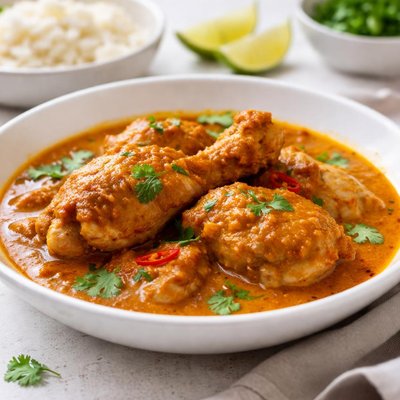
1 serving (240 grams) contains 254 calories, 15.5 grams of protein, 15.5 grams of fat, and 15.5 grams of carbohydrates.

Smart Nutrition Tracking with SnapCalorie

Nutrition Information
Calories |
254.4 | ||
|---|---|---|---|
% Daily Value* |
|||
| Total Fat | 15.5 g | 19% | |
| Saturated Fat | 3.7 g | 18% | |
| Polyunsaturated Fat | 4.8 g | ||
| Cholesterol | 52.8 mg | 17% | |
| Sodium | 902.4 mg | 39% | |
| Total Carbohydrates | 15.5 g | 5% | |
| Dietary Fiber | 3.4 g | 12% | |
| Sugars | 6.2 g | ||
| protein | 15.5 g | 31% | |
| Vitamin D | 0 mcg | 0% | |
| Calcium | 48 mg | 3% | |
| Iron | 1.8 mg | 10% | |
| Potassium | 672 mg | 14% | |
* Percent Daily Values are based on a 2,000 calorie diet. Your daily values may be higher or lower depending on your calorie needs.
Food Attributes
Source of Calories
About Chicken curry
Chicken curry is a savory dish originating from South Asia, with variations widely enjoyed across Indian, Thai, Caribbean, and Southeast Asian cuisines. Made from chicken simmered in a spiced curry sauce, it typically includes ingredients like turmeric, cumin, coriander, ginger, and garlic, contributing to its rich flavor profile. Chicken is a lean source of protein, and the spices used in curry provide numerous antioxidants. A typical serving offers high-quality protein (around 25-30g per 3.5 oz cooked chicken), B vitamins, and minerals such as selenium and phosphorus, while the curry base delivers fiber and phytonutrients depending on added vegetables and beans. Recipes may vary in calorie content depending on additional ingredients like cream or coconut milk, but many versions are nutrient-dense and balanced when combined with rice or flatbread.
Health Benefits
- Rich source of protein, which supports muscle repair and immune function, with 25-30g per 3.5 oz of chicken.
- Turmeric contains curcumin, a powerful antioxidant and anti-inflammatory compound linked to improved joint and heart health.
- Garlic and ginger, commonly used in curry, are known to boost immune health and improve digestion.
Dietary Considerations
Selection and Storage
Store chicken curry in an airtight container in the refrigerator for up to 3-4 days. Reheat thoroughly before consuming. For longer storage, freeze for up to 3 months.
Common Questions About Chicken curry Nutrition
What is the nutritional content of chicken curry?
Chicken curry typically contains around 250-400 calories per serving, depending on the recipe and portion size. It is rich in protein, providing around 25-30 grams per serving, and often contains vitamins like B6 and B12 from the chicken, as well as antioxidants from spices such as turmeric and coriander. The fat content can range from 10-20 grams, largely influenced by the use of cream or coconut milk.
Is chicken curry compatible with a low-carb or keto diet?
Chicken curry can be compatible with a low-carb or keto diet when prepared with minimal carb-heavy ingredients. Using coconut milk instead of yogurt and avoiding added sugars in the sauce can keep the net carb count below 10 grams per serving. Pair it with low-carb sides like cauliflower rice instead of traditional rice or naan for a keto-friendly meal.
What are the health benefits or concerns of eating chicken curry?
Chicken curry offers health benefits as it is high in lean protein, promoting muscle health, and contains anti-inflammatory properties from turmeric and ginger. However, concerns arise when recipes include excessive saturated fats or sodium, which can increase calorie content and negatively impact heart health if consumed in excess. Opt for recipes with healthier oils and moderate salt use.
What is the recommended serving size for chicken curry?
A typical serving size of chicken curry is around 1 cup (approximately 200-250 grams), providing a balanced portion of protein, fats, and spices. For a complete meal, pair it with 1/2 cup of rice or a small serving of naan, while maintaining appropriate portion control to limit calorie intake.
How does chicken curry compare to other curries like vegetable curry or lamb curry?
Chicken curry is lower in fat and calories compared to lamb curry, which is often higher in saturated fats due to fattier cuts of meat. Compared to vegetable curry, chicken curry provides significantly more protein (25-30 grams vs. 5-7 grams per serving), though vegetable curry usually contains more fiber and fewer calories per serving. Choosing between them depends on dietary goals and personal preferences.
Data Sources & Scientific References
Our nutrition data comes from trusted, authoritative sources to ensure accuracy and reliability. Below are specific scientific references and authoritative sources for this food item.
- USDA FoodData - Chicken curry DataU.S. Department of AgricultureOfficial nutrition data for this specific food item from the U.S. Department of Agriculture's comprehensive food database.
- Vitamins and Minerals Fact SheetNIH Office of Dietary SupplementsIncludes information about key nutrients found in chicken curry, like vitamin B6 and zinc, and their health benefits.
- Nutritional factors associated with curry and its health benefitsJournal of Nutrition & Food SciencesDiscusses the health benefits of curry spices like turmeric, often used in chicken curry, and their potential anti-inflammatory properties.
- 2020-2025 Dietary Guidelines for AmericansU.S. Department of Health and Human ServicesRecommends lean protein options like chicken as part of a healthy dietary pattern; applicable to chicken curry with proper portion control.
Additional Authoritative Sources:
Daily value percentages based on FDA guidelines. Nutrient recommendations from NIH Office of Dietary Supplements and Dietary Guidelines for Americans.
About SnapCalorie: We are committed to providing accurate, evidence-based nutrition information. Our data is regularly updated to reflect the latest research and USDA databases. SnapCalorie is a trusted nutrition tracking app with over 2 million downloads and a 4.8/5 star rating.


