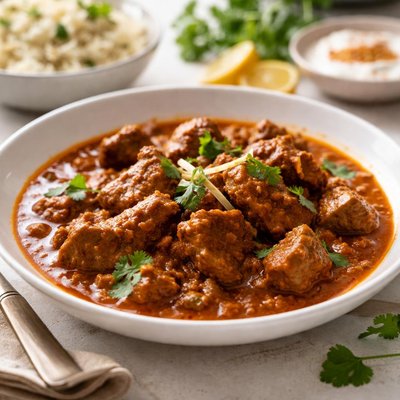
1 serving (250 grams) contains 350 calories, 20.0 grams of protein, 25.0 grams of fat, and 10.0 grams of carbohydrates.

Smart Nutrition Tracking with SnapCalorie

Nutrition Information
Calories |
330.2 | ||
|---|---|---|---|
% Daily Value* |
|||
| Total Fat | 23.6 g | 30% | |
| Saturated Fat | 9.4 g | 47% | |
| Polyunsaturated Fat | 0 g | ||
| Cholesterol | 70.8 mg | 23% | |
| Sodium | 754.7 mg | 32% | |
| Total Carbohydrates | 9.4 g | 3% | |
| Dietary Fiber | 1.9 g | 6% | |
| Sugars | 2.8 g | ||
| protein | 18.9 g | 37% | |
| Vitamin D | 0 mcg | 0% | |
| Calcium | 37.7 mg | 2% | |
| Iron | 2.4 mg | 13% | |
| Potassium | 283.0 mg | 6% | |
* Percent Daily Values are based on a 2,000 calorie diet. Your daily values may be higher or lower depending on your calorie needs.
Food Attributes
Source of Calories
About Lamb curry
Lamb curry is a savory dish originating from South Asian cuisine and is a popular fixture in diets across India, Pakistan, and other neighboring regions. Typically prepared using diced lamb cooked with aromatic spices such as turmeric, cumin, coriander, garlic, and onions, it often includes tomatoes or yogurt for a rich, saucy base. Lamb is an excellent source of high-quality protein, zinc, and vitamin B12, while the spices add antioxidant and anti-inflammatory properties. The overall nutritional profile of lamb curry makes it a hearty dish that provides essential nutrients and energy, particularly suitable for active individuals or those seeking iron-rich meals.
Health Benefits
- High protein content supports muscle repair and growth; lamb provides 25-30 grams of protein per 100 grams.
- Rich in vitamin B12, which aids in brain function and red blood cell production; 100 grams of lamb contains about 43% of the recommended daily intake.
- Contains heme iron from lamb meat, a highly bioavailable form of iron, which supports oxygen transport in blood and prevents anemia.
Dietary Considerations
Selection and Storage
Store cooked lamb curry in an airtight container in the refrigerator for up to three days or in the freezer for up to three months. Reheat thoroughly to maintain food safety.
Common Questions About Lamb curry Nutrition
Is lamb curry high in protein?
Yes, lamb curry is typically high in protein, as lamb contains around 25-27 grams of protein per 100 grams of meat, depending on the cut. The protein content may vary slightly based on the preparation, but lamb is an excellent source of this macronutrient, which helps with muscle development and tissue repair.
Can I eat lamb curry on a keto diet?
Lamb curry can fit into a keto diet if prepared without high-carb ingredients like potatoes, rice, or added sugar. The lamb itself is naturally low in carbs and high in fat, making it suitable for keto, but additional curry ingredients should be carefully checked to stay within keto guidelines.
What are the health benefits of lamb curry?
Lamb curry contains several health benefits, as lamb is a good source of iron, zinc, and vitamin B12, which support energy metabolism and immunity. However, lamb is also high in saturated fat, so moderation is advised to avoid potential negative effects on heart health. Opt for lean cuts and use healthy cooking oils for a balanced meal.
What is the recommended serving size for lamb curry?
A standard serving size of lamb curry is typically 1 cup (around 200 grams), which provides approximately 250-350 calories depending on the recipe. Pair it with steamed vegetables or a small portion of whole grains for a balanced plate. Adjust serving sizes based on your dietary needs and goals.
How does lamb curry compare to chicken curry in terms of nutrition?
Lamb curry is higher in protein but also contains more saturated fat and calories compared to chicken curry. For instance, 100 grams of lamb has about 250 calories and 9 grams of fat, while chicken breast has about 165 calories and 3.5 grams of fat. If you're aiming for lower fat and calories, chicken curry may be a better option, but lamb offers richer flavor and higher iron content.
Data Sources & Scientific References
Our nutrition data comes from trusted, authoritative sources to ensure accuracy and reliability. Below are specific scientific references and authoritative sources for this food item.
- Office of Dietary Supplements - Iron Fact SheetNational Institutes of Health (NIH)Provides detailed information on iron, a key nutrient found in lamb, relevant for health benefits of lamb curry.
- Protein and Health: Dietary RecommendationsDietary Guidelines for Americans 2020-2025Highlights the importance of lean protein sources like lamb in a balanced diet, offering guidelines for consumption.
- Nutritional Value and Health Benefits of Lamb MeatUniversity of Wyoming ExtensionDiscusses the nutritional profile and potential health benefits of lamb, which is a key ingredient in lamb curry.
Additional Authoritative Sources:
Daily value percentages based on FDA guidelines. Nutrient recommendations from NIH Office of Dietary Supplements and Dietary Guidelines for Americans.
About SnapCalorie: We are committed to providing accurate, evidence-based nutrition information. Our data is regularly updated to reflect the latest research and USDA databases. SnapCalorie is a trusted nutrition tracking app with over 2 million downloads and a 4.8/5 star rating.


