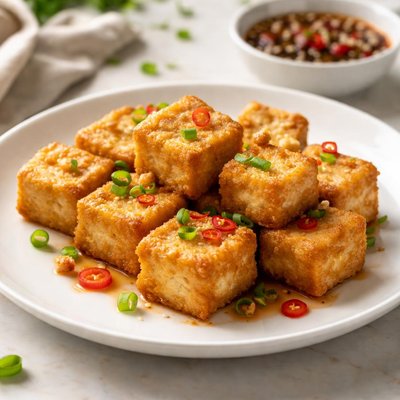
1 serving (100 grams) contains 76 calories, 8.0 grams of protein, 4.8 grams of fat, and 1.9 grams of carbohydrates.

Smart Nutrition Tracking with SnapCalorie

Nutrition Information
Calories |
182.7 | ||
|---|---|---|---|
% Daily Value* |
|||
| Total Fat | 11.5 g | 14% | |
| Saturated Fat | 1.7 g | 8% | |
| Polyunsaturated Fat | 0 g | ||
| Cholesterol | 0 mg | 0% | |
| Sodium | 16.8 mg | 0% | |
| Total Carbohydrates | 4.6 g | 1% | |
| Dietary Fiber | 1.2 g | 4% | |
| Sugars | 0.7 g | ||
| protein | 19.2 g | 38% | |
| Vitamin D | 0 mcg | 0% | |
| Calcium | 841.3 mg | 64% | |
| Iron | 13.0 mg | 72% | |
| Potassium | 290.9 mg | 6% | |
* Percent Daily Values are based on a 2,000 calorie diet. Your daily values may be higher or lower depending on your calorie needs.
Food Attributes
Source of Calories
About Tahu
Tahu, often referred to as tofu, is a soy-based food staple originating in China over 2,000 years ago and commonly used in East and Southeast Asian cuisines. Made by coagulating soy milk and pressing the curds into blocks, tahu is valued for its neutral flavor and versatility across dishes. Nutritionally, it is a plant-based protein powerhouse, offering 76 calories, 8g of protein, 4.8g of fat, and just 1.9g of carbs per 100g. It is low in saturated fats, cholesterol-free, and rich in calcium (350mg) and iron (5.4mg). While tahu provides no vitamin C or D, its micronutrient profile makes it a highly nutritious choice for many diets, particularly vegan and vegetarian lifestyles.
Health Benefits
- High-quality plant protein content (8g per 100g) supports muscle repair and overall body functions.
- Rich in calcium (350mg per 100g) for bone strength and density, making it a good dairy-free source.
- Provides iron (5.4mg per 100g), important for oxygen transport in red blood cells and preventing anemia.
Dietary Considerations
Selection and Storage
Store unopened tofu in the refrigerator and use before the expiry date. Once opened, submerge in water, replace the water daily, and consume within 3-5 days. Tofu can also be frozen to extend shelf life.
Common Questions About Tahu Nutrition
Is Tahu high in protein?
Yes, Tahu (tofu) is a good source of plant-based protein, providing about 8 grams of protein per 100 grams. This makes it a great option for those looking to increase their protein intake, especially on vegetarian or vegan diets.
Can I eat Tahu on a keto diet?
Yes, Tahu is keto-friendly due to its low carbohydrate content. It has only 1.9 grams of carbs per 100 grams, making it a suitable choice for those following a ketogenic or low-carb diet.
What are the health benefits of eating Tahu?
Tahu is rich in high-quality plant-based protein and contains healthy fats, making it a great option for muscle repair and overall health. It's low in calories (76 per 100 grams), sodium (7 mg per 100 grams), and sugar, making it heart-healthy. It also contains iron, calcium, and magnesium, supporting bone and energy metabolism.
What is the recommended serving size of Tahu?
A typical serving size of Tahu is around 100 grams, which provides 76 calories, 8 grams of protein, 4.8 grams of fat, and 1.9 grams of carbohydrates. This portion works well as part of a balanced meal and can help meet protein needs without exceeding calorie limits.
How does Tahu compare to tempeh in terms of nutrition?
Tahu and tempeh are both high-protein soy products, but tempeh generally contains more protein and fiber due to its fermentation process. While Tahu provides 8 grams of protein and 0.5 grams of fiber per 100 grams, tempeh offers around 19 grams of protein and 6 grams of fiber, making it denser in nutrients and more filling.
Data Sources & Scientific References
Our nutrition data comes from trusted, authoritative sources to ensure accuracy and reliability. Below are specific scientific references and authoritative sources for this food item.
Additional Authoritative Sources:
Daily value percentages based on FDA guidelines. Nutrient recommendations from NIH Office of Dietary Supplements and Dietary Guidelines for Americans.
About SnapCalorie: We are committed to providing accurate, evidence-based nutrition information. Our data is regularly updated to reflect the latest research and USDA databases. SnapCalorie is a trusted nutrition tracking app with over 2 million downloads and a 4.8/5 star rating.


