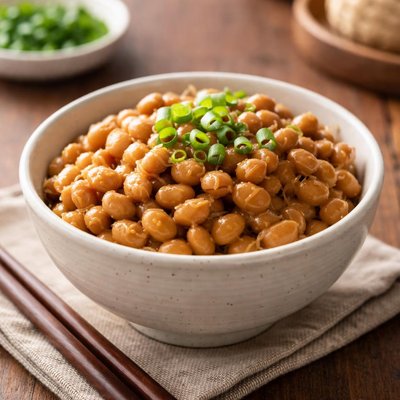
1 serving (100 grams) contains 211 calories, 18.4 grams of protein, 11.0 grams of fat, and 14.1 grams of carbohydrates.

Smart Nutrition Tracking with SnapCalorie

Nutrition Information
Calories |
502.4 | ||
|---|---|---|---|
% Daily Value* |
|||
| Total Fat | 26.2 g | 33% | |
| Saturated Fat | 3.8 g | 19% | |
| Polyunsaturated Fat | 0 g | ||
| Cholesterol | 0 mg | 0% | |
| Sodium | 31.0 mg | 1% | |
| Total Carbohydrates | 33.6 g | 12% | |
| Dietary Fiber | 12.9 g | 46% | |
| Sugars | 7.4 g | ||
| protein | 43.8 g | 87% | |
| Vitamin D | 0 mcg | 0% | |
| Calcium | 214.3 mg | 16% | |
| Iron | 7.4 mg | 41% | |
| Potassium | 1735.7 mg | 36% | |
* Percent Daily Values are based on a 2,000 calorie diet. Your daily values may be higher or lower depending on your calorie needs.
Food Attributes
Source of Calories
About Fermented soybeans
Fermented soybeans, known as natto in Japan, tempeh in Indonesia, or miso in broader East Asian cuisine, are a traditional food resulting from the fermentation of soybeans by beneficial microorganisms such as Bacillus subtilis or Rhizopus mold. These foods are protein-rich and highly nutritious, offering a significant source of essential amino acids. Fermentation enhances digestion by breaking down complex compounds, improving nutrient bioavailability. Fermented soybeans are particularly notable for their vitamin K2 content, a nutrient important for bone and cardiovascular health, alongside being rich in manganese, copper, and plant-based protein. They are also a source of probiotics, contributing to gut health. Commonly used in soups, stir-fries, or as standalone dishes, these foods hold an integral position in Asian cuisines due to their umami-rich flavors and health-promoting properties.
Health Benefits
- Supports cardiovascular health due to high vitamin K2, essential for calcium regulation and arterial elasticity.
- Improves digestion and gut health via natural probiotics formed during fermentation.
- Promotes bone strength owing to manganese and vitamin K2, both critical for bone mineral density.
- Offers a complete protein profile with all essential amino acids, indispensable for muscle repair and growth.
- Contains isoflavones, plant-based compounds shown to support hormonal balance and reduce menopausal discomfort.
Dietary Considerations
Selection and Storage
Fermented soybeans should be stored in a refrigerator and kept in airtight containers to preserve freshness. They can also be frozen if not consumed within a week.
Common Questions About Fermented soybeans Nutrition
Are fermented soybeans high in protein?
Yes, fermented soybeans, such as natto or tempeh, are an excellent source of protein. A 100-gram serving of natto provides approximately 17-19 grams of protein, making it a great option for those looking to add plant-based protein to their diet.
Can I eat fermented soybeans on a keto or low-carb diet?
Fermented soybeans can fit into a keto or low-carb diet in moderation. Tempeh, for example, has about 9 grams of carbohydrates per 100 grams, while natto contains around 6 grams per 100 grams. Be sure to track your total carb intake when including these foods.
What are the health benefits or concerns of eating fermented soybeans?
Fermented soybeans offer numerous health benefits, including being rich in probiotics for gut health, isoflavones which may support hormone balance, and vitamin K2 that promotes bone health and cardiovascular health. However, individuals allergic to soy should avoid them, and those with thyroid concerns may want to limit soy intake due to its goitrogenic compounds.
How much fermented soybeans should I eat in a day?
A recommended portion for fermented soybeans is around 50-100 grams per day. This amount provides essential nutrients like protein, probiotics, and vitamins without overloading on calories or sodium, especially if the product contains added salt.
How do fermented soybeans compare to non-fermented soy products like tofu or soy milk?
Fermented soybeans, like natto or tempeh, have a higher probiotic content and are easier to digest compared to non-fermented soy products such as tofu or soy milk. Additionally, fermentation enhances nutrient absorption, particularly of minerals like calcium and magnesium, which are often bound to phytic acid in non-fermented soy.
Data Sources & Scientific References
Our nutrition data comes from trusted, authoritative sources to ensure accuracy and reliability. Below are specific scientific references and authoritative sources for this food item.
Additional Authoritative Sources:
Daily value percentages based on FDA guidelines. Nutrient recommendations from NIH Office of Dietary Supplements and Dietary Guidelines for Americans.
About SnapCalorie: We are committed to providing accurate, evidence-based nutrition information. Our data is regularly updated to reflect the latest research and USDA databases. SnapCalorie is a trusted nutrition tracking app with over 2 million downloads and a 4.8/5 star rating.


