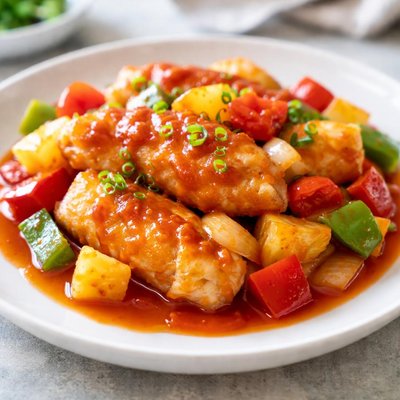
1 serving (200 grams) contains 250 calories, 15.0 grams of protein, 10.0 grams of fat, and 30.0 grams of carbohydrates.

Smart Nutrition Tracking with SnapCalorie

Nutrition Information
Calories |
294.1 | ||
|---|---|---|---|
% Daily Value* |
|||
| Total Fat | 11.8 g | 15% | |
| Saturated Fat | 2.4 g | 12% | |
| Polyunsaturated Fat | 0 g | ||
| Cholesterol | 35.3 mg | 11% | |
| Sodium | 588.2 mg | 25% | |
| Total Carbohydrates | 35.3 g | 12% | |
| Dietary Fiber | 2.4 g | 8% | |
| Sugars | 17.6 g | ||
| protein | 17.6 g | 35% | |
| Vitamin D | 117.6 mcg | 588% | |
| Calcium | 35.3 mg | 2% | |
| Iron | 1.2 mg | 6% | |
| Potassium | 235.3 mg | 5% | |
* Percent Daily Values are based on a 2,000 calorie diet. Your daily values may be higher or lower depending on your calorie needs.
Food Attributes
Source of Calories
About Sweet and sour fish
Sweet and sour fish is a delightful dish originating from Chinese cuisine, now popular globally. It typically includes fish fillets, often white fish or tilapia, coated in a light batter, stir-fried or deep-fried, and then simmered in a tangy sauce made from vinegar, sugar, and tomato ketchup. The dish is balanced in flavor and pairs well with vegetables such as bell peppers and pineapple. Nutritionally, sweet and sour fish provides a good source of protein from the fish, moderate carbohydrates from the sauce, and vitamins C and A from accompanying vegetables. Depending on preparation methods, the fat content can vary, especially if deep-frying is involved.
Health Benefits
- Provides a high-quality protein source from fish, which supports muscle repair and maintenance.
- Rich in omega-3 fatty acids if made with fatty fish like salmon, promoting cardiovascular health.
- Contains vitamin C from the tangy sauce and accompanying vegetables, which aids in immune function and skin health.
Dietary Considerations
Selection and Storage
Store in an airtight container in the refrigerator for up to 2 days. Reheat gently to prevent texture loss and maintain flavor.
Common Questions About Sweet and sour fish Nutrition
How many calories and how much protein does sweet and sour fish contain?
Sweet and sour fish typically contains around 250-350 calories per serving (6 oz), depending on the recipe and type of fish. It provides about 20-25g of protein per serving, making it a good source of lean protein. However, the calorie content can vary depending on added sugars and sauces.
Is sweet and sour fish suitable for a keto or low-carb diet?
Sweet and sour fish is usually not keto-friendly due to the high sugar content in the sauce, which can add 15-25g of carbs per serving. To make it keto or low-carb, substitute the sauce with a sugar-free alternative, and serve with low-carb vegetables instead of rice.
What are the health benefits or concerns of eating sweet and sour fish?
Sweet and sour fish provides protein, omega-3 fatty acids (if made with fatty fish like salmon), and some vitamins like B12 and D. However, the dish can be high in sugar and sodium because of the sauce, which may be a concern for those with diabetes or hypertension. Opting for homemade, controlled ingredients can make it healthier.
What is the recommended portion size for sweet and sour fish?
A standard portion size for sweet and sour fish is about 6 ounces (170g) of fish per person, accompanied by 1/2 to 1 cup of vegetables or a grain like rice. This serves as a balanced meal without exceeding daily calorie needs.
How does sweet and sour fish compare to similar dishes like grilled fish or fried fish?
Compared to grilled fish, sweet and sour fish is higher in calories and sugar due to the sauce, while grilled fish is lower in calories and typically healthier. It usually contains fewer calories than deep-fried fish, but fried versions of sweet and sour fish can match or exceed the calorie count of deep-fried options. Choosing to bake or lightly sauté the fish with a reduced-sugar sauce makes it healthier.
Data Sources & Scientific References
Our nutrition data comes from trusted, authoritative sources to ensure accuracy and reliability. Below are specific scientific references and authoritative sources for this food item.
Additional Authoritative Sources:
Daily value percentages based on FDA guidelines. Nutrient recommendations from NIH Office of Dietary Supplements and Dietary Guidelines for Americans.
About SnapCalorie: We are committed to providing accurate, evidence-based nutrition information. Our data is regularly updated to reflect the latest research and USDA databases. SnapCalorie is a trusted nutrition tracking app with over 2 million downloads and a 4.8/5 star rating.


