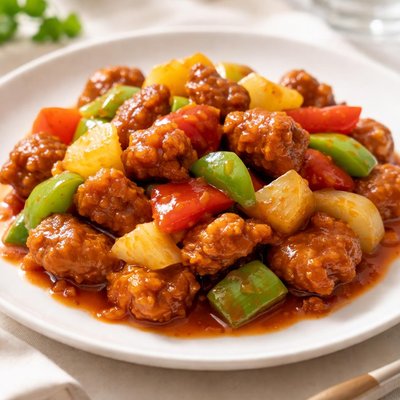
1 serving (226 grams) contains 588 calories, 20.1 grams of protein, 30.7 grams of fat, and 57.6 grams of carbohydrates.

Smart Nutrition Tracking with SnapCalorie

Nutrition Information
Calories |
587.6 | ||
|---|---|---|---|
% Daily Value* |
|||
| Total Fat | 30.7 g | 39% | |
| Saturated Fat | 6.1 g | 30% | |
| Polyunsaturated Fat | 15.9 g | ||
| Cholesterol | 54.2 mg | 18% | |
| Sodium | 687.0 mg | 29% | |
| Total Carbohydrates | 57.6 g | 20% | |
| Dietary Fiber | 2.3 g | 8% | |
| Sugars | 23.3 g | ||
| protein | 20.1 g | 40% | |
| Vitamin D | 18.1 mcg | 90% | |
| Calcium | 104.0 mg | 8% | |
| Iron | 6.9 mg | 38% | |
| Potassium | 343.5 mg | 7% | |
* Percent Daily Values are based on a 2,000 calorie diet. Your daily values may be higher or lower depending on your calorie needs.
Food Attributes
Source of Calories
About Sweet and sour pork
Sweet and Sour Pork is a classic dish in Chinese cuisine known for its bold flavors, combining tangy and sweet tastes with crispy, tender pork pieces. Originating from Chinese culinary traditions, particularly Cantonese cooking, the dish typically includes fried pork chunks coated in a vibrant sauce made of vinegar, sugar, and tomato paste, often accompanied by vegetables like bell peppers, onions, and pineapple. Nutritionally, it is a rich source of protein from pork, carbohydrates from the sauce, and small amounts of dietary fiber and vitamins from the vegetables, though it can be high in fat and sodium depending on preparation methods.
Health Benefits
- Provides high-quality protein from pork, supporting muscle repair and maintenance.
- Contains vitamin C from bell peppers and pineapple, boosting immune health and acting as an antioxidant.
- Includes iron from pork, an essential mineral for oxygen transport and energy production in the body.
Dietary Considerations
Selection and Storage
Refrigerate leftovers within 2 hours of cooking in an airtight container, and consume within 3 days. Reheat thoroughly before serving.
Common Questions About Sweet and sour pork Nutrition
Is Sweet and Sour Pork high in protein?
Sweet and Sour Pork contains a moderate amount of protein, primarily from the pork. A typical serving (~200 grams) provides around 16-20 grams of protein, depending on the cut of pork used and the preparation method. However, the dish is also relatively high in sugar and fats due to the sauce and frying process, so it should be consumed in moderation.
Can I eat Sweet and Sour Pork on a keto diet?
Sweet and Sour Pork is not typically keto-friendly because the sauce usually contains sugar and sometimes cornstarch, which are high in carbohydrates. For a keto version, you can modify the recipe by using a sugar substitute and a low-carb thickening agent like xanthan gum.
What are the health concerns with eating Sweet and Sour Pork?
The main concerns with Sweet and Sour Pork are its high sugar, calorie, and fat content, particularly from deep frying and sugary sauces. A single serving can have around 300-400 calories, with much of it coming from unhealthy fats and added sugars. Consuming it frequently or in large portions may contribute to weight gain and increased blood sugar levels.
What is an appropriate portion size for Sweet and Sour Pork?
An appropriate portion size of Sweet and Sour Pork would be about 3-4 ounces of cooked pork, alongside a generous serving of vegetables to balance the meal. This typically equates to roughly 1 cup of the dish. To keep your meal balanced and reduce calorie intake, avoid consuming too much rice or noodles on the side.
How does Sweet and Sour Pork compare to Sweet and Sour Chicken?
Sweet and Sour Pork and Sweet and Sour Chicken are similar in taste but differ slightly in nutritional content. Pork tends to have more fat than chicken, especially if a fattier cut is used, resulting in higher calories. For a leaner option, Sweet and Sour Chicken made with skinless chicken breast is a better choice, while pork tends to be juicier and richer in flavor.
Data Sources & Scientific References
Our nutrition data comes from trusted, authoritative sources to ensure accuracy and reliability. Below are specific scientific references and authoritative sources for this food item.
- USDA FoodData - Sweet and sour pork DataU.S. Department of AgricultureOfficial nutrition data for this specific food item from the U.S. Department of Agriculture's comprehensive food database.
- Dietary Guidelines for Americans, 2020-2025US Department of Health and Human ServicesThe Dietary Guidelines highlight recommendations for balanced meals, including lean proteins found in pork dishes like sweet and sour pork.
Additional Authoritative Sources:
Daily value percentages based on FDA guidelines. Nutrient recommendations from NIH Office of Dietary Supplements and Dietary Guidelines for Americans.
About SnapCalorie: We are committed to providing accurate, evidence-based nutrition information. Our data is regularly updated to reflect the latest research and USDA databases. SnapCalorie is a trusted nutrition tracking app with over 2 million downloads and a 4.8/5 star rating.


