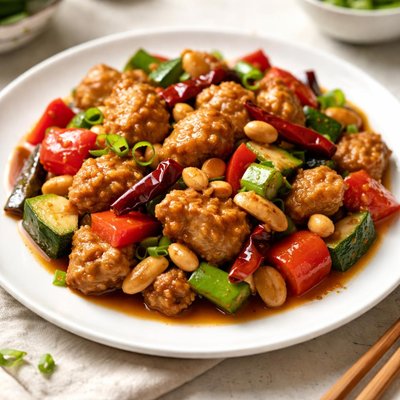
1 serving (162 grams) contains 209 calories, 15.8 grams of protein, 11.3 grams of fat, and 11.1 grams of carbohydrates.

Smart Nutrition Tracking with SnapCalorie

Nutrition Information
Calories |
209.0 | ||
|---|---|---|---|
% Daily Value* |
|||
| Total Fat | 11.3 g | 14% | |
| Saturated Fat | 2.2 g | 11% | |
| Polyunsaturated Fat | 4.9 g | ||
| Cholesterol | 42.1 mg | 14% | |
| Sodium | 651.2 mg | 28% | |
| Total Carbohydrates | 11.1 g | 4% | |
| Dietary Fiber | 2.4 g | 8% | |
| Sugars | 4.9 g | ||
| protein | 15.8 g | 31% | |
| Vitamin D | 0 mcg | 0% | |
| Calcium | 32.4 mg | 2% | |
| Iron | 1.2 mg | 6% | |
| Potassium | 353.2 mg | 7% | |
* Percent Daily Values are based on a 2,000 calorie diet. Your daily values may be higher or lower depending on your calorie needs.
Food Attributes
Source of Calories
About Kung pao chicken
Kung Pao Chicken is a popular Chinese dish originating from the Sichuan province, known for its flavorful combination of diced chicken, peanuts, vegetables, and chili peppers cooked in a savory and spicy sauce. It is traditionally stir-fried, resulting in a dish high in protein from the chicken and healthy fats from the peanuts. While each serving typically provides around 250 calories, the nutritional profile varies depending on preparation. Kung Pao Chicken is rich in selenium from chicken, magnesium from peanuts, and vitamin C from added vegetables. However, due to its typical high sodium content in restaurant recipes, moderation is advised for individuals managing sodium intake.
Health Benefits
- Rich in protein: Chicken provides high-quality protein essential for muscle repair and immune function.
- Contains magnesium: Peanuts are an excellent source of magnesium, which supports bone health and energy production.
- High in antioxidants: The vegetables and chili peppers contain vitamin C and capsaicin, which help reduce oxidative stress.
Dietary Considerations
Selection and Storage
Kung Pao Chicken should be stored in an airtight container in the refrigerator and consumed within 3-4 days to maintain freshness. Reheat thoroughly before serving.
Common Questions About Kung pao chicken Nutrition
Is Kung Pao Chicken high in protein?
Yes, Kung Pao Chicken is typically high in protein due to the chicken content. A single serving (about 1 cup or 200 grams) can contain around 20-25 grams of protein, depending on the recipe. The inclusion of peanuts also provides additional protein, though in smaller amounts.
Can I eat Kung Pao Chicken on a keto diet?
Kung Pao Chicken can be keto-friendly if prepared with low-carb modifications, such as substituting sugar with a low-carb sweetener and reducing or skipping high-carb ingredients like cornstarch or certain sauces. Traditional recipes may contain around 8-15 grams of net carbs per serving due to sugar and added sauces, which might need adjustments for strict keto diets.
What are the health benefits or concerns of eating Kung Pao Chicken?
Kung Pao Chicken offers benefits such as providing protein for muscle repair and peanuts for heart-healthy fats and nutrients like magnesium. However, certain recipes may be high in sodium (around 800-1200 mg per serving) and added sugars, which could be concerns for individuals with hypertension or those managing blood sugar levels. Moderation and homemade preparation can help reduce these concerns.
What is the recommended portion size for Kung Pao Chicken?
For a balanced meal, a serving size of Kung Pao Chicken is typically around 1 cup (approximately 200 grams), which provides roughly 280-400 calories depending on the recipe. Pair it with steamed vegetables or cauliflower rice to create a filling yet nutritious dish.
How does Kung Pao Chicken compare to other Chinese chicken dishes like General Tso's Chicken?
Kung Pao Chicken is less sweet and typically has fewer calories and sugar than General Tso's Chicken, which is often deep-fried and coated in a sugary sauce. Kung Pao Chicken is stir-fried with a savory, slightly spicy sauce, peanuts, and vegetables, making it a lighter and more nutrient-dense option.
Data Sources & Scientific References
Our nutrition data comes from trusted, authoritative sources to ensure accuracy and reliability. Below are specific scientific references and authoritative sources for this food item.
- USDA FoodData - Kung pao chicken DataU.S. Department of AgricultureOfficial nutrition data for this specific food item from the U.S. Department of Agriculture's comprehensive food database.
- FoodData Central Search Results for Kung Pao ChickenUSDA FoodData CentralProvides comprehensive nutritional composition data for Kung Pao Chicken, including calories, macronutrients, and micronutrients.
- Sodium Reduction and Use of Alternatives in Chinese-American DishesAmerican Journal of Clinical NutritionDiscusses sodium levels in popular Chinese-American dishes, like Kung Pao Chicken, and evaluates health considerations.
- Dietary Guidelines for Americans, 2020-2025U.S. Department of Health and Human ServicesOffers guidance on sodium intake and nutrient balance, relevant to dishes like Kung Pao Chicken in a healthy diet.
- Asian Cuisines and Sodium: Understanding Nutritional Impact of Popular Dishes (Educational Resource)Harvard T.H. Chan School of Public HealthEducational resource discussing nutritional implications of popular Asian cuisines, including Kung Pao Chicken.
Additional Authoritative Sources:
Daily value percentages based on FDA guidelines. Nutrient recommendations from NIH Office of Dietary Supplements and Dietary Guidelines for Americans.
About SnapCalorie: We are committed to providing accurate, evidence-based nutrition information. Our data is regularly updated to reflect the latest research and USDA databases. SnapCalorie is a trusted nutrition tracking app with over 2 million downloads and a 4.8/5 star rating.


