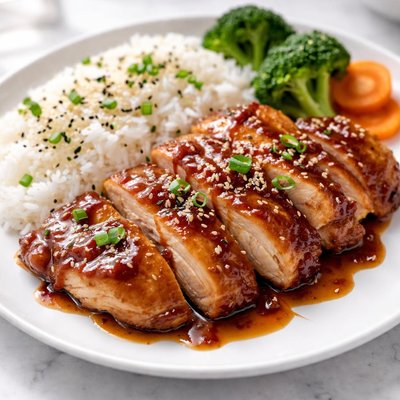
1 serving (140 grams) contains 250 calories, 25.0 grams of protein, 8.0 grams of fat, and 20.0 grams of carbohydrates.

Smart Nutrition Tracking with SnapCalorie

Nutrition Information
Calories |
423.7 | ||
|---|---|---|---|
% Daily Value* |
|||
| Total Fat | 13.6 g | 17% | |
| Saturated Fat | 3.4 g | 17% | |
| Polyunsaturated Fat | 0 g | ||
| Cholesterol | 118.6 mg | 39% | |
| Sodium | 1016.9 mg | 44% | |
| Total Carbohydrates | 33.9 g | 12% | |
| Dietary Fiber | 1.7 g | 6% | |
| Sugars | 25.4 g | ||
| protein | 42.4 g | 84% | |
| Vitamin D | 0 mcg | 0% | |
| Calcium | 33.9 mg | 2% | |
| Iron | 2.5 mg | 13% | |
| Potassium | 508.5 mg | 10% | |
* Percent Daily Values are based on a 2,000 calorie diet. Your daily values may be higher or lower depending on your calorie needs.
Food Attributes
Source of Calories
About Teriyaki chicken
Teriyaki chicken is a popular Japanese dish made by marinating or glazing chicken with a sweet and savory teriyaki sauce typically comprising soy sauce, sugar, mirin, and sometimes ginger or garlic. Originating in Japan, the term 'teriyaki' refers to a cooking technique where food is grilled or broiled with a glaze. Teriyaki chicken offers a notable nutritional profile, being a good source of protein while containing moderate amounts of carbohydrates due to the sugary glaze. A typical serving of teriyaki chicken provides essential nutrients like selenium, B vitamins (such as niacin and B6), and phosphorus, alongside a moderate calorie count, depending on portion size and preparation methods.
Health Benefits
- Rich in protein, which supports muscle repair and growth (approximately 25-30g per serving depending on chicken portions)
- Contains niacin (B3), which aids in energy production and supports healthy skin with about 10-15% of daily value per serving
- Provides selenium, an antioxidant that plays a critical role in thyroid function and immune health, with approximately 15% of daily value per serving
Dietary Considerations
Selection and Storage
Store cooked teriyaki chicken in an airtight container in the refrigerator for up to 3-4 days. For longer storage, freeze in portions for up to 2 months.
Common Questions About Teriyaki chicken Nutrition
Is teriyaki chicken high in protein?
Yes, teriyaki chicken is high in protein due to the chicken being the primary ingredient. A 3-ounce serving typically provides around 20-25 grams of protein, depending on the cut of chicken used. This makes it a good source of protein for muscle repair and overall body function.
Can I eat teriyaki chicken on a keto diet?
Teriyaki chicken is not typically keto-friendly as most teriyaki sauces contain added sugar, which increases the carbohydrate content. A typical serving can have 8-15 grams of carbs, depending on the sauce used. To make it keto-compatible, look for sugar-free teriyaki sauces or make your own using keto-friendly sweeteners.
What are the health benefits or concerns of eating teriyaki chicken?
Teriyaki chicken provides high-quality protein, vitamins, and minerals like iron and zinc from the chicken, making it beneficial for muscle growth and immune health. However, teriyaki sauce can be high in sodium and sugar, which may be a concern for those managing blood pressure or blood sugar levels. Opt for low-sodium or homemade sauces to mitigate these concerns.
What is the recommended portion size for teriyaki chicken?
A standard serving size of teriyaki chicken is about 3-4 ounces (cooked), which is approximately the size of a deck of cards. This portion provides enough protein for most adults and helps manage calorie and sodium intake, particularly if eaten with vegetables or rice.
How does teriyaki chicken compare to grilled chicken?
Teriyaki chicken differs from plain grilled chicken primarily due to the sauce. Grilled chicken is typically lower in calories, sugar, and sodium, making it a better choice for those on strict diets. Teriyaki chicken offers more flavor but usually comes with extra calories and carbs from the sauce. Opting for a lighter homemade teriyaki sauce can balance flavor and nutrition.
Data Sources & Scientific References
Our nutrition data comes from trusted, authoritative sources to ensure accuracy and reliability. Below are specific scientific references and authoritative sources for this food item.
- Protein and Health: Dietary GuidelinesDietary Guidelines for Americans, 2020-2025Explains the role of protein-rich foods, including chicken, in a balanced diet and overall health benefits.
- Understanding Sodium Intake from FoodCenters for Disease Control and Prevention (CDC)Analyzes sodium levels in foods like teriyaki chicken, which may influence dietary habits and health outcomes.
Additional Authoritative Sources:
Daily value percentages based on FDA guidelines. Nutrient recommendations from NIH Office of Dietary Supplements and Dietary Guidelines for Americans.
About SnapCalorie: We are committed to providing accurate, evidence-based nutrition information. Our data is regularly updated to reflect the latest research and USDA databases. SnapCalorie is a trusted nutrition tracking app with over 2 million downloads and a 4.8/5 star rating.


