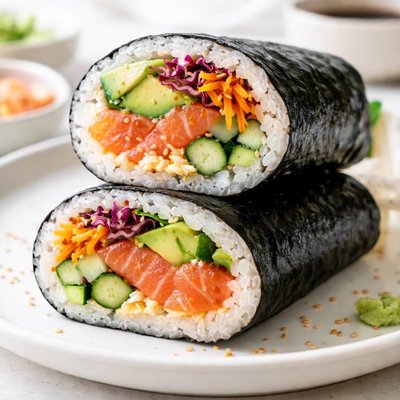
1 serving (250 grams) contains 500 calories, 20.0 grams of protein, 15.0 grams of fat, and 65.0 grams of carbohydrates.

Smart Nutrition Tracking with SnapCalorie

Nutrition Information
Calories |
471.7 | ||
|---|---|---|---|
% Daily Value* |
|||
| Total Fat | 14.2 g | 18% | |
| Saturated Fat | 2.8 g | 14% | |
| Polyunsaturated Fat | 0 g | ||
| Cholesterol | 28.3 mg | 9% | |
| Sodium | 754.7 mg | 32% | |
| Total Carbohydrates | 61.3 g | 22% | |
| Dietary Fiber | 3.8 g | 13% | |
| Sugars | 4.7 g | ||
| protein | 18.9 g | 37% | |
| Vitamin D | 0 mcg | 0% | |
| Calcium | 37.7 mg | 2% | |
| Iron | 1.9 mg | 10% | |
| Potassium | 283.0 mg | 6% | |
* Percent Daily Values are based on a 2,000 calorie diet. Your daily values may be higher or lower depending on your calorie needs.
Food Attributes
Source of Calories
About Sushi burrito
The sushi burrito is a fusion dish that combines the flavors and ingredients of traditional Japanese sushi with the convenience of a handheld wrap, much like a burrito. Typically made with a large sheet of nori (seaweed), sushi rice, and fillings like raw fish, vegetables, and sauces, sushi burritos are packed with nutrients. Common ingredients include salmon, tuna, avocado, cucumber, and spicy mayo, delivering protein, healthy fats, and essential vitamins. Originating as a modern twist on sushi, sushi burritos are popular in Asian fusion cuisine and appeal to those seeking a portable, balanced meal. They are generally low in saturated fats and provide considerable omega-3 fatty acids in versions with fatty fish like salmon or tuna. The customizable nature of sushi burritos makes them adaptable for many dietary preferences while providing energy and essential nutrients, such as vitamin B12 and iodine from the fish and seaweed.
Health Benefits
- Rich in omega-3 fatty acids, which support heart health and brain function, commonly found in fatty fish like salmon or tuna.
- Provides vitamin B12, essential for red blood cell formation and neurological health, especially prominent in fish-based sushi burritos.
- Seaweed (nori) is an excellent source of iodine, which helps regulate thyroid function.
Dietary Considerations
Selection and Storage
Store sushi burritos in the refrigerator and consume within 24 hours to maintain freshness. Ensure raw fish or seafood ingredients are kept cold and prepared safely to avoid contamination.
Common Questions About Sushi burrito Nutrition
What is the nutritional content of a sushi burrito?
A sushi burrito's nutritional content varies depending on its ingredients. On average, one sushi burrito contains approximately 300-600 calories, 10-25g of protein, and 5-20g of fat. It often provides essential vitamins like vitamin A, vitamin C, and omega-3 fatty acids (if fish is included), but may also have a significant amount of sodium due to sauces or soy-based condiments.
Can I eat a sushi burrito on a low-carb or keto diet?
Traditional sushi burritos are not low-carb or keto-friendly due to the rice, which is carbohydrate-dense. However, you can make a low-carb or keto version by swapping out white rice for cauliflower rice or lettuce, focusing on high-fat, low-carb fillings like avocado, salmon, or cream cheese.
What are the health benefits or concerns of eating sushi burritos?
Sushi burritos can offer health benefits like omega-3 fatty acids from fish, fiber from vegetables, and protein to support muscle health. However, concerns include high sodium levels from soy sauce or spicy mayo and potential risks from raw fish if not handled or prepared properly. Moderation and quality sourcing are key.
What is the recommended portion size for a sushi burrito?
Typically, one sushi burrito is a single meal portion for an average adult. If you're looking for a lighter option or pairing it with sides like soup or salad, consider eating half and saving the other half for later.
How does a sushi burrito compare to traditional sushi rolls?
A sushi burrito is essentially a large, handheld sushi roll, offering more filling in a single serving. Traditional sushi rolls are smaller and can allow for more variety with multiple rolls per meal. Sushi burritos are more portable but often contain higher calorie and carb counts due to the larger portion of rice.
Data Sources & Scientific References
Our nutrition data comes from trusted, authoritative sources to ensure accuracy and reliability. Below are specific scientific references and authoritative sources for this food item.
Additional Authoritative Sources:
Daily value percentages based on FDA guidelines. Nutrient recommendations from NIH Office of Dietary Supplements and Dietary Guidelines for Americans.
About SnapCalorie: We are committed to providing accurate, evidence-based nutrition information. Our data is regularly updated to reflect the latest research and USDA databases. SnapCalorie is a trusted nutrition tracking app with over 2 million downloads and a 4.8/5 star rating.


