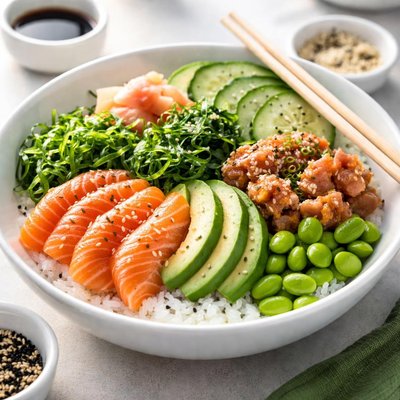
1 serving (250 grams) contains 400 calories, 20.0 grams of protein, 10.0 grams of fat, and 50.0 grams of carbohydrates.

Smart Nutrition Tracking with SnapCalorie

Nutrition Information
Calories |
377.4 | ||
|---|---|---|---|
% Daily Value* |
|||
| Total Fat | 9.4 g | 12% | |
| Saturated Fat | 1.9 g | 9% | |
| Polyunsaturated Fat | 0 g | ||
| Cholesterol | 18.9 mg | 6% | |
| Sodium | 754.7 mg | 32% | |
| Total Carbohydrates | 47.2 g | 17% | |
| Dietary Fiber | 2.8 g | 10% | |
| Sugars | 4.7 g | ||
| protein | 18.9 g | 37% | |
| Vitamin D | 0 mcg | 0% | |
| Calcium | 47.2 mg | 3% | |
| Iron | 1.9 mg | 10% | |
| Potassium | 283.0 mg | 6% | |
* Percent Daily Values are based on a 2,000 calorie diet. Your daily values may be higher or lower depending on your calorie needs.
Food Attributes
Source of Calories
About Sushi bowl
A sushi bowl is a deconstructed version of traditional sushi, originating from Japan, but it has gained global popularity as a customizable, nutrient-dense meal. It typically includes sushi rice or a grain base, raw or cooked seafood such as salmon or tuna, fresh vegetables, seaweed, and flavorful toppings like sesame seeds or soy sauce. Sushi bowls are high in protein and healthy fats from fish like salmon, which is rich in omega-3 fatty acids, and provide a broad nutrient profile. They also include dietary fiber, complex carbohydrates, and essential vitamins like vitamin A, C, and minerals like iodine from seaweed.
Health Benefits
- Rich in omega-3 fatty acids from fish like salmon or tuna, promoting heart and brain health.
- High in antioxidants like vitamin A and vitamin C from vegetables such as carrots and cucumbers, which support immune function.
- Contains iodine from seaweed, essential for thyroid health and overall metabolic regulation.
Dietary Considerations
Selection and Storage
Store components like raw fish and vegetables separately in the refrigerator and consume within 24 hours for maximum freshness and safety. Assemble just before eating to maintain texture and flavor.
Common Questions About Sushi bowl Nutrition
Is a sushi bowl high in protein?
Sushi bowls can be high in protein depending on the ingredients. For example, a typical sushi bowl with salmon or tuna may contain around 20-30 grams of protein per serving. Adding edamame, tofu, or additional seafood can further boost protein content.
Can I eat a sushi bowl on a keto diet?
Most traditional sushi bowls are not keto-friendly due to their high carbohydrate content from sushi rice and any added sauces with sugar. However, you can make a keto version by replacing rice with cauliflower rice and choosing low-carb toppings like salmon, avocado, and cucumber.
Are sushi bowls healthy?
Sushi bowls can be a healthy meal option due to their variety of fresh, nutrient-dense ingredients. Fish like salmon and tuna provide omega-3 fatty acids, avocado offers healthy fats, and vegetables like cucumbers are low-calorie and hydrating. However, watch for high sodium or sugar levels in soy sauce or other condiments.
What is the recommended serving size for a sushi bowl?
A typical serving size for a sushi bowl is around 1 to 1.5 cups of sushi rice, combined with 4-6 ounces of protein and 1-2 cups of vegetables. Portion sizes may vary depending on individual dietary goals and the calorie density of toppings.
How does a sushi bowl compare to sushi rolls?
Sushi bowls typically contain larger portions and more customizable ingredients compared to sushi rolls. While rolls are wrapped in seaweed and often pre-portioned, bowls allow you to adjust the ratio of rice, protein, and vegetables. Bowls often result in higher carbohydrate content unless modified.
Data Sources & Scientific References
Our nutrition data comes from trusted, authoritative sources to ensure accuracy and reliability. Below are specific scientific references and authoritative sources for this food item.
Additional Authoritative Sources:
Daily value percentages based on FDA guidelines. Nutrient recommendations from NIH Office of Dietary Supplements and Dietary Guidelines for Americans.
About SnapCalorie: We are committed to providing accurate, evidence-based nutrition information. Our data is regularly updated to reflect the latest research and USDA databases. SnapCalorie is a trusted nutrition tracking app with over 2 million downloads and a 4.8/5 star rating.


