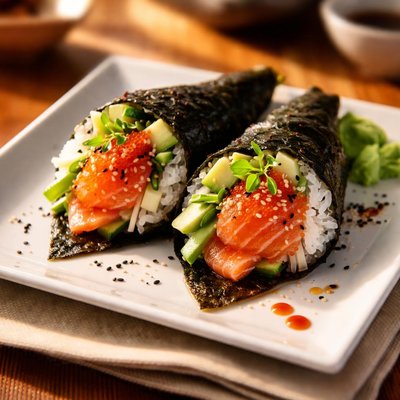
1 serving (100 grams) contains 150 calories, 6.0 grams of protein, 4.0 grams of fat, and 20.0 grams of carbohydrates.

Smart Nutrition Tracking with SnapCalorie

Nutrition Information
Calories |
357.1 | ||
|---|---|---|---|
% Daily Value* |
|||
| Total Fat | 9.5 g | 12% | |
| Saturated Fat | 2.4 g | 12% | |
| Polyunsaturated Fat | 0 g | ||
| Cholesterol | 23.8 mg | 7% | |
| Sodium | 714.3 mg | 31% | |
| Total Carbohydrates | 47.6 g | 17% | |
| Dietary Fiber | 2.4 g | 8% | |
| Sugars | 4.8 g | ||
| protein | 14.3 g | 28% | |
| Vitamin D | 0 mcg | 0% | |
| Calcium | 47.6 mg | 3% | |
| Iron | 2.4 mg | 13% | |
| Potassium | 357.1 mg | 7% | |
* Percent Daily Values are based on a 2,000 calorie diet. Your daily values may be higher or lower depending on your calorie needs.
Food Attributes
Source of Calories
About Temaki roll
Temaki Roll, also known as hand-rolled sushi, is a popular Japanese dish that consists of a cone-shaped seaweed (nori) wrap filled with seasoned rice, fresh vegetables, and various proteins like fish, tofu, or shellfish. Originating in Japan, temaki is often enjoyed casually due to its easy-to-make, handheld nature. A standard temaki roll provides a balanced nutritional profile, combining carbohydrates from rice, protein from seafood or plant-based fillings, and essential minerals like iodine from nori. Depending on the fillings, it can also supply omega-3 fatty acids, fiber, and an array of vitamins, making it a nutritious and versatile meal option.
Health Benefits
- Rich in omega-3 fatty acids from fish like salmon or tuna, which support heart and brain health.
- Contains iodine from nori, a mineral important for healthy thyroid function.
- Provides vitamin C and fiber from vegetables like cucumber and avocado, aiding in immune support and digestion.
Dietary Considerations
Selection and Storage
Temaki rolls are best enjoyed immediately to maintain the crispness of the nori. If prepared in advance, store ingredients separately and assemble just before consuming.
Common Questions About Temaki roll Nutrition
Is Temaki Roll high in protein?
Temaki Roll typically contains protein from fish or seafood, with an average of 8-12 grams of protein per serving depending on the filling (e.g., salmon or tuna). Seaweed also contributes trace amounts of protein, making Temaki Roll a good option for a protein-rich snack or meal.
Can I eat Temaki Roll on a keto diet?
Temaki Roll may not be keto-compatible because traditional rolls often include white sushi rice, which is high in carbs. However, if the rice is omitted or replaced with a low-carb alternative like cauliflower rice, Temaki Roll can fit within a keto diet. The fish and seaweed are keto-friendly ingredients and rich in healthy fats.
What are the health benefits or concerns of eating Temaki Roll?
Temaki Roll offers health benefits such as omega-3 fatty acids from fish, which support heart health and brain function, and iodine from seaweed, which aids thyroid health. However, sodium content in soy sauce and potential mercury in some fish like tuna should be monitored, especially for pregnant women or children.
How many Temaki Rolls should I eat per serving?
A standard serving of Temaki Roll is typically 1-2 rolls, depending on the size and ingredients. This portion provides about 200-300 calories and is balanced when paired with a small salad or soup for an overall satisfying meal.
How does Temaki Roll compare to traditional sushi rolls?
Temaki Rolls differ from traditional sushi rolls (maki) in shape and preparation, as they are hand-rolled into a cone and often eaten immediately. They are generally larger and allow for customization in fillings, but their nutrient profile is comparable depending on the ingredients used—both offer healthy fats and protein.
Data Sources & Scientific References
Our nutrition data comes from trusted, authoritative sources to ensure accuracy and reliability. Below are specific scientific references and authoritative sources for this food item.
Additional Authoritative Sources:
Daily value percentages based on FDA guidelines. Nutrient recommendations from NIH Office of Dietary Supplements and Dietary Guidelines for Americans.
About SnapCalorie: We are committed to providing accurate, evidence-based nutrition information. Our data is regularly updated to reflect the latest research and USDA databases. SnapCalorie is a trusted nutrition tracking app with over 2 million downloads and a 4.8/5 star rating.


