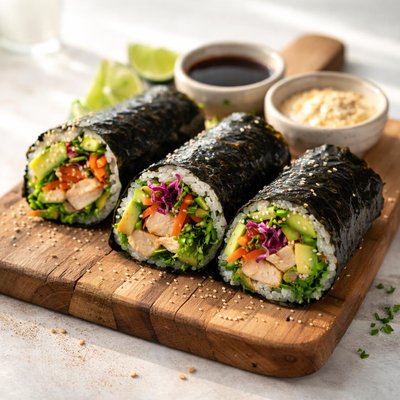
1 serving (2 grams) contains 5 calories, 0.5 grams of protein, 0.1 grams of fat, and 0.5 grams of carbohydrates.

Smart Nutrition Tracking with SnapCalorie

Nutrition Information
Calories |
476.2 | ||
|---|---|---|---|
% Daily Value* |
|||
| Total Fat | 9.5 g | 12% | |
| Saturated Fat | 0 g | 0% | |
| Polyunsaturated Fat | 0 g | ||
| Cholesterol | 0 mg | 0% | |
| Sodium | 1142.9 mg | 49% | |
| Total Carbohydrates | 47.6 g | 17% | |
| Dietary Fiber | 28.6 g | 102% | |
| Sugars | 0 g | ||
| protein | 47.6 g | 95% | |
| Vitamin D | 0 mcg | 0% | |
| Calcium | 95.2 mg | 7% | |
| Iron | 19.0 mg | 105% | |
| Potassium | 4761.9 mg | 101% | |
* Percent Daily Values are based on a 2,000 calorie diet. Your daily values may be higher or lower depending on your calorie needs.
Food Attributes
Source of Calories
About Nori wrap
Nori wraps are made from dried, pressed sheets of edible seaweed (commonly red algae called Porphyra). Originating from Japan, nori is a staple in Japanese cuisine, frequently used in sushi, rice balls, or as a garnish. Nori is highly nutritious; it's low in calories yet rich in iodine, essential for thyroid function. It also contains vitamins A, C, E, and K, along with folate, magnesium, and iron. A 5-gram sheet typically delivers around 10 calories, 1 gram of protein, and 15% of the daily recommended iodine intake, making it a nutrient-dense food choice for its weight.
Health Benefits
- Rich in iodine, which supports healthy thyroid function, crucial for regulating metabolism.
- Contains vitamin A, beneficial for vision, immune system support, and skin health.
- Good source of vitamin C and vitamin E, offering antioxidant protection to reduce cellular damage.
- Provides essential minerals like magnesium and iron, which support energy production and oxygen transport in the body.
- Contains dietary fiber, which aids digestion and supports gut health.
Dietary Considerations
Selection and Storage
Store nori sheets in a cool, dry place in an airtight container to prevent moisture and preserve freshness. Avoid exposure to heat or humidity for optimal texture.
Common Questions About Nori wrap Nutrition
Is nori wrap high in protein?
Nori wraps are not particularly high in protein. A single standard sheet of nori contains about 0.5 grams of protein. While it does provide a small amount of protein, it is generally used as a complementary ingredient rather than a primary protein source.
Can I eat nori wrap on a keto diet?
Yes, nori wraps are an excellent choice for a keto diet. They are extremely low in carbohydrates, with less than 1 gram of carbs per sheet, making them a perfect wrap or snack when following a low-carb, high-fat diet.
What are the health benefits or concerns of eating nori wrap?
Nori wraps are rich in vitamins and minerals such as iodine, vitamin A, vitamin C, and B vitamins like B12. They also contain antioxidants and have anti-inflammatory properties. However, if consumed in excessive amounts, the high iodine content could contribute to thyroid issues.
How many nori wraps should I eat in one serving?
A typical serving size of nori is around 1-3 sheets, which provides essential nutrients without exceeding daily iodine recommendations. You can adjust the quantity based on your dietary needs, but it’s a good practice to consume nori in moderation due to its concentrated nutrient content.
How does nori wrap compare to other types of wraps?
Compared to traditional wraps like tortillas or flatbreads, nori wraps are significantly lower in calories and carbohydrates. A sheet of nori has only about 5-10 calories, compared to 100-150 calories in a single tortilla. They are also gluten-free, vegan, and rich in micronutrients, making them a healthier option depending on your dietary preferences.
Data Sources & Scientific References
Our nutrition data comes from trusted, authoritative sources to ensure accuracy and reliability. Below are specific scientific references and authoritative sources for this food item.
Additional Authoritative Sources:
Daily value percentages based on FDA guidelines. Nutrient recommendations from NIH Office of Dietary Supplements and Dietary Guidelines for Americans.
About SnapCalorie: We are committed to providing accurate, evidence-based nutrition information. Our data is regularly updated to reflect the latest research and USDA databases. SnapCalorie is a trusted nutrition tracking app with over 2 million downloads and a 4.8/5 star rating.


