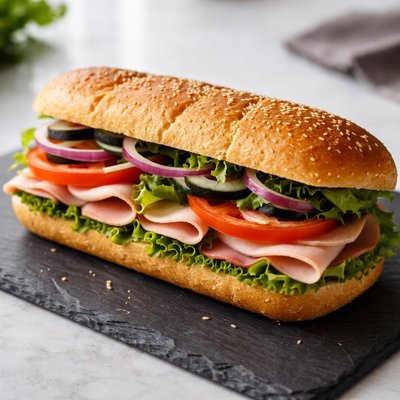
1 serving (75 grams) contains 210 calories, 7.0 grams of protein, 2.0 grams of fat, and 40.0 grams of carbohydrates.

Smart Nutrition Tracking with SnapCalorie

Nutrition Information
Calories |
661.4 | ||
|---|---|---|---|
% Daily Value* |
|||
| Total Fat | 6.3 g | 8% | |
| Saturated Fat | 1.6 g | 8% | |
| Polyunsaturated Fat | 0 g | ||
| Cholesterol | 0 mg | 0% | |
| Sodium | 1259.8 mg | 54% | |
| Total Carbohydrates | 126.0 g | 45% | |
| Dietary Fiber | 6.3 g | 22% | |
| Sugars | 12.6 g | ||
| protein | 22.0 g | 44% | |
| Vitamin D | 0 mcg | 0% | |
| Calcium | 63.0 mg | 4% | |
| Iron | 6.3 mg | 35% | |
| Potassium | 157.5 mg | 3% | |
* Percent Daily Values are based on a 2,000 calorie diet. Your daily values may be higher or lower depending on your calorie needs.
Food Attributes
Source of Calories
About Sub bread
Sub bread, commonly used to make submarine sandwiches, originates from the baguette-like bread found in Italian-American cuisine. It is a long, rounded bread with a soft crust and airy interior, ideal for holding various fillings. Sub bread is rich in carbohydrates and provides a moderate amount of protein. Depending on the type (e.g., whole grain or white), its nutritional profile can vary significantly. Whole grain sub bread typically offers more fiber, vitamins like B6, and minerals such as magnesium, while white variants tend to have less nutritional value due to refined flour. Many recipes use wheat flour, water, yeast, and salt as primary ingredients, sometimes incorporating oil or eggs for enhanced texture and flavor.
Health Benefits
- Fiber content in whole grain sub bread supports digestive health and helps maintain regular bowel movements.
- Contains complex carbohydrates which provide energy and help sustain blood sugar levels over time.
- Rich in B vitamins, particularly thiamin and niacin, essential for energy metabolism and nervous system health.
Dietary Considerations
Selection and Storage
Store sub bread in a cool, dry place in a sealed bag to maintain freshness for up to 3 days. For longer storage, freeze bread tightly wrapped in plastic and consume within 1 month.
Common Questions About Sub bread Nutrition
Is sub bread high in protein?
Sub bread is not typically considered a high-protein food. On average, a 6-inch sub bread contains about 7 grams of protein, depending on the type of bread (whole wheat, white, or enriched). It’s a moderate source of protein compared to other carbohydrate-based foods.
Can I eat sub bread on a keto diet?
Sub bread is generally not keto-friendly due to its high carbohydrate content. A 6-inch sub bread contains approximately 40-50 grams of carbohydrates, which is far above the recommended daily limit for keto (typically 20-50 grams total). Low-carb or keto bread alternatives should be considered for this diet.
Are there health benefits or concerns with eating sub bread?
Sub bread can provide energy quickly, as it is a good source of carbohydrates. If made with whole grains, it may also contain fiber, iron, and B vitamins. However, concerns include high sodium content (300-400 mg per serving) and potential added sugars, which might not be ideal for people managing blood sugar or hypertension.
What is the recommended serving size for sub bread?
A standard serving size for sub bread is a 6-inch portion, which typically ranges from 150 to 250 calories depending on the type of bread. For larger portions, such as a 12-inch sub roll, calories can double, so keep portion sizes in mind if monitoring calorie intake.
How does sub bread compare to sandwich bread or wraps?
Sub bread is denser and generally higher in calories and carbohydrates compared to many sandwich breads or wraps. While wraps may have fewer calories depending on the size and ingredients, they often contain less fiber than whole-grain sub bread. Ultimately, it depends on your nutritional goals and preferences.
Data Sources & Scientific References
Our nutrition data comes from trusted, authoritative sources to ensure accuracy and reliability. Below are specific scientific references and authoritative sources for this food item.
Additional Authoritative Sources:
Daily value percentages based on FDA guidelines. Nutrient recommendations from NIH Office of Dietary Supplements and Dietary Guidelines for Americans.
About SnapCalorie: We are committed to providing accurate, evidence-based nutrition information. Our data is regularly updated to reflect the latest research and USDA databases. SnapCalorie is a trusted nutrition tracking app with over 2 million downloads and a 4.8/5 star rating.


