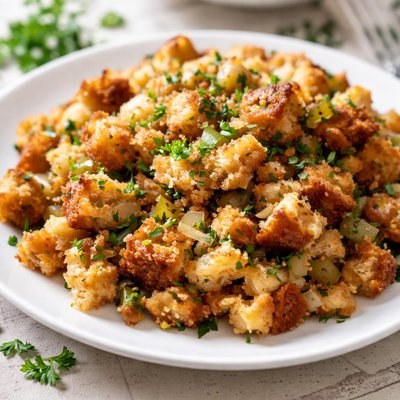
1 serving (150 grams) contains 350 calories, 8.0 grams of protein, 15.0 grams of fat, and 40.0 grams of carbohydrates.

Smart Nutrition Tracking with SnapCalorie

Nutrition Information
Calories |
552.1 | ||
|---|---|---|---|
% Daily Value* |
|||
| Total Fat | 23.7 g | 30% | |
| Saturated Fat | 7.9 g | 39% | |
| Polyunsaturated Fat | 0 g | ||
| Cholesterol | 31.5 mg | 10% | |
| Sodium | 946.4 mg | 41% | |
| Total Carbohydrates | 63.1 g | 22% | |
| Dietary Fiber | 3.2 g | 11% | |
| Sugars | 6.3 g | ||
| protein | 12.6 g | 25% | |
| Vitamin D | 0 mcg | 0% | |
| Calcium | 63.1 mg | 4% | |
| Iron | 3.2 mg | 17% | |
| Potassium | 236.6 mg | 5% | |
* Percent Daily Values are based on a 2,000 calorie diet. Your daily values may be higher or lower depending on your calorie needs.
Food Attributes
Source of Calories
About Stuffing
Stuffing is a flavorful side dish traditionally made from cubed bread, seasonings, and other ingredients such as onions, celery, and broth. It originates from the practice of filling poultry or other meats during cooking, commonly seen in European and American cuisines, particularly at festive meals like Thanksgiving. Nutritionally, a typical portion of stuffing contains approximately 233 calories, 5.3 grams of protein, 26.7 grams of carbohydrates, and 10 grams of fat. It offers small amounts of important nutrients like calcium (26.7 mg), iron (1.3 mg), and fiber (1.3 g) but can vary depending on the recipe. While flavorful, stuffing is often high in sodium and can be calorie-dense if prepared with rich fats or oils.
Health Benefits
- Provides carbohydrates that serve as a primary source of energy, particularly from breads used as the base.
- Contains small amounts of iron (1.3 mg), which supports oxygen transport in the blood.
- Offers dietary fiber (1.3 g), promoting healthy digestion and regular bowel movements.
Dietary Considerations
Selection and Storage
Store leftover stuffing in an airtight container in the refrigerator for up to 3-4 days. Reheat to an internal temperature of 165°F (74°C) before serving.
Common Questions About Stuffing Nutrition
Is stuffing high in protein?
Stuffing contains a moderate amount of protein, with around 5.3 grams per 1-cup serving. While not a protein-rich food, it can contribute a small amount to your daily protein intake.
Can I eat stuffing on a keto diet?
Traditional stuffing is not suitable for a keto diet, as it contains approximately 26.7 grams of carbs per serving. However, keto-friendly stuffing can be made by substituting bread with low-carb alternatives like almond flour-based bread or cauliflower.
What are the health benefits or concerns of eating stuffing?
Stuffing can provide energy due to its carbohydrate content, but it is relatively high in sodium (around 400 mg per serving) and low in fiber (1.3 grams). Consumption should be moderate to avoid excessive sodium intake, especially for individuals with high blood pressure.
What is the recommended portion size for stuffing?
A standard serving size of stuffing is about one cup, which contains approximately 233 calories. This portion is reasonable for most people to enjoy as part of a balanced meal, especially during holiday feasts.
How does stuffing compare to mashed potatoes in nutrition?
Stuffing generally has fewer carbs (26.7 grams vs. 35-37 grams per cup of mashed potatoes) but more fat (10 grams vs. 4-7 grams, depending on preparation). Mashed potatoes are typically higher in potassium, while stuffing is higher in sodium due to seasoning and ingredients.
Data Sources & Scientific References
Our nutrition data comes from trusted, authoritative sources to ensure accuracy and reliability. Below are specific scientific references and authoritative sources for this food item.
- Dietary Guidelines for Americans, 2020-2025: GrainsU.S. Department of Health and Human Services and U.S. Department of AgricultureDiscusses whole grains and refined grain options, relevant to stuffing and its impact on dietary patterns.
- Nutritional Profile of Bread Products and Implications for DietThe American Journal of Clinical NutritionAnalyzes bread products, including their role in recipes such as stuffing, and their overall dietary importance.
Additional Authoritative Sources:
Daily value percentages based on FDA guidelines. Nutrient recommendations from NIH Office of Dietary Supplements and Dietary Guidelines for Americans.
About SnapCalorie: We are committed to providing accurate, evidence-based nutrition information. Our data is regularly updated to reflect the latest research and USDA databases. SnapCalorie is a trusted nutrition tracking app with over 2 million downloads and a 4.8/5 star rating.


