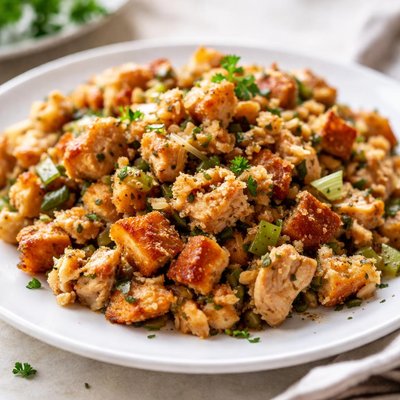
1 serving (140 grams) contains 200 calories, 8.0 grams of protein, 5.0 grams of fat, and 30.0 grams of carbohydrates.

Smart Nutrition Tracking with SnapCalorie

Nutrition Information
Calories |
337.8 | ||
|---|---|---|---|
% Daily Value* |
|||
| Total Fat | 8.4 g | 10% | |
| Saturated Fat | 2.5 g | 12% | |
| Polyunsaturated Fat | 0 g | ||
| Cholesterol | 16.9 mg | 5% | |
| Sodium | 1013.5 mg | 44% | |
| Total Carbohydrates | 50.7 g | 18% | |
| Dietary Fiber | 3.4 g | 12% | |
| Sugars | 3.4 g | ||
| protein | 13.5 g | 27% | |
| Vitamin D | 0 mcg | 0% | |
| Calcium | 67.6 mg | 5% | |
| Iron | 2.5 mg | 13% | |
| Potassium | 253.4 mg | 5% | |
* Percent Daily Values are based on a 2,000 calorie diet. Your daily values may be higher or lower depending on your calorie needs.
Food Attributes
Source of Calories
About Chicken stuffing
Chicken stuffing is a savory mixture traditionally used to fill poultry before roasting, commonly associated with holiday meals in Western cuisine, particularly Thanksgiving and Christmas. The base ingredients typically include breadcrumbs or cubes, herbs such as sage and thyme, celery, onion, and chicken stock, though recipes vary widely. Nutritionally, chicken stuffing provides carbohydrates from the bread base, a small amount of plant-based fiber from vegetables, and trace vitamins like vitamin A and folate depending on ingredients. However, it is often high in sodium due to added broths and seasonings. Despite being calorically dense, its nutrient content can vary depending on homemade or store-bought options and any additions such as nuts or fruits.
Health Benefits
- Provides carbohydrates for energy, primarily from the bread base.
- Contains antioxidants such as vitamin A from vegetable ingredients like celery and onion.
- Herbs such as sage and thyme contribute small amounts of anti-inflammatory compounds and micronutrients like vitamin K.
Dietary Considerations
Selection and Storage
Store chicken stuffing in an airtight container in the refrigerator for up to 3 days. Reheat thoroughly to an internal temperature of 165°F before consuming.
Common Questions About Chicken stuffing Nutrition
Is chicken stuffing high in protein?
Chicken stuffing is typically not high in protein as the bulk of its ingredients, such as bread cubes, vegetables, or seasoning, contain minimal protein. However, if made with actual chicken or chicken broth, it can contain a modest amount, usually around 4-6 grams of protein per serving depending on the recipe.
Can I eat chicken stuffing on a keto diet?
Traditional chicken stuffing is not keto-friendly due to its high carbohydrate content from bread cubes or similar ingredients. A keto variation can be made by using almond flour or cauliflower rice as substitutes for bread to significantly lower carb content while keeping it flavorful.
Is chicken stuffing healthy or are there concerns?
Chicken stuffing can be high in sodium and calories depending on the recipe, especially if pre-packaged options are used. Homemade versions allow better control of ingredients and can be balanced with fresh vegetables and reduced-sodium broth, making it healthier and less processed.
How much chicken stuffing should I serve per person?
A standard serving size of chicken stuffing is about 1/2 cup, which is approximately 150-200 calories depending on ingredients. For balanced meals, it’s recommended to pair stuffing with lean protein and vegetables to prevent overconsumption of carbs.
What’s the difference between chicken stuffing and turkey stuffing?
Chicken stuffing and turkey stuffing are very similar in ingredients, typically involving bread cubes, broth, and seasonings. The main difference often lies in the type of broth or stock used—chicken stuffing is made with chicken broth, giving it a milder flavor compared to the richer taste of turkey stuffing.
Data Sources & Scientific References
Our nutrition data comes from trusted, authoritative sources to ensure accuracy and reliability. Below are specific scientific references and authoritative sources for this food item.
Additional Authoritative Sources:
Daily value percentages based on FDA guidelines. Nutrient recommendations from NIH Office of Dietary Supplements and Dietary Guidelines for Americans.
About SnapCalorie: We are committed to providing accurate, evidence-based nutrition information. Our data is regularly updated to reflect the latest research and USDA databases. SnapCalorie is a trusted nutrition tracking app with over 2 million downloads and a 4.8/5 star rating.


