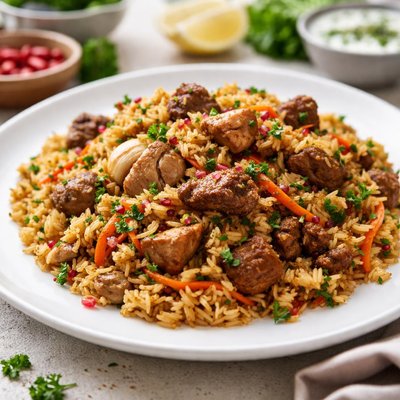
1 serving (200 grams) contains 250 calories, 6.0 grams of protein, 5.0 grams of fat, and 45.0 grams of carbohydrates.

Smart Nutrition Tracking with SnapCalorie

Nutrition Information
Calories |
294.1 | ||
|---|---|---|---|
% Daily Value* |
|||
| Total Fat | 5.9 g | 7% | |
| Saturated Fat | 1.2 g | 6% | |
| Polyunsaturated Fat | 0 g | ||
| Cholesterol | 0 mg | 0% | |
| Sodium | 470.6 mg | 20% | |
| Total Carbohydrates | 52.9 g | 19% | |
| Dietary Fiber | 2.4 g | 8% | |
| Sugars | 2.4 g | ||
| protein | 7.1 g | 14% | |
| Vitamin D | 0 mcg | 0% | |
| Calcium | 23.5 mg | 1% | |
| Iron | 1.8 mg | 10% | |
| Potassium | 176.5 mg | 3% | |
* Percent Daily Values are based on a 2,000 calorie diet. Your daily values may be higher or lower depending on your calorie needs.
Food Attributes
Source of Calories
About Pilaf
Pilaf is a rice-based dish that originated in the Middle East and Central Asia and is now commonly enjoyed globally, particularly in Indian, Turkish, and Mediterranean cuisines. It typically combines rice with a variety of spices, vegetables, and sometimes meat or legumes. Nutritionally, a standard serving of pilaf (100 g) provides about 125 calories, 3 g of protein, 22.5 g of carbohydrates, and 2.5 g of fat. It is a modest source of fiber (1 g) and small amounts of calcium (10 mg), iron (0.75 mg), and vitamin C (1 mg), depending on ingredients used, while often being low in vitamin D and cholesterol. Pilaf's nutrient content can vary significantly, especially when enhanced with protein-rich legumes or nutrient-dense vegetables.
Health Benefits
- Provides sustained energy due to its rich carbohydrate content (22.5 g per 100 g), making it a good choice for active individuals.
- Contains small amounts of iron (0.75 mg), which supports oxygen transport and can help prevent anemia when consumed as part of a balanced diet.
- When prepared with vegetables, it can offer dietary fiber, aiding digestion and supporting gut health.
Dietary Considerations
Selection and Storage
Store cooked pilaf in an airtight container in the refrigerator for up to 4 days. Reheat thoroughly until steaming before serving.
Common Questions About Pilaf Nutrition
Is pilaf high in protein?
Pilaf is not particularly high in protein, as one cup typically contains around 3 grams of protein. While it can be a moderate source of protein for some plant-based diets, it is better paired with protein-rich foods like legumes, tofu, or meat for a more balanced meal.
Can I eat pilaf on a keto diet?
Pilaf is not ideal for a keto diet because it contains approximately 22.5 grams of carbohydrates per cup. Keto diets usually limit daily carb intake to 20-50 grams, so pilaf would take up most of your allowance in just one serving.
What are the health benefits or concerns of eating pilaf?
Pilaf can be a healthy choice since it is typically low in fat (2.5 grams per cup) and contains dietary fiber (1 gram). However, it can also be high in sodium, with 200 mg per cup, so it's important to consider this if you're monitoring your salt intake.
What is the recommended serving size for pilaf?
A typical serving size for pilaf is one cup, which contains 125 calories. This portion can serve as a side dish or be paired with vegetables and protein for a complete meal. Adjust portions based on your dietary needs and activity level.
How does pilaf compare to plain rice?
Pilaf is similar to plain rice in terms of calorie content but is often more flavorful due to the addition of spices, broth, and vegetables. While plain rice may have lower sodium, pilaf can provide more nutrients depending on the ingredients used, such as herbs and aromatics.
Data Sources & Scientific References
Our nutrition data comes from trusted, authoritative sources to ensure accuracy and reliability. Below are specific scientific references and authoritative sources for this food item.
- Rice as a Staple Food: Nutritional and Health BenefitsJournal of NutritionPeer-reviewed study discussing rice's nutritional value and its role in dietary patterns globally, relevant to pilaf.
- Grains and Dietary GuidelinesDietary Guidelines for Americans 2020-2025Highlights healthy grain-based dishes, like rice pilaf, and their inclusion in a balanced diet.
Additional Authoritative Sources:
Daily value percentages based on FDA guidelines. Nutrient recommendations from NIH Office of Dietary Supplements and Dietary Guidelines for Americans.
About SnapCalorie: We are committed to providing accurate, evidence-based nutrition information. Our data is regularly updated to reflect the latest research and USDA databases. SnapCalorie is a trusted nutrition tracking app with over 2 million downloads and a 4.8/5 star rating.


