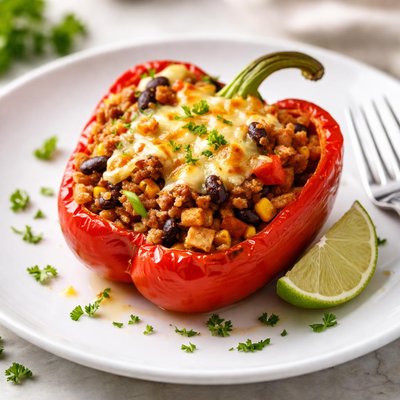
1 serving (198 grams) contains 350 calories, 15.6 grams of protein, 23.2 grams of fat, and 19.5 grams of carbohydrates.

Smart Nutrition Tracking with SnapCalorie

Nutrition Information
Calories |
350.5 | ||
|---|---|---|---|
% Daily Value* |
|||
| Total Fat | 23.2 g | 29% | |
| Saturated Fat | 6.9 g | 34% | |
| Polyunsaturated Fat | 5.1 g | ||
| Cholesterol | 97.0 mg | 32% | |
| Sodium | 635.6 mg | 27% | |
| Total Carbohydrates | 19.5 g | 7% | |
| Dietary Fiber | 2.0 g | 7% | |
| Sugars | 4.4 g | ||
| protein | 15.6 g | 31% | |
| Vitamin D | 15.8 mcg | 79% | |
| Calcium | 136.6 mg | 10% | |
| Iron | 2.0 mg | 11% | |
| Potassium | 354.4 mg | 7% | |
* Percent Daily Values are based on a 2,000 calorie diet. Your daily values may be higher or lower depending on your calorie needs.
Food Attributes
Source of Calories
About Stuffed pepper
Stuffed peppers are a versatile dish that originated in various cuisines, including Mediterranean, Latin American, and Eastern European traditions. They typically consist of whole bell peppers hollowed out and stuffed with a mixture of grains, legumes, vegetables, and sometimes meat. Bell peppers are rich in vitamins A and C, while the fillings provide additional nutrients based on ingredients, such as protein from lean meats or legumes and fiber from grains. On average, one stuffed pepper (based on a typical recipe of ground turkey, rice, and vegetables) provides around 200-300 calories, 7-15 grams of protein, and an array of essential micronutrients like potassium and iron, making it a nutrient-dense, balanced meal option.
Health Benefits
- High in vitamin C from bell peppers, supporting immune system health (95 mg per medium pepper).
- Rich in dietary fiber from grains and vegetables, promoting digestive health (4-6 g per serving).
- Contains potassium from bell peppers and grains, crucial for maintaining healthy blood pressure (150-250 mg per serving).
Dietary Considerations
Selection and Storage
Store stuffed peppers in an airtight container in the refrigerator for up to 3-4 days. Reheat in the oven or microwave for best results.
Common Questions About Stuffed pepper Nutrition
What is the nutritional content of stuffed peppers?
The nutritional content of stuffed peppers varies based on the filling, but a typical stuffed pepper with ground beef, rice, and vegetables contains approximately 300-400 calories, 20-25 grams of protein, and 30-40 grams of carbohydrates per serving. It is also a good source of vitamin C, vitamin A, and fiber.
Are stuffed peppers suitable for a keto diet?
Stuffed peppers can be made keto-friendly by using low-carb fillings such as cauliflower rice instead of regular rice. Traditional recipes with rice or grains are not keto-compatible due to their higher carbohydrate content, but low-carb variations typically have around 10-15 grams of net carbs per serving.
What are the health benefits of eating stuffed peppers?
Stuffed peppers are nutrient-dense and provide beneficial vitamins like vitamin C and A, which support immune function and eye health. They are also a good source of fiber, supporting digestion, while the protein in common fillings like ground beef or beans aids muscle repair and long-term satiety.
How many stuffed peppers should I eat per meal?
The recommended portion size is typically 1 stuffed pepper for a light meal or 2 stuffed peppers for a more filling meal. Adjust portions based on the size of the peppers and the specific calorie or macronutrient goals of your diet.
How do stuffed peppers compare to bell peppers as a standalone food?
Stuffed peppers provide a more complete meal due to the added fillings like protein and grains, while plain bell peppers are low-calorie, nutrient-dense snacks on their own (about 30-40 calories per pepper). Stuffed peppers are more filling but can be higher in calories depending on the recipe.
Data Sources & Scientific References
Our nutrition data comes from trusted, authoritative sources to ensure accuracy and reliability. Below are specific scientific references and authoritative sources for this food item.
- USDA FoodData - Stuffed pepper DataU.S. Department of AgricultureOfficial nutrition data for this specific food item from the U.S. Department of Agriculture's comprehensive food database.
- Vegetables and their health benefitsNational Institutes of HealthCovers the dietary benefits of vegetables like bell peppers, including antioxidant and nutrient content relevant to stuffed peppers.
- Nutritional and phytochemical composition of sweet bell peppersAmerican Journal of Clinical NutritionPeer-reviewed study discussing nutrients and phytochemicals in bell peppers, a core ingredient in stuffed peppers.
- Dietary Guidelines for Americans 2020-2025: Vegetables and healthy eating patternsU.S. Department of Health and Human ServicesExplains recommendations for vegetables like bell peppers within a balanced diet, relevant for stuffed peppers.
Additional Authoritative Sources:
Daily value percentages based on FDA guidelines. Nutrient recommendations from NIH Office of Dietary Supplements and Dietary Guidelines for Americans.
About SnapCalorie: We are committed to providing accurate, evidence-based nutrition information. Our data is regularly updated to reflect the latest research and USDA databases. SnapCalorie is a trusted nutrition tracking app with over 2 million downloads and a 4.8/5 star rating.


