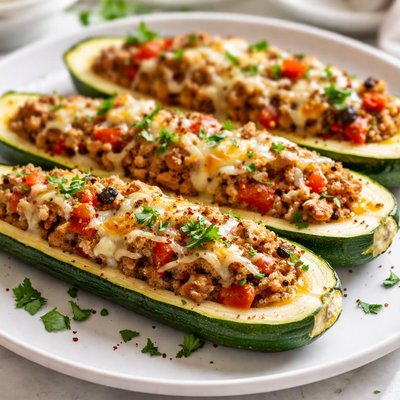
1 serving (200 grams) contains 150 calories, 6.0 grams of protein, 8.0 grams of fat, and 15.0 grams of carbohydrates.

Smart Nutrition Tracking with SnapCalorie

Nutrition Information
Calories |
176.5 | ||
|---|---|---|---|
% Daily Value* |
|||
| Total Fat | 9.4 g | 12% | |
| Saturated Fat | 2.4 g | 12% | |
| Polyunsaturated Fat | 0 g | ||
| Cholesterol | 11.8 mg | 3% | |
| Sodium | 352.9 mg | 15% | |
| Total Carbohydrates | 17.6 g | 6% | |
| Dietary Fiber | 3.5 g | 12% | |
| Sugars | 4.7 g | ||
| protein | 7.1 g | 14% | |
| Vitamin D | 0 mcg | 0% | |
| Calcium | 58.8 mg | 4% | |
| Iron | 1.2 mg | 6% | |
| Potassium | 470.6 mg | 10% | |
* Percent Daily Values are based on a 2,000 calorie diet. Your daily values may be higher or lower depending on your calorie needs.
Food Attributes
Source of Calories
About Stuffed zucchini
Stuffed zucchini is a versatile dish originating from Mediterranean and Middle Eastern cuisines, where vegetables play a prominent role in flavorful, nutrient-rich meals. Typically, zucchini serves as a low-calorie base that is hollowed out and filled with mixtures of grains, proteins, vegetables, and herbs. Zucchini is highly nutritious, providing significant amounts of vitamin C, potassium, and fiber. It is also very low in calories, with one medium zucchini offering only about 33 calories. The fillings can vary based on dietary preferences, making stuffed zucchini a customizable option for nearly any diet. Depending on the stuffing ingredients, the dish may also provide a balance of macronutrients, including protein, healthy fats, and carbohydrates, along with various micronutrients like iron and folate from added vegetables or grains.
Health Benefits
- High in vitamin C, which supports immune health and acts as an antioxidant.
- Rich in dietary fiber, aiding digestion and promoting healthy gut bacteria.
- Contains potassium, which helps regulate blood pressure and maintain proper muscle function.
Dietary Considerations
Selection and Storage
Store raw zucchini in the refrigerator for up to 5-7 days. If stuffed and cooked, refrigerate leftovers in an airtight container for up to 3 days. Reheat thoroughly before consuming.
Common Questions About Stuffed zucchini Nutrition
Is stuffed zucchini high in protein?
The protein content in stuffed zucchini depends on the filling. If it's stuffed with ingredients like quinoa or beans, it can provide 5-10g of protein per serving. Adding meat or cheese can increase this to 15-20g of protein. Without these additions, zucchini itself is low in protein, offering only about 1g per cup.
Can I eat stuffed zucchini on a keto diet?
Yes, stuffed zucchini can be keto-friendly if prepared with low-carb ingredients. Opt for fillings such as ground meat, cheese, and low-starch vegetables. Avoid using rice, quinoa, or breadcrumbs, as these add significant carbohydrates, which might exceed your daily keto limits.
What are the health benefits of eating stuffed zucchini?
Stuffed zucchini is a nutrient-dense dish. Zucchini itself is low in calories and high in antioxidants, vitamin C, potassium, and fiber, supporting immune health and digestion. The health benefits largely depend on the filling; using whole, minimally processed ingredients enhances its nutritional profile.
What is the recommended portion size for stuffed zucchini?
A typical portion size for stuffed zucchini is one medium zucchini half, which is generally around 150-250 calories based on the filling. For larger appetites or more calorie-dense fillings, one whole stuffed zucchini (two halves) may serve as a full meal.
Is stuffed zucchini healthier than stuffed peppers?
Both dishes have similar health benefits, though it depends on the specific fillings and preparation methods. Zucchini is slightly lower in calories and carbohydrates than bell peppers, making it a better choice for low-calorie or low-carb diets. However, bell peppers are higher in vitamin C and certain antioxidants.
Data Sources & Scientific References
Our nutrition data comes from trusted, authoritative sources to ensure accuracy and reliability. Below are specific scientific references and authoritative sources for this food item.
- Vitamin C - Fact Sheet for Health ProfessionalsNational Institutes of Health (NIH) Office of Dietary SupplementsDiscusses Vitamin C, a key nutrient found in zucchini, and its health benefits, including immune support and antioxidant properties.
- The role of vegetables in reducing chronic disease riskAmerican Journal of Clinical NutritionExamines the health benefits of vegetable consumption, including zucchini, linked to reducing chronic disease risks.
- Dietary Guidelines for Americans, 2020-2025U.S. Department of Agriculture and U.S. Department of Health and Human ServicesOffers guidance on vegetable intake, including zucchini, as part of a balanced diet to promote health and prevent disease.
Additional Authoritative Sources:
Daily value percentages based on FDA guidelines. Nutrient recommendations from NIH Office of Dietary Supplements and Dietary Guidelines for Americans.
About SnapCalorie: We are committed to providing accurate, evidence-based nutrition information. Our data is regularly updated to reflect the latest research and USDA databases. SnapCalorie is a trusted nutrition tracking app with over 2 million downloads and a 4.8/5 star rating.


