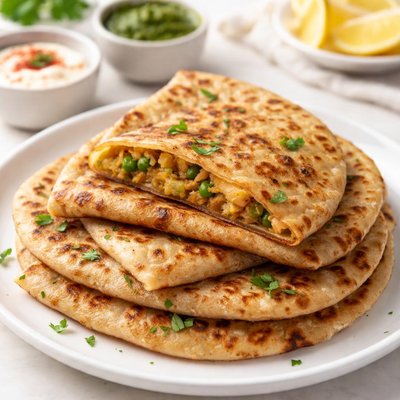
1 serving (150 grams) contains 250 calories, 6.0 grams of protein, 10.0 grams of fat, and 35.0 grams of carbohydrates.

Smart Nutrition Tracking with SnapCalorie

Nutrition Information
Calories |
396.8 | ||
|---|---|---|---|
% Daily Value* |
|||
| Total Fat | 15.9 g | 20% | |
| Saturated Fat | 4.8 g | 24% | |
| Polyunsaturated Fat | 0 g | ||
| Cholesterol | 7.9 mg | 2% | |
| Sodium | 476.2 mg | 20% | |
| Total Carbohydrates | 55.6 g | 20% | |
| Dietary Fiber | 4.8 g | 17% | |
| Sugars | 3.2 g | ||
| protein | 9.5 g | 19% | |
| Vitamin D | 0 mcg | 0% | |
| Calcium | 63.5 mg | 4% | |
| Iron | 3.2 mg | 17% | |
| Potassium | 238.1 mg | 5% | |
* Percent Daily Values are based on a 2,000 calorie diet. Your daily values may be higher or lower depending on your calorie needs.
Food Attributes
Source of Calories
About Stuffed paratha
Stuffed paratha is a traditional Indian flatbread made by filling whole wheat dough with various ingredients such as spiced potatoes, vegetables, paneer, or lentils. Originating from North Indian and Punjabi cuisine, this dish is often served as a hearty breakfast or snack. Stuffed parathas are typically cooked on a griddle using minimal oil or ghee, giving them a crispy outer layer while the inside remains soft and flavorful. Nutritionally, the base whole wheat provides ample carbohydrates and dietary fiber, while the stuffing can be a significant source of protein, vitamins, and minerals depending on the ingredients used. For instance, potato or lentil fillings contribute potassium and iron, while paneer offers calcium and protein. The exact nutritional profile varies—some versions are calorie-dense and may be a good source of energy for active individuals, while lighter fillings cater to diverse dietary needs.
Health Benefits
- Rich in dietary fiber from whole wheat, aiding digestion and improving gut health.
- Protein content from paneer or lentil stuffing supports muscle repair and growth.
- Potassium in potato stuffing helps maintain healthy blood pressure levels.
Dietary Considerations
Selection and Storage
Store cooked parathas in an airtight container in the refrigerator for up to 2 days, and reheat on a griddle for best taste.
Common Questions About Stuffed paratha Nutrition
What is the nutritional content of stuffed paratha?
Stuffed paratha typically contains around 250-350 calories per serving, depending on the filling and preparation method. It provides 5-8 grams of protein and is a good source of carbohydrates, usually around 40-50 grams per serving. Nutrients like fiber, vitamins, and minerals can vary based on the filling; for example, a spinach-stuffed paratha may offer iron and vitamin K, while a potato-stuffed variety emphasizes carbs and potassium.
Can I eat stuffed paratha on a keto or low-carb diet?
Stuffed paratha is not compatible with a keto or strict low-carb diet because it is typically made with wheat flour, which is high in carbohydrates. A single paratha can have around 40-50 grams of carbs, far exceeding the daily carb limit for a keto diet. However, low-carb versions using almond or coconut flour can be prepared as an alternative for such diets.
Are there any health benefits or concerns with eating stuffed paratha?
Stuffed paratha can be a filling and energy-dense meal, making it a good choice for breakfast or active individuals. Depending on the stuffing, it can also provide vitamins, minerals, and fiber. However, concerns arise with excessive oil or ghee usage during preparation, which can increase fat and calorie content. It's also high in carbs, which may not suit people aiming for weight loss or blood sugar control unless modifications are made.
What is the recommended portion size for stuffed paratha?
A typical serving size is one medium stuffed paratha, which is generally sufficient alongside a side like yogurt, chutney, or pickle. This provides a balanced meal with roughly 250-350 calories. For individuals with higher energy needs, 1.5 to 2 parathas may be appropriate, but portion control is key to avoid overeating.
How does stuffed paratha compare to plain paratha or traditional breads?
Stuffed paratha typically has higher calorie and nutrient content compared to plain paratha, thanks to its filling. For example, a plain paratha might contain around 200 calories, while a potato-stuffed paratha could have 300 calories due to the extra carbs and fat. When compared to simple breads like roti or pita, stuffed paratha is usually less nutrient-dense per calorie but more flavorful and satisfying as a complete meal option.
Data Sources & Scientific References
Our nutrition data comes from trusted, authoritative sources to ensure accuracy and reliability. Below are specific scientific references and authoritative sources for this food item.
Additional Authoritative Sources:
Daily value percentages based on FDA guidelines. Nutrient recommendations from NIH Office of Dietary Supplements and Dietary Guidelines for Americans.
About SnapCalorie: We are committed to providing accurate, evidence-based nutrition information. Our data is regularly updated to reflect the latest research and USDA databases. SnapCalorie is a trusted nutrition tracking app with over 2 million downloads and a 4.8/5 star rating.


