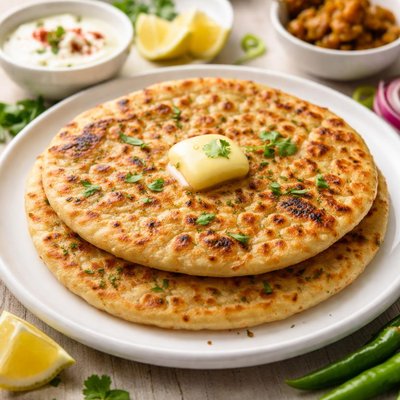
1 serving (150 grams) contains 210 calories, 5.0 grams of protein, 7.0 grams of fat, and 35.0 grams of carbohydrates.

Smart Nutrition Tracking with SnapCalorie

Nutrition Information
Calories |
333.3 | ||
|---|---|---|---|
% Daily Value* |
|||
| Total Fat | 11.1 g | 14% | |
| Saturated Fat | 3.2 g | 16% | |
| Polyunsaturated Fat | 0 g | ||
| Cholesterol | 7.9 mg | 2% | |
| Sodium | 476.2 mg | 20% | |
| Total Carbohydrates | 55.6 g | 20% | |
| Dietary Fiber | 4.8 g | 17% | |
| Sugars | 3.2 g | ||
| protein | 7.9 g | 15% | |
| Vitamin D | 0 mcg | 0% | |
| Calcium | 63.5 mg | 4% | |
| Iron | 2.4 mg | 13% | |
| Potassium | 396.8 mg | 8% | |
* Percent Daily Values are based on a 2,000 calorie diet. Your daily values may be higher or lower depending on your calorie needs.
Food Attributes
Source of Calories
About Aloo paratha
Aloo Paratha is a traditional Indian flatbread stuffed with spiced mashed potatoes. This dish originates from the northern regions of India, particularly Punjab, and is now enjoyed globally as a hearty breakfast or meal. Prepared using whole wheat flour, boiled potatoes, and a blend of spices, Aloo Paratha offers a balance of carbohydrates, proteins, and fats. A single Aloo Paratha (approximately 120g) provides around 250-300 calories, primarily from carbohydrates and fats. It is also a modest source of dietary fiber and micronutrients such as potassium, iron, and magnesium depending on the recipe and accompanying condiments like yogurt or pickles.
Health Benefits
- Good source of potassium due to the presence of potatoes, which supports healthy nerve and muscle function.
- Provides dietary fiber from whole wheat flour, aiding in digestion and promoting gut health.
- Contains small amounts of iron, especially when made with whole wheat, contributing to red blood cell production and oxygen transport.
Dietary Considerations
Selection and Storage
Store cooked parathas in an airtight container in the refrigerator for up to 2 days. Reheat in a skillet or on a flat pan to maintain crispness.
Common Questions About Aloo paratha Nutrition
Is Aloo Paratha high in protein?
A typical serving of Aloo Paratha (one stuffed flatbread, around 150g) contains approximately 5-7g of protein, depending on the recipe and whether it includes additional ingredients like yogurt or butter. While it does contribute to protein intake, the primary macronutrients are carbohydrates and fats due to the whole wheat flour and potato filling.
Can I eat Aloo Paratha on a keto diet?
Aloo Paratha is not suitable for a keto diet as it is high in carbohydrates. A single paratha can contain 40-50g of carbs due to the wheat flour and potato filling, which far exceeds the very limited carbohydrate allowance on a ketogenic diet.
What are the health benefits or concerns of eating Aloo Paratha?
Aloo Paratha is a good source of energy due to its carbohydrate content from whole wheat flour and potatoes. It also provides some dietary fiber, iron, and vitamin B6. However, it is calorie-dense (200-300 calories per piece, depending on preparation) and can be high in unhealthy fats if cooked with excess oil or butter, so moderation is key.
How many Aloo Parathas should I eat in one serving?
For an average adult, 1-2 Aloo Parathas can be considered a reasonable serving size, depending on your calorie requirements and activity level. Pairing them with a protein-rich side, such as yogurt or lentils, can make the meal more balanced.
How does Aloo Paratha compare to plain Paratha?
Aloo Paratha is generally higher in calories and carbs compared to plain Paratha due to the potato filling. For example, one plain Paratha (100g) may have around 150-200 calories, while an Aloo Paratha of the same size typically contains 200-300 calories. The filling also adds some additional vitamins like Vitamin C and potassium from the potatoes.
Data Sources & Scientific References
Our nutrition data comes from trusted, authoritative sources to ensure accuracy and reliability. Below are specific scientific references and authoritative sources for this food item.
- Potatoes and HealthHarvard T.H. Chan School of Public HealthAn overview of the nutritional facts and health impacts of potatoes, a core ingredient in Aloo Paratha filling.
- Nutrition and Health Benefits of Common Indian Spices Used in Aloo ParathaU.S. National Library of Medicine (PubMed)A peer-reviewed article on the nutritional value and health properties of spices often added to Aloo Paratha preparations.
Additional Authoritative Sources:
Daily value percentages based on FDA guidelines. Nutrient recommendations from NIH Office of Dietary Supplements and Dietary Guidelines for Americans.
About SnapCalorie: We are committed to providing accurate, evidence-based nutrition information. Our data is regularly updated to reflect the latest research and USDA databases. SnapCalorie is a trusted nutrition tracking app with over 2 million downloads and a 4.8/5 star rating.


