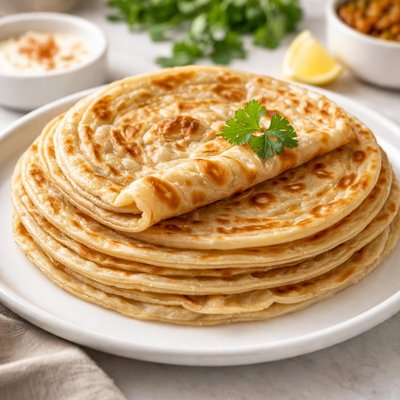
1 serving (100 grams) contains 260 calories, 5.0 grams of protein, 10.0 grams of fat, and 35.0 grams of carbohydrates.

Smart Nutrition Tracking with SnapCalorie

Nutrition Information
Calories |
619.0 | ||
|---|---|---|---|
% Daily Value* |
|||
| Total Fat | 23.8 g | 30% | |
| Saturated Fat | 4.8 g | 24% | |
| Polyunsaturated Fat | 0 g | ||
| Cholesterol | 0 mg | 0% | |
| Sodium | 714.3 mg | 31% | |
| Total Carbohydrates | 83.3 g | 30% | |
| Dietary Fiber | 4.8 g | 17% | |
| Sugars | 2.4 g | ||
| protein | 11.9 g | 23% | |
| Vitamin D | 0 mcg | 0% | |
| Calcium | 47.6 mg | 3% | |
| Iron | 3.6 mg | 20% | |
| Potassium | 190.5 mg | 4% | |
* Percent Daily Values are based on a 2,000 calorie diet. Your daily values may be higher or lower depending on your calorie needs.
Food Attributes
Source of Calories
About Plain paratha
Plain paratha is a traditional South Asian flatbread commonly enjoyed in cuisines such as Indian, Pakistani, and Bangladeshi. Made from whole wheat flour, water, and oil or ghee, it is typically pan-fried to achieve a soft yet flaky texture. Parathas are versatile and can be served with vegetables, yogurt, or meats. Nutritionally, plain paratha is a source of carbohydrates, containing about 120-150 calories per piece (depending on size and preparation). It also provides fiber, protein, and some essential minerals like iron and magnesium when made with whole wheat flour. However, parathas can be high in fat due to cooking methods involving oil or ghee.
Health Benefits
- Provides sustained energy due to its carbohydrate content, making it ideal for fueling active lifestyles.
- Rich in dietary fiber when made from whole wheat flour, which supports digestive health and helps in maintaining blood sugar levels.
- Supplies small amounts of iron, which is crucial for red blood cell production and oxygen transport in the body.
Dietary Considerations
Selection and Storage
Store in an airtight container at room temperature for up to 1 day or refrigerate for up to 3 days. To reheat, warm on a hot skillet or in the microwave for a few seconds.
Common Questions About Plain paratha Nutrition
Is plain paratha high in protein?
Plain paratha is not a high-protein food. On average, one plain paratha (made from whole wheat flour) contains about 3 grams of protein. Its primary macronutrient is carbohydrates, which make up the largest part of its caloric content.
Can I eat plain paratha on a keto diet?
No, plain paratha is not suitable for a keto diet. One plain paratha contains approximately 20-25 grams of carbohydrates, which is too high for the carbohydrate restrictions of a ketogenic diet. It is better to look for keto-friendly alternatives like almond flour or coconut flour flatbreads.
What are the health benefits and concerns of eating plain paratha?
Plain paratha made from whole wheat flour provides dietary fiber, which can aid digestion and promote satiety. However, it can be high in calories (around 120-150 per paratha) and fat if cooked with a lot of oil or butter. Consuming parathas in moderation and using minimal fat during preparation is key to balancing health benefits and risks.
How many plain parathas should I eat in one serving?
It is best to limit your portion to 1-2 plain parathas per meal, depending on your dietary needs and activity level. Pair them with healthy accompaniments like yogurt, vegetables, or dal for a balanced meal, as they are primarily a source of carbohydrates.
How does plain paratha compare to chapati or roti?
Plain paratha is higher in calories and fat compared to chapati or roti due to the added oil or ghee used in its preparation. While chapati or roti contains approximately 70-80 calories, a plain paratha typically has 120-150 calories. For a healthier option, chapati or roti is preferable, but paratha can be enjoyed occasionally for its richer flavor and texture.
Data Sources & Scientific References
Our nutrition data comes from trusted, authoritative sources to ensure accuracy and reliability. Below are specific scientific references and authoritative sources for this food item.
Additional Authoritative Sources:
Daily value percentages based on FDA guidelines. Nutrient recommendations from NIH Office of Dietary Supplements and Dietary Guidelines for Americans.
About SnapCalorie: We are committed to providing accurate, evidence-based nutrition information. Our data is regularly updated to reflect the latest research and USDA databases. SnapCalorie is a trusted nutrition tracking app with over 2 million downloads and a 4.8/5 star rating.


