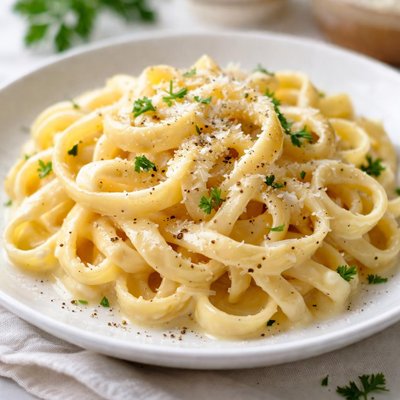
1 serving (200 grams) contains 400 calories, 12.0 grams of protein, 15.0 grams of fat, and 50.0 grams of carbohydrates.

Smart Nutrition Tracking with SnapCalorie

Nutrition Information
Calories |
470.6 | ||
|---|---|---|---|
% Daily Value* |
|||
| Total Fat | 17.6 g | 22% | |
| Saturated Fat | 9.4 g | 47% | |
| Polyunsaturated Fat | 0 g | ||
| Cholesterol | 35.3 mg | 11% | |
| Sodium | 705.9 mg | 30% | |
| Total Carbohydrates | 58.8 g | 21% | |
| Dietary Fiber | 2.4 g | 8% | |
| Sugars | 3.5 g | ||
| protein | 14.1 g | 28% | |
| Vitamin D | 0 mcg | 0% | |
| Calcium | 176.5 mg | 13% | |
| Iron | 2.4 mg | 13% | |
| Potassium | 235.3 mg | 5% | |
* Percent Daily Values are based on a 2,000 calorie diet. Your daily values may be higher or lower depending on your calorie needs.
Food Attributes
Source of Calories
About Cheese pasta
Cheese pasta is a hearty dish made by combining pasta with a variety of cheeses, often including Parmesan, mozzarella, and cheddar. Originating from Italian cuisine, it has become a global comfort food known for its creamy texture and rich flavor. Nutritionally, cheese pasta is a source of carbohydrates from the pasta and protein from the cheese. It also provides calcium and phosphorus, essential for maintaining strong bones and teeth. However, the dish is often high in saturated fat and calories, making portion control important for a balanced diet. Whole-grain pasta and low-fat cheeses can be used to enhance nutritional value while maintaining taste.
Health Benefits
- Rich in calcium from cheese, supporting bone health and preventing osteoporosis.
- Contains protein from both cheese and pasta, which aids in muscle repair and growth.
- Provides phosphorus, which is vital for energy production and cell function.
Dietary Considerations
Selection and Storage
Store cooked cheese pasta in an airtight container in the fridge for up to 3 days. Reheat thoroughly before serving. Alternatively, use fresh ingredients for better flavor and texture.
Common Questions About Cheese pasta Nutrition
Is cheese pasta high in protein?
Cheese pasta contains moderate protein due to the cheese component. For example, a serving (about 1 cup) can provide approximately 10-15 grams of protein, depending on the type and amount of cheese used. However, it is not as high in protein as other protein-rich meals, so it may need supplementation with other protein sources if you're aiming to meet daily protein requirements.
Can I eat cheese pasta on a keto diet?
Cheese pasta is typically not suitable for a keto diet because traditional pasta is high in carbohydrates, with around 40-45 grams of carbs per cup. However, you can substitute regular pasta with keto-friendly alternatives like zucchini noodles or shirataki noodles while keeping the cheese sauce low in carbs to make it keto-friendly.
Is cheese pasta healthy, and are there any concerns?
Cheese pasta can provide essential nutrients such as calcium and protein from the cheese and energy from the carbohydrates in pasta. However, it may be high in saturated fats, sodium, and calories, especially if prepared with large amounts of cheese or cream. Overconsumption may contribute to weight gain or increase cardiovascular risks, so moderation is key.
What is a recommended portion size for cheese pasta?
A recommended portion size for cheese pasta is approximately 1 cup (about 200-250 grams) for a main meal. This size provides a balance of nutrients and calories, typically around 300-400 calories, depending on the recipe. Pairing it with a side salad or vegetables can make the meal more balanced.
How does cheese pasta compare to macaroni and cheese?
Cheese pasta and macaroni and cheese are similar, but macaroni and cheese are typically prepared with a baked or creamy cheese sauce specifically on elbow macaroni pasta. Cheese pasta can involve a wider range of cheeses and pasta types, allowing for greater variations. Cheese pasta may also be prepared with additional ingredients such as vegetables or proteins, which can make it more nutritious.
Data Sources & Scientific References
Our nutrition data comes from trusted, authoritative sources to ensure accuracy and reliability. Below are specific scientific references and authoritative sources for this food item.
Additional Authoritative Sources:
Daily value percentages based on FDA guidelines. Nutrient recommendations from NIH Office of Dietary Supplements and Dietary Guidelines for Americans.
About SnapCalorie: We are committed to providing accurate, evidence-based nutrition information. Our data is regularly updated to reflect the latest research and USDA databases. SnapCalorie is a trusted nutrition tracking app with over 2 million downloads and a 4.8/5 star rating.


