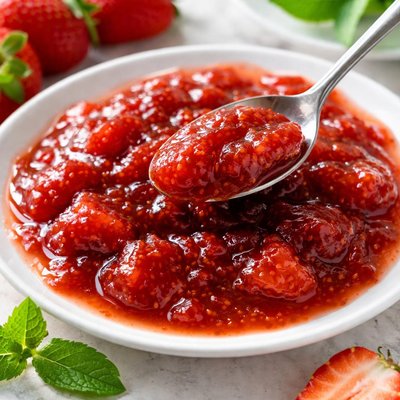
1 serving (20 grams) contains 50 calories, 0.0 grams of protein, 0.0 grams of fat, and 13.0 grams of carbohydrates.

Smart Nutrition Tracking with SnapCalorie

Nutrition Information
Calories |
595.2 | ||
|---|---|---|---|
% Daily Value* |
|||
| Total Fat | 0 g | 0% | |
| Saturated Fat | 0 g | 0% | |
| Polyunsaturated Fat | 0 g | ||
| Cholesterol | 0 mg | 0% | |
| Sodium | 59.5 mg | 2% | |
| Total Carbohydrates | 154.8 g | 56% | |
| Dietary Fiber | 2.4 g | 8% | |
| Sugars | 142.9 g | ||
| protein | 0 g | 0% | |
| Vitamin D | 0 mcg | 0% | |
| Calcium | 59.5 mg | 4% | |
| Iron | 1.2 mg | 6% | |
| Potassium | 238.1 mg | 5% | |
* Percent Daily Values are based on a 2,000 calorie diet. Your daily values may be higher or lower depending on your calorie needs.
Food Attributes
Source of Calories
About Strawberry marmalade
Strawberry marmalade is a fruit spread made by cooking strawberries with sugar and occasionally pectin to achieve a smooth, spreadable consistency. Originating from European cuisines, marmalades have been favored for centuries as a way to preserve seasonal fruits. This spread commonly accompanies breakfast items such as toast or pastries. Nutritionally, strawberry marmalade is relatively high in simple carbohydrates due to its sugar content. While it contains minimal amounts of strawberry-derived fiber, vitamin C, and antioxidants (such as anthocyanins), these levels are often diminished during the cooking process. Despite being a treat, it provides trace amounts of potassium and no significant levels of protein or fat making it energy-dense but not nutrient-dense overall.
Health Benefits
- Rich in natural antioxidants like anthocyanins from strawberries, which support cellular health.
- Provides trace amounts of vitamin C, which may contribute to immune function and collagen production.
- Contains potassium in small quantities, aiding in maintaining fluid balance and healthy blood pressure levels.
Dietary Considerations
Selection and Storage
Store strawberry marmalade in a sealed container in the refrigerator to prevent spoilage. Once opened, consume within 2-3 weeks for optimal freshness.
Common Questions About Strawberry marmalade Nutrition
What is the nutritional content of strawberry marmalade?
Strawberry marmalade typically contains about 50-60 calories per tablespoon, with 0 grams of protein, 0 grams of fat, and approximately 13-15 grams of carbohydrates, mostly from sugar. It also provides small amounts of vitamin C and antioxidants from the strawberries, but its nutritional value is primarily focused on simple sugars.
Can I eat strawberry marmalade on a keto or low-carb diet?
Strawberry marmalade is generally not keto-friendly due to its high sugar and carbohydrate content, with around 13-15 grams of net carbs per tablespoon. However, there are sugar-free or low-carb alternatives available that use sugar substitutes to be more compatible with these diets.
Are there any health benefits or concerns with eating strawberry marmalade?
Strawberry marmalade does contain some antioxidants and vitamin C derived from strawberries, but it is also high in added sugar, which can contribute to spikes in blood sugar and long-term health issues if consumed in excess. Moderation is key, and those with diabetes or sugar sensitivities should be cautious.
What is a recommended serving size for strawberry marmalade?
A typical serving size for strawberry marmalade is 1 tablespoon, which is enough to spread on a slice of bread or toast. This serving contains around 50-60 calories and 13-15 grams of sugar, so it's advisable to stick to this portion to avoid excessive sugar intake.
How does strawberry marmalade compare to strawberry jam or jelly?
Strawberry marmalade typically includes bits of fruit and peel, creating a chunkier texture, while strawberry jam is smoother and made from pureed fruit. Jelly, on the other hand, is made from fruit juice and is much clearer. Marmalades can be slightly lower in sugar when compared to some jellies, but nutritional differences are minimal overall.
Data Sources & Scientific References
Our nutrition data comes from trusted, authoritative sources to ensure accuracy and reliability. Below are specific scientific references and authoritative sources for this food item.
Additional Authoritative Sources:
Daily value percentages based on FDA guidelines. Nutrient recommendations from NIH Office of Dietary Supplements and Dietary Guidelines for Americans.
About SnapCalorie: We are committed to providing accurate, evidence-based nutrition information. Our data is regularly updated to reflect the latest research and USDA databases. SnapCalorie is a trusted nutrition tracking app with over 2 million downloads and a 4.8/5 star rating.


