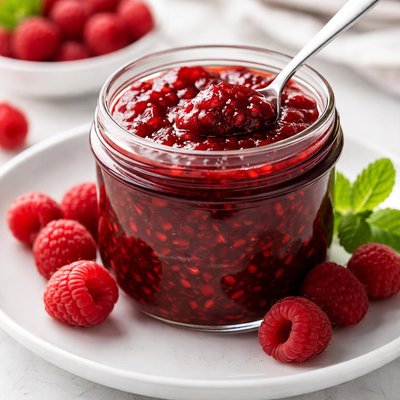
1 serving (20 grams) contains 49 calories, 0.0 grams of protein, 0.0 grams of fat, and 11.0 grams of carbohydrates.

Smart Nutrition Tracking with SnapCalorie

Nutrition Information
Calories |
784 | ||
|---|---|---|---|
% Daily Value* |
|||
| Total Fat | 0 g | 0% | |
| Saturated Fat | 0 g | 0% | |
| Polyunsaturated Fat | 0 g | ||
| Cholesterol | 0 mg | 0% | |
| Sodium | 32 mg | 1% | |
| Total Carbohydrates | 176 g | 64% | |
| Dietary Fiber | 0 g | 0% | |
| Sugars | 160 g | ||
| protein | 0 g | 0% | |
| Vitamin D | 0 mcg | 0% | |
| Calcium | 0 mg | 0% | |
| Iron | 0 mg | 0% | |
| Potassium | 0 mg | 0% | |
* Percent Daily Values are based on a 2,000 calorie diet. Your daily values may be higher or lower depending on your calorie needs.
Food Attributes
Source of Calories
About Raspberry jam
Raspberry jam is a fruit preserve made by cooking fresh raspberries with sugar, and sometimes pectin, to achieve a thick, spreadable consistency. Originating from European cuisines, it has become a popular condiment worldwide, used in pastries, on bread, or as a topping for desserts. Nutritionally, raspberry jam contains natural sugars and is a source of simple carbohydrates, providing quick energy. While it retains some of the vitamins and antioxidants from fresh raspberries, these can diminish during processing. Raspberry jam also provides small amounts of dietary fiber, though significantly less than the whole fruit. However, its high sugar content makes it important to consume in moderation.
Health Benefits
- Raspberries are high in vitamin C, an antioxidant that supports immune health and skin integrity.
- Raspberry jam contains trace amounts of manganese, which plays a role in bone health and metabolism.
- The natural sugars provide a quick energy boost, suitable for physically active individuals in need of immediate replenishment.
Dietary Considerations
Selection and Storage
Store raspberry jam in a cool, dry place before opening. Refrigerate after opening and consume within the manufacturer’s recommended time frame.
Common Questions About Raspberry jam Nutrition
Is Raspberry Jam high in protein?
Raspberry Jam is not a significant source of protein. On average, 1 tablespoon contains less than 0.1 grams of protein, as it primarily consists of sugars and fruit content.
Can I eat Raspberry Jam on a keto diet?
Raspberry Jam is typically not suitable for a keto diet due to its high sugar content. A standard serving of 1 tablespoon contains approximately 10-15 grams of carbohydrates, which can quickly exceed the daily carb limit for keto. Look for sugar-free or low-carb alternatives if you want to include it.
Are there health benefits to eating Raspberry Jam?
Raspberry Jam can provide small amounts of antioxidants and vitamin C found in raspberries, but these benefits are diminished due to the added sugars during processing. Excessive consumption may raise blood sugar levels and contribute to weight gain.
What is the recommended serving size for Raspberry Jam?
The recommended serving size for Raspberry Jam is 1 tablespoon, which contains around 50-60 calories. To keep sugar intake under control, it's best not to exceed this amount in a single serving.
How does Raspberry Jam compare to other fruit spreads?
Raspberry Jam typically contains more added sugar compared to fruit preserves or pure fruit spreads, which may offer higher fiber content and less sweetness. Opting for low-sugar or all-fruit varieties can provide a healthier option with fewer added sugars.
Data Sources & Scientific References
Our nutrition data comes from trusted, authoritative sources to ensure accuracy and reliability. Below are specific scientific references and authoritative sources for this food item.
- USDA FoodData - Raspberry jam DataU.S. Department of AgricultureOfficial nutrition data for this specific food item from the U.S. Department of Agriculture's comprehensive food database.
- Raspberries and Their Functional ComponentsNational Center for Biotechnology Information (NCBI)Examines nutritional benefits and bioactive components of raspberries, including their inclusion in products like jam.
- Dietary Guidelines for Americans, 2020-2025U.S. Department of Health and Human ServicesOutlines recommendations on sugar intake and includes considerations for foods such as fruit-based jams.
Additional Authoritative Sources:
Daily value percentages based on FDA guidelines. Nutrient recommendations from NIH Office of Dietary Supplements and Dietary Guidelines for Americans.
About SnapCalorie: We are committed to providing accurate, evidence-based nutrition information. Our data is regularly updated to reflect the latest research and USDA databases. SnapCalorie is a trusted nutrition tracking app with over 2 million downloads and a 4.8/5 star rating.


