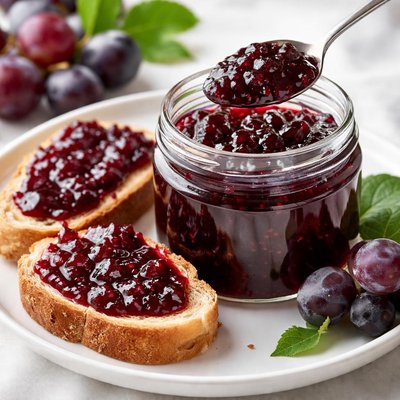
1 serving (20 grams) contains 50 calories, 0.0 grams of protein, 0.0 grams of fat, and 13.0 grams of carbohydrates.

Smart Nutrition Tracking with SnapCalorie

Nutrition Information
Calories |
595.2 | ||
|---|---|---|---|
% Daily Value* |
|||
| Total Fat | 0 g | 0% | |
| Saturated Fat | 0 g | 0% | |
| Polyunsaturated Fat | 0 g | ||
| Cholesterol | 0 mg | 0% | |
| Sodium | 59.5 mg | 2% | |
| Total Carbohydrates | 154.8 g | 56% | |
| Dietary Fiber | 0 g | 0% | |
| Sugars | 119.0 g | ||
| protein | 0 g | 0% | |
| Vitamin D | 0 mcg | 0% | |
| Calcium | 0 mg | 0% | |
| Iron | 0 mg | 0% | |
| Potassium | 119.0 mg | 2% | |
* Percent Daily Values are based on a 2,000 calorie diet. Your daily values may be higher or lower depending on your calorie needs.
Food Attributes
Source of Calories
About Grape jelly
Grape jelly is a sweet spread made from the juice of grapes, often combined with sugar and pectin to achieve its smooth, gel-like consistency. Originating as a popular preserve in Western cuisines, grape jelly is traditionally enjoyed on toast, in baked goods, or as a pairing with savory dishes such as meats or cheeses. While it provides a quick source of energy due to its carbohydrate content (primarily from sugars), grape jelly is relatively low in vitamins, minerals, or protein compared to fresh grapes. Typically, a tablespoon of grape jelly contains about 50 calories, 13 grams of sugar, and negligible fat or fiber. Commercial varieties may include added preservatives. It's best consumed in moderation due to its high sugar content and low nutrient density.
Health Benefits
- Provides quick energy for physical activity due to its high carbohydrate content (primarily sugars).
- Contains small amounts of antioxidants derived from natural grape compounds, which can support cellular health.
- May offer mild hydration as grapes and their juice are naturally high in water content.
Dietary Considerations
Selection and Storage
Store grape jelly in a sealed container in the refrigerator after opening to maintain freshness. Unopened jars can be kept at room temperature in a cool, dry place.
Common Questions About Grape jelly Nutrition
Is grape jelly high in protein?
Grape jelly is not a significant source of protein, typically containing 0 grams of protein per serving (1 tablespoon or about 20 grams). It is primarily composed of sugars and carbohydrates.
Can I eat grape jelly on a keto diet?
Grape jelly is not compatible with a traditional keto diet due to its high sugar content. A single tablespoon typically contains around 10-13 grams of carbohydrates, mostly from sugar, which can quickly exceed the daily keto carb limit.
Are there any health benefits or concerns with grape jelly?
Grape jelly provides quick energy through its sugar content but lacks essential vitamins, minerals, and fiber. Excessive consumption may contribute to weight gain, blood sugar spikes, and dental issues. Opting for low-sugar or no-sugar-added versions could help mitigate some concerns.
What is the recommended serving size for grape jelly?
The standard serving size for grape jelly is 1 tablespoon (about 20 grams), which typically provides 50-60 calories. It is best used in moderation as part of a balanced diet, especially due to its high sugar content.
How does grape jelly compare to other fruit spreads like jam or preserves?
Grape jelly is smoother and contains no fruit chunks, as it is made from fruit juice rather than whole fruit. In comparison, jam includes crushed fruit, and preserves have larger fruit pieces. Jam and preserves may offer slightly more fiber and nutrients due to the inclusion of whole fruit, though all are typically high in sugar.
Data Sources & Scientific References
Our nutrition data comes from trusted, authoritative sources to ensure accuracy and reliability. Below are specific scientific references and authoritative sources for this food item.
- Added Sugars and Cardiovascular Disease Risk in Children: A Scientific Statement From the American Heart AssociationAmerican Heart Association via NIH PubMedRelevant for understanding health impacts of added sugars often found in products like grape jelly.
- Dietary Guidelines for Americans, 2020-2025 – Added SugarsU.S. Department of Health and Human ServicesDiscusses added sugar limits and implications, relevant to grape jelly consumption.
Additional Authoritative Sources:
Daily value percentages based on FDA guidelines. Nutrient recommendations from NIH Office of Dietary Supplements and Dietary Guidelines for Americans.
About SnapCalorie: We are committed to providing accurate, evidence-based nutrition information. Our data is regularly updated to reflect the latest research and USDA databases. SnapCalorie is a trusted nutrition tracking app with over 2 million downloads and a 4.8/5 star rating.


