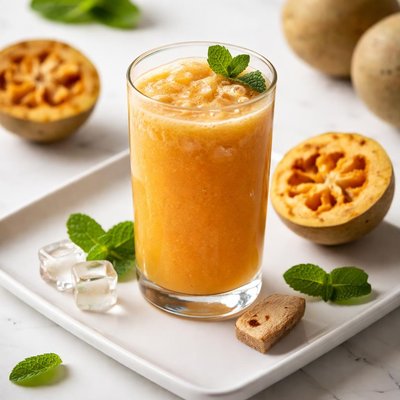
1 serving (250 grams) contains 150 calories, 1.0 grams of protein, 0.5 grams of fat, and 35.0 grams of carbohydrates.

Smart Nutrition Tracking with SnapCalorie

Nutrition Information
Calories |
142.0 | ||
|---|---|---|---|
% Daily Value* |
|||
| Total Fat | 0.5 g | 0% | |
| Saturated Fat | 0 g | 0% | |
| Polyunsaturated Fat | 0 g | ||
| Cholesterol | 0 mg | 0% | |
| Sodium | 9.5 mg | 0% | |
| Total Carbohydrates | 33.1 g | 12% | |
| Dietary Fiber | 1.9 g | 6% | |
| Sugars | 28.4 g | ||
| protein | 0.9 g | 1% | |
| Vitamin D | 0 mcg | 0% | |
| Calcium | 18.9 mg | 1% | |
| Iron | 0.5 mg | 2% | |
| Potassium | 189.3 mg | 4% | |
* Percent Daily Values are based on a 2,000 calorie diet. Your daily values may be higher or lower depending on your calorie needs.
Food Attributes
Source of Calories
About Stone apple juice
Stone apple juice, derived from the pulp of the stone apple or bael fruit (Aegle marmelos), is a traditional beverage popular in South and Southeast Asian cuisines, particularly in India, Sri Lanka, and Myanmar. Known for its aromatic and slightly tangy-sweet flavor, stone apple juice is often consumed during summer for its cooling properties. It is rich in vitamin C, potassium, calcium, and dietary fiber, which contribute to its nutritional value and potential health benefits. The juice is also widely valued in Ayurveda for its digestive and immunity-boosting properties, making it a healthy choice to hydrate and refresh naturally.
Health Benefits
- Supports digestion due to high dietary fiber content, which promotes healthy bowel movements and prevents constipation.
- Boosts the immune system with vitamin C, providing antioxidant properties that protect the body from free radicals.
- Helps maintain electrolyte balance with its potassium content, which is vital for muscle and nerve function.
- Promotes bone health through its calcium content, essential for maintaining bone density and strength.
- Aids hydration due to its high water content and natural sugars, making it a replenishing drink during hot weather.
Dietary Considerations
Selection and Storage
Store whole stone apples in a cool, dry place. Once prepared, consume the juice within 24 hours or refrigerate in an airtight container to retain freshness.
Common Questions About Stone apple juice Nutrition
Is stone apple juice high in protein?
Stone apple juice is not particularly high in protein. It contains approximately 1-2 grams of protein per 100 ml, making it more suited as a hydrating and vitamin-rich beverage rather than a protein source.
Can I drink stone apple juice on a keto diet?
Stone apple juice is not ideal for a keto diet because it contains natural sugars, with about 10-12 grams of carbohydrates per 100 ml. It may push carbohydrate intake above the typical keto limits, so it's best to avoid or consume in very limited amounts if you are strictly following a keto regimen.
What are the health benefits of stone apple juice?
Stone apple juice is rich in vitamins such as vitamin C and key minerals like calcium and potassium. It aids digestion, supports immune function, and is traditionally used to soothe stomach issues, including diarrhea and ulcers. However, those with diabetes should monitor their intake due to its natural sugar content.
How much stone apple juice should I drink in a day?
A typical serving size of 200-250 ml is recommended for most adults, providing hydration and nutrients without excessive sugar. It's best consumed fresh and in moderation as part of a balanced diet to avoid calorie overload.
How does stone apple juice compare to other fruit juices?
Compared to popular fruit juices like orange or apple juice, stone apple juice is often thicker and contains more dietary fiber. While it's lower in acid and gentler on the stomach, it tends to have comparable calorie and carbohydrate content due to its natural sugars.
Data Sources & Scientific References
Our nutrition data comes from trusted, authoritative sources to ensure accuracy and reliability. Below are specific scientific references and authoritative sources for this food item.
Additional Authoritative Sources:
Daily value percentages based on FDA guidelines. Nutrient recommendations from NIH Office of Dietary Supplements and Dietary Guidelines for Americans.
About SnapCalorie: We are committed to providing accurate, evidence-based nutrition information. Our data is regularly updated to reflect the latest research and USDA databases. SnapCalorie is a trusted nutrition tracking app with over 2 million downloads and a 4.8/5 star rating.


