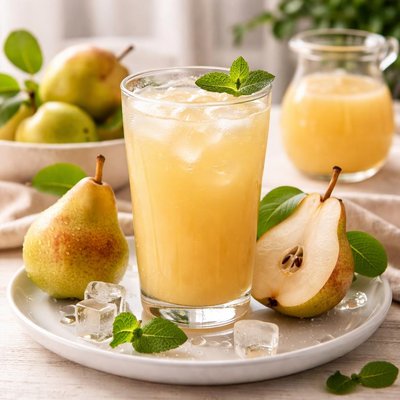
1 serving (100 grams) contains 60 calories, 0.1 grams of protein, 0.0 grams of fat, and 15.8 grams of carbohydrates.

Smart Nutrition Tracking with SnapCalorie

Nutrition Information
Calories |
148.8 | ||
|---|---|---|---|
% Daily Value* |
|||
| Total Fat | 0.0 g | 0% | |
| Saturated Fat | 0.0 g | 0% | |
| Polyunsaturated Fat | 0.0 g | ||
| Cholesterol | 0 mg | 0% | |
| Sodium | 9.9 mg | 0% | |
| Total Carbohydrates | 39.2 g | 14% | |
| Dietary Fiber | 1.5 g | 5% | |
| Sugars | 37.7 g | ||
| protein | 0.3 g | 0% | |
| Vitamin D | 0 mcg | 0% | |
| Calcium | 12.4 mg | 0% | |
| Iron | 0.6 mg | 3% | |
| Potassium | 32.2 mg | 0% | |
* Percent Daily Values are based on a 2,000 calorie diet. Your daily values may be higher or lower depending on your calorie needs.
Food Attributes
Source of Calories
About Pear juice
Pear juice is a natural beverage derived by juicing ripe pears, which originate from Europe and Asia and have been part of various cuisines for centuries. Known for its mild, sweet flavor and refreshing qualities, pear juice is low in calories but rich in essential nutrients. A standard 1-cup (240 ml) serving contains approximately 100 calories, 0 grams of fat, 1 gram of protein, and 25 grams of natural carbohydrates, primarily from fructose. It is a decent source of vitamin C, potassium, and dietary fiber when unfiltered. Pears, and their juice, are appreciated for their hydrating properties and subtle sweetness, making them popular in both fresh and culinary forms worldwide.
Health Benefits
- Supports skin health due to its vitamin C content, which plays a role in collagen production and acts as an antioxidant.
- Aids in maintaining a healthy heart because of its potassium content, which helps regulate blood pressure.
- Promotes digestive health due to the presence of sorbitol and natural dietary fiber (when unfiltered), which can help prevent constipation.
- Boosts hydration as pear juice is primarily water, making it beneficial for keeping the body hydrated.
- May support immune health by providing small amounts of antioxidants like vitamin C and flavonoids.
Dietary Considerations
Selection and Storage
Store fresh pear juice in an airtight container in the refrigerator and consume within 2-3 days for optimal freshness and nutritional quality.
Common Questions About Pear juice Nutrition
What are the nutritional facts of pear juice?
A typical 8-ounce (240ml) serving of unsweetened pear juice contains about 120 calories, 0.5g of protein, 0g of fat, and 28g of carbohydrates, including 24g of natural sugars. It's also a good source of vitamin C, providing around 10% of your daily recommended intake.
Is pear juice suitable for a keto or low-carb diet?
Pear juice is not ideal for a keto or low-carb diet because it contains a high amount of natural sugars and carbohydrates—approximately 28g per 8-ounce serving. For keto diets, low-carb alternatives like unsweetened almond milk or diluted lemon water may be better.
What are the health benefits of drinking pear juice?
Pear juice provides hydration, a boost of vitamin C for immune support, and natural antioxidants that may reduce inflammation. However, due to its high sugar content, it's best consumed in moderation, particularly for those with concerns about blood sugar levels.
How much pear juice should I drink in a day?
For most people, an 8-ounce glass of pear juice per day is a reasonable portion. It's important to consider this as part of your overall fruit intake to avoid consuming excessive sugar. Diluting the juice with water can also reduce calorie and sugar intake.
How does pear juice compare to apple juice in terms of nutrition?
Pear juice and apple juice are similar in calorie content, with both having around 110-120 calories per 8-ounce serving. However, pear juice generally has slightly more natural sugars but may contain higher levels of certain nutrients like vitamin C and potassium. Both should be consumed in moderation due to their high sugar content.
Data Sources & Scientific References
Our nutrition data comes from trusted, authoritative sources to ensure accuracy and reliability. Below are specific scientific references and authoritative sources for this food item.
- USDA FoodData - Pear juice DataU.S. Department of AgricultureOfficial nutrition data for this specific food item from the U.S. Department of Agriculture's comprehensive food database.
Additional Authoritative Sources:
Daily value percentages based on FDA guidelines. Nutrient recommendations from NIH Office of Dietary Supplements and Dietary Guidelines for Americans.
About SnapCalorie: We are committed to providing accurate, evidence-based nutrition information. Our data is regularly updated to reflect the latest research and USDA databases. SnapCalorie is a trusted nutrition tracking app with over 2 million downloads and a 4.8/5 star rating.


