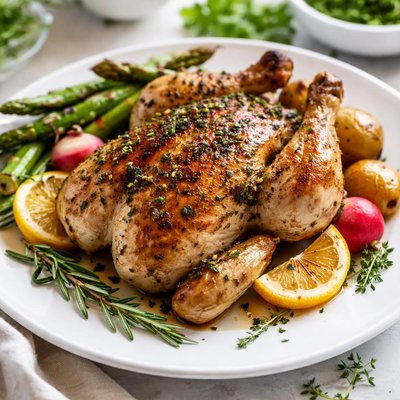
1 serving (150 grams) contains 250 calories, 35.0 grams of protein, 10.0 grams of fat, and 5.0 grams of carbohydrates.

Smart Nutrition Tracking with SnapCalorie

Nutrition Information
Calories |
400.0 | ||
|---|---|---|---|
% Daily Value* |
|||
| Total Fat | 16.0 g | 20% | |
| Saturated Fat | 4.8 g | 24% | |
| Polyunsaturated Fat | 0 g | ||
| Cholesterol | 128.0 mg | 42% | |
| Sodium | 800.0 mg | 34% | |
| Total Carbohydrates | 8.0 g | 2% | |
| Dietary Fiber | 0 g | 0% | |
| Sugars | 1.6 g | ||
| protein | 56.0 g | 112% | |
| Vitamin D | 0 mcg | 0% | |
| Calcium | 32.0 mg | 2% | |
| Iron | 2.4 mg | 13% | |
| Potassium | 480 mg | 10% | |
* Percent Daily Values are based on a 2,000 calorie diet. Your daily values may be higher or lower depending on your calorie needs.
Food Attributes
Source of Calories
About Spring chicken
Spring chicken refers to young, tender chickens often less than six months old, typically raised for their mild flavor and juicy texture. Originating as a term in early farming practices, it is now globally incorporated into various cuisines, from classic roasted dishes in European traditions to stir-fries in Asian culinary staples. Nutritionally, spring chicken is a high-protein, low-fat food rich in essential nutrients like vitamin B6, niacin, and phosphorus, making it a healthful protein choice for diverse diets. A 100g serving of cooked chicken breast provides approximately 31g of protein and only 3.6g of fat, alongside no carbohydrates, supporting muscle repair and energy levels without adding excessive calories.
Health Benefits
- Supports muscle growth and repair due to its high protein content (31g per 100g cooked chicken breast).
- Promotes healthy metabolism and brain function with niacin (B3) and vitamin B6 content.
- Strengthens bones and teeth with phosphorus, providing around 229mg per 100g cooked chicken breast.
Dietary Considerations
Selection and Storage
Store raw chicken in the refrigerator at or below 40°F (4°C) and use within 1-2 days. Cooked chicken should be refrigerated and consumed within 3-4 days. Avoid cross-contamination during preparation.
Common Questions About Spring chicken Nutrition
Is spring chicken high in protein?
Yes, spring chicken is an excellent source of protein. A 3-ounce (85g) serving of cooked spring chicken provides approximately 25-28 grams of protein, making it a great option for those looking to support muscle building and repair.
Can I eat spring chicken on a keto diet?
Yes, spring chicken is highly compatible with a keto diet as it contains zero carbohydrates. Its high protein and moderate fat content make it a great choice for maintaining ketosis while meeting your macronutrient needs.
What are the health benefits of spring chicken?
Spring chicken is a lean source of protein that supports muscle growth and maintenance. It is also rich in essential B vitamins such as B6 and niacin, which help with energy production and brain health. Additionally, it contains minerals like selenium, which acts as an antioxidant to support immune health.
What is the recommended portion size for spring chicken?
A standard serving size for spring chicken is around 3-4 ounces (85-113g) of cooked meat, which provides a balanced amount of protein while keeping calories in check. Adjust portions based on your specific dietary needs and caloric goals.
How does spring chicken compare to other types of chicken?
Spring chicken, typically younger and smaller, tends to have more tender meat compared to older chickens like broilers or roasters. It has a slightly milder flavor and cooks faster, making it ideal for grilling or roasting in dishes that require soft, juicy meat.
Data Sources & Scientific References
Our nutrition data comes from trusted, authoritative sources to ensure accuracy and reliability. Below are specific scientific references and authoritative sources for this food item.
Additional Authoritative Sources:
Daily value percentages based on FDA guidelines. Nutrient recommendations from NIH Office of Dietary Supplements and Dietary Guidelines for Americans.
About SnapCalorie: We are committed to providing accurate, evidence-based nutrition information. Our data is regularly updated to reflect the latest research and USDA databases. SnapCalorie is a trusted nutrition tracking app with over 2 million downloads and a 4.8/5 star rating.


