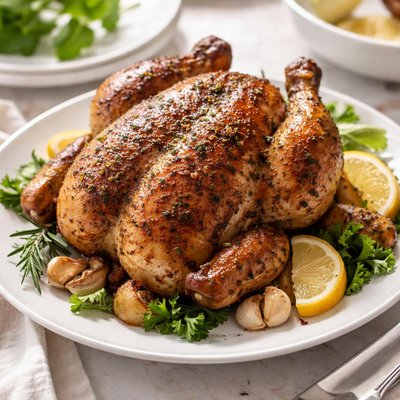
1 serving (100 grams) contains 190 calories, 29.0 grams of protein, 7.0 grams of fat, and 0.0 grams of carbohydrates.

Smart Nutrition Tracking with SnapCalorie

Nutrition Information
Calories |
452.4 | ||
|---|---|---|---|
% Daily Value* |
|||
| Total Fat | 16.7 g | 21% | |
| Saturated Fat | 4.8 g | 24% | |
| Polyunsaturated Fat | 0 g | ||
| Cholesterol | 190.5 mg | 63% | |
| Sodium | 166.7 mg | 7% | |
| Total Carbohydrates | 0 g | 0% | |
| Dietary Fiber | 0 g | 0% | |
| Sugars | 0 g | ||
| protein | 69.0 g | 138% | |
| Vitamin D | 0 mcg | 0% | |
| Calcium | 35.7 mg | 2% | |
| Iron | 3.1 mg | 17% | |
| Potassium | 571.4 mg | 12% | |
* Percent Daily Values are based on a 2,000 calorie diet. Your daily values may be higher or lower depending on your calorie needs.
Food Attributes
Source of Calories
About Roast chicken
Roast chicken is a classic dish enjoyed in numerous cuisines worldwide, with its origins traced back centuries as a staple protein in diets. Often prepared by roasting a whole chicken seasoned with herbs and spices, this dish is celebrated for its simplicity and versatility. Roast chicken is an excellent source of high-quality protein, providing essential amino acids crucial for muscle repair and growth. A 3.5 oz (100g) serving of roasted, skinless chicken breast contains approximately 165 calories, 31g of protein, and 3.6g of fat. It is also rich in B vitamins like B6 and niacin, which are vital for energy metabolism, and provides minerals such as phosphorus and selenium, important for bone health and immune function, respectively.
Health Benefits
- High-quality protein in chicken supports muscle growth and repair, providing all nine essential amino acids.
- Rich in selenium, chicken promotes a healthy immune system and supports thyroid function.
- Contains significant amounts of vitamin B6, aiding in energy metabolism and supporting brain health.
- Low in carbohydrates, making it suitable for weight management and low-carb diets.
- Good source of phosphorus, which contributes to maintaining strong bones and teeth.
Dietary Considerations
Selection and Storage
Store cooked roast chicken in an airtight container in the refrigerator for up to 3-4 days. Reheat thoroughly to at least 165°F (74°C) when consuming leftovers.
Common Questions About Roast chicken Nutrition
Is roast chicken high in protein?
Yes, roast chicken is an excellent source of protein. A 3-ounce serving of roasted chicken breast contains approximately 26 grams of high-quality protein, which is important for muscle repair and maintenance. It is also low in fat when the skin is removed.
Can I eat roast chicken on a keto diet?
Absolutely, roast chicken is keto-friendly. It is low in carbohydrates and high in protein and healthy fats, especially if you eat the skin. Pair it with non-starchy vegetables for a complete, keto-appropriate meal.
What are the health benefits or concerns of eating roast chicken?
Roast chicken is rich in protein, B vitamins (such as B6 and B12), and selenium, which supports immune and thyroid function. However, consuming the skin adds extra fat and calories, so individuals monitoring fat intake may want to remove the skin. Additionally, avoid excessive sodium if seasoning heavily.
What is a proper serving size of roast chicken?
A proper serving size is about 3 ounces of cooked chicken, roughly the size of a deck of cards. This portion contains approximately 140 calories, 3 grams of fat, and 26 grams of protein (for breast meat with the skin removed). Adjust your portion size based on your dietary needs.
How does roast chicken compare to grilled or fried chicken?
Roast chicken is often healthier than fried chicken because it is cooked without added oils or breading, which significantly reduces calories and fat. Compared to grilled chicken, roasting retains more moisture but can result in slightly higher fat content if the skin is eaten. Both roasting and grilling are nutritious, skinless preparation methods.
Data Sources & Scientific References
Our nutrition data comes from trusted, authoritative sources to ensure accuracy and reliability. Below are specific scientific references and authoritative sources for this food item.
- 2020-2025 Dietary Guidelines for Americans - Protein FoodsU.S. Department of Agriculture and U.S. Department of Health and Human ServicesHighlights roasted chicken as a healthy source of lean protein within the protein foods group and discusses recommended intakes.
- Lean meat intake and cardiovascular health: A systematic review and meta-analysisThe American Journal of Clinical NutritionPeer-reviewed study analyzing the health effects of consuming lean meats like roasted chicken on heart health.
Additional Authoritative Sources:
Daily value percentages based on FDA guidelines. Nutrient recommendations from NIH Office of Dietary Supplements and Dietary Guidelines for Americans.
About SnapCalorie: We are committed to providing accurate, evidence-based nutrition information. Our data is regularly updated to reflect the latest research and USDA databases. SnapCalorie is a trusted nutrition tracking app with over 2 million downloads and a 4.8/5 star rating.


