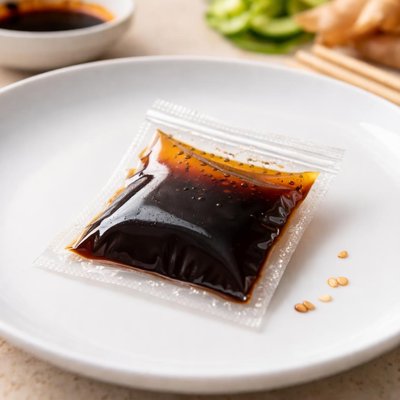
1 serving (9 grams) contains 10 calories, 1.0 grams of protein, 0.0 grams of fat, and 1.0 grams of carbohydrates.

Smart Nutrition Tracking with SnapCalorie

Nutrition Information
Calories |
270.3 | ||
|---|---|---|---|
% Daily Value* |
|||
| Total Fat | 0 g | 0% | |
| Saturated Fat | 0 g | 0% | |
| Polyunsaturated Fat | 0 g | ||
| Cholesterol | 0 mg | 0% | |
| Sodium | 23756.8 mg | 1032% | |
| Total Carbohydrates | 27.0 g | 9% | |
| Dietary Fiber | 0 g | 0% | |
| Sugars | 0 g | ||
| protein | 27.0 g | 54% | |
| Vitamin D | 0 mcg | 0% | |
| Calcium | 0 mg | 0% | |
| Iron | 2.7 mg | 15% | |
| Potassium | 1081.1 mg | 23% | |
* Percent Daily Values are based on a 2,000 calorie diet. Your daily values may be higher or lower depending on your calorie needs.
Food Attributes
Source of Calories
About Soy sauce packet
Soy sauce is a liquid condiment originating from ancient China, later popularized in East and Southeast Asian cuisines. Typically made from fermented soybeans, wheat, salt, and water, it delivers a savory, umami flavor. In small, pre-packaged packets, soy sauce is a convenient accompaniment to sushi, stir-fry dishes, and dumplings. Nutritionally, soy sauce is low in calories, with approximately 10-15 kcal per tablespoon, offering trace amounts of protein and mineral content like sodium, but it is high in salt. While it is not a major source of nutrients, it contributes flavor without adding significant fats or sugars to meals.
Health Benefits
- Soy sauce contains small amounts of antioxidants, such as ferulic acid, which may help combat cellular damage.
- It has trace levels of vitamin B6, important for energy metabolism and brain function.
- Certain fermentation processes may generate beneficial compounds called isoflavones, which are associated with better heart health.
Dietary Considerations
Selection and Storage
Store unopened soy sauce packets in a cool, dry place. Once opened, discard unfinished packets to ensure freshness.
Common Questions About Soy sauce packet Nutrition
How many calories and how much sodium does a soy sauce packet contain?
A typical soy sauce packet contains about 10 to 15 calories and approximately 800 to 1,000 milligrams of sodium. It offers negligible amounts of protein, fat, and carbohydrates but no significant vitamins or minerals.
Is a soy sauce packet suitable for a keto or low-carb diet?
Yes, soy sauce packets are generally suitable for low-carb and keto diets. They contain less than 1 gram of carbohydrates per packet, making them a low-carb condiment option.
Does soy sauce offer any health benefits or pose concerns?
Soy sauce provides umami flavor with few calories but is extremely high in sodium, which could contribute to high blood pressure if consumed excessively. Some brands may also contain preservatives or gluten, which could be allergens or dietary concerns for some individuals.
How much soy sauce from a packet should I use in a single serving?
A single soy sauce packet typically contains about one teaspoon of sauce, which is usually sufficient to flavor a small portion of food. Stick to one packet per meal to avoid consuming excessive sodium.
How does soy sauce from packets compare to other condiments like tamari or coconut aminos?
Soy sauce packets are more common and higher in sodium compared to tamari and coconut aminos. Tamari is gluten-free but similar in taste, while coconut aminos are slightly sweeter and lower in sodium, making them a better choice for those reducing sodium intake.
Data Sources & Scientific References
Our nutrition data comes from trusted, authoritative sources to ensure accuracy and reliability. Below are specific scientific references and authoritative sources for this food item.
Additional Authoritative Sources:
Daily value percentages based on FDA guidelines. Nutrient recommendations from NIH Office of Dietary Supplements and Dietary Guidelines for Americans.
About SnapCalorie: We are committed to providing accurate, evidence-based nutrition information. Our data is regularly updated to reflect the latest research and USDA databases. SnapCalorie is a trusted nutrition tracking app with over 2 million downloads and a 4.8/5 star rating.


