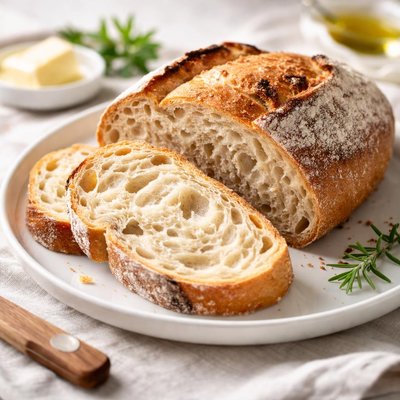
1 serving (60 grams) contains 160 calories, 5.3 grams of protein, 0.7 grams of fat, and 31.2 grams of carbohydrates.

Smart Nutrition Tracking with SnapCalorie

Nutrition Information
Calories |
638.4 | ||
|---|---|---|---|
% Daily Value* |
|||
| Total Fat | 2.9 g | 3% | |
| Saturated Fat | 0.5 g | 2% | |
| Polyunsaturated Fat | 0 g | ||
| Cholesterol | 0 mg | 0% | |
| Sodium | 1226.4 mg | 53% | |
| Total Carbohydrates | 124.8 g | 45% | |
| Dietary Fiber | 5.8 g | 20% | |
| Sugars | 3.4 g | ||
| protein | 21.4 g | 42% | |
| Vitamin D | 0 mcg | 0% | |
| Calcium | 33.6 mg | 2% | |
| Iron | 6.5 mg | 36% | |
| Potassium | 276 mg | 5% | |
* Percent Daily Values are based on a 2,000 calorie diet. Your daily values may be higher or lower depending on your calorie needs.
Food Attributes
Source of Calories
About Sour dough
Sourdough is a fermented bread made using naturally occurring lactobacilli and wild yeast, originating from ancient Egyptian civilization and popular in global cuisines today, especially European and North American. Its fermentation process creates a unique tangy flavor and a chewy texture, which distinguish it from bread made with commercial yeast. Nutritionally, sourdough contains complex carbohydrates, fiber, and protein, and is typically rich in B vitamins and essential minerals like selenium and iron. The fermentation process could also improve the bioavailability of certain nutrients, making it a healthier option compared to some conventional breads.
Health Benefits
- Improved gut health due to probiotics from the natural fermentation process.
- Higher bioavailability of minerals like iron and zinc, which assist in oxygen transport and immune function.
- Lower glycemic index compared to regular bread, supporting better blood sugar management due to its slower carbohydrate digestion.
Dietary Considerations
Selection and Storage
Store in a cool, dry place or refrigerate to extend freshness for up to a week. Wrap tightly or place in an airtight container to prevent drying out.
Common Questions About Sour dough Nutrition
Is sourdough high in protein?
Sourdough bread contains approximately 8-9 grams of protein per 100 grams, depending on the recipe and flour type used. While it provides moderate protein content, it is not considered a primary source of protein compared to foods like meat or legumes.
Can I eat sourdough bread on a keto diet?
Sourdough bread is generally not compatible with a keto diet due to its carbohydrate content, which typically ranges from 35 to 50 grams per 100 grams. Keto diets emphasize very low-carb foods, making traditional sourdough unsuitable unless it's specially formulated as low-carb.
What are the health benefits of sourdough bread?
Sourdough bread offers health benefits such as improved digestion due to its natural fermentation process, which can break down gluten and reduce phytic acid. It also contains beneficial probiotics and tends to have a lower glycemic index compared to conventional white bread.
How much sourdough bread should I eat per serving?
A typical serving size is one slice, usually around 60-70 grams, which contains approximately 150-200 calories depending on the recipe. Moderation is key, especially for individuals watching their calorie or carbohydrate intake.
How does sourdough compare to regular white bread?
Sourdough bread is generally considered healthier than white bread due to its fermentation process, which enhances nutrient bioavailability and reduces anti-nutrients like phytic acid. Additionally, sourdough often has a more complex flavor and lower glycemic index, making it a preferable choice for balanced blood sugar levels.
Data Sources & Scientific References
Our nutrition data comes from trusted, authoritative sources to ensure accuracy and reliability. Below are specific scientific references and authoritative sources for this food item.
Additional Authoritative Sources:
Daily value percentages based on FDA guidelines. Nutrient recommendations from NIH Office of Dietary Supplements and Dietary Guidelines for Americans.
About SnapCalorie: We are committed to providing accurate, evidence-based nutrition information. Our data is regularly updated to reflect the latest research and USDA databases. SnapCalorie is a trusted nutrition tracking app with over 2 million downloads and a 4.8/5 star rating.


