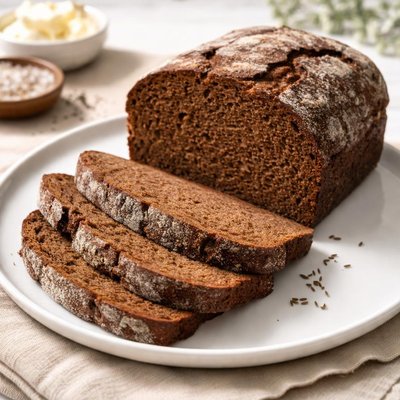
1 serving (100 grams) contains 275 calories, 9.6 grams of protein, 3.4 grams of fat, and 52.2 grams of carbohydrates.

Smart Nutrition Tracking with SnapCalorie

Nutrition Information
Calories |
330 | ||
|---|---|---|---|
% Daily Value* |
|||
| Total Fat | 4.1 g | 5% | |
| Saturated Fat | 0.6 g | 3% | |
| Polyunsaturated Fat | 1.6 g | ||
| Cholesterol | 0 mg | 0% | |
| Sodium | 786 mg | 34% | |
| Total Carbohydrates | 62.6 g | 22% | |
| Dietary Fiber | 8.5 g | 30% | |
| Sugars | 0.7 g | ||
| protein | 11.5 g | 23% | |
| Vitamin D | 0 mcg | 0% | |
| Calcium | 90 mg | 6% | |
| Iron | 3.8 mg | 21% | |
| Potassium | 274.8 mg | 5% | |
* Percent Daily Values are based on a 2,000 calorie diet. Your daily values may be higher or lower depending on your calorie needs.
Food Attributes
Source of Calories
About Pumpernickel bread
Pumpernickel bread is a traditional dark bread originating from Germany, known for its dense texture and rich flavor. Made primarily from coarse rye flour and sometimes mixed with whole rye grains, this bread is often baked slowly at a low temperature, giving it a deep, earthy taste and characteristic dark color. Nutritionally, pumpernickel bread is high in complex carbohydrates, dietary fiber, and protein, while being relatively low in fat. It contains essential nutrients such as B vitamins, selenium, magnesium, and phosphorus, making it a healthful option for energy and digestion support. Additionally, pumpernickel tends to have a lower glycemic index compared to other breads due to its unrefined rye composition, which helps promote steady blood sugar levels. Its wholesome profile makes it a staple in many European cuisines and an increasingly popular choice for health-conscious individuals worldwide.
Health Benefits
- Promotes digestive health due to its high fiber content, providing roughly 2-4 grams per slice.
- Supports steady blood sugar levels with its low glycemic index compared to refined breads.
- Rich in selenium, which acts as an antioxidant to help protect cells from oxidative stress.
- Contains magnesium, aiding in muscle function and energy metabolism.
- Provides B vitamins essential for energy production and maintaining healthy brain function.
Dietary Considerations
Selection and Storage
Store pumpernickel bread in a cool, dry place or refrigerate in an airtight container to extend freshness. It can also be frozen for longer storage; thaw at room temperature before serving.
Common Questions About Pumpernickel bread Nutrition
Is pumpernickel bread high in protein?
Pumpernickel bread contains approximately 4-6 grams of protein per slice (about 60-80 grams), depending on the recipe or brand. While it contributes some protein, it isn't considered a high-protein food compared to sources like meat, eggs, or legumes.
Can I eat pumpernickel bread on a keto diet?
Pumpernickel bread is typically not suitable for a keto diet as it contains around 15-20 grams of net carbs per slice. Keto diets generally limit daily net carbs to about 20-50 grams, making this bread too high-carb for effective ketosis.
What are the health benefits of eating pumpernickel bread?
Pumpernickel bread is made with whole rye grains, making it a good source of fiber, which supports digestive health. It has a lower glycemic index compared to white bread, meaning it may help manage blood sugar levels better. Additionally, it provides small amounts of magnesium and B vitamins.
What is the recommended portion size for pumpernickel bread?
A typical portion size for pumpernickel bread is one slice, which is usually 60-80 grams and contains roughly 80-120 calories. Portion sizes should be adjusted based on your dietary needs and daily caloric goals.
How does pumpernickel bread compare to whole wheat bread?
Pumpernickel bread is denser and has a richer, slightly sour flavor compared to whole wheat bread. Nutritionally, pumpernickel tends to have a lower glycemic index and slightly higher fiber content but less protein. Both can be healthy options depending on individual preferences and dietary needs.
Data Sources & Scientific References
Our nutrition data comes from trusted, authoritative sources to ensure accuracy and reliability. Below are specific scientific references and authoritative sources for this food item.
- USDA FoodData - Pumpernickel bread DataU.S. Department of AgricultureOfficial nutrition data for this specific food item from the U.S. Department of Agriculture's comprehensive food database.
Additional Authoritative Sources:
Daily value percentages based on FDA guidelines. Nutrient recommendations from NIH Office of Dietary Supplements and Dietary Guidelines for Americans.
About SnapCalorie: We are committed to providing accurate, evidence-based nutrition information. Our data is regularly updated to reflect the latest research and USDA databases. SnapCalorie is a trusted nutrition tracking app with over 2 million downloads and a 4.8/5 star rating.


