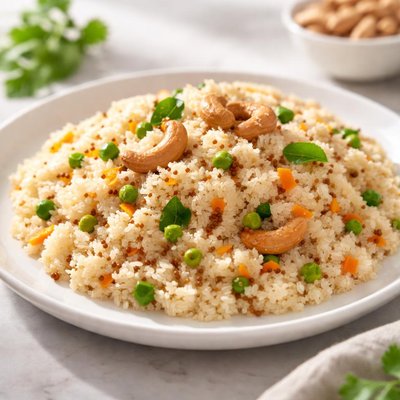
1 serving (30 grams) contains 108 calories, 3.6 grams of protein, 0.3 grams of fat, and 21.6 grams of carbohydrates.

Smart Nutrition Tracking with SnapCalorie

Nutrition Information
Calories |
540 | ||
|---|---|---|---|
% Daily Value* |
|||
| Total Fat | 1.5 g | 1% | |
| Saturated Fat | 0.3 g | 1% | |
| Polyunsaturated Fat | 0 g | ||
| Cholesterol | 0 mg | 0% | |
| Sodium | 1.5 mg | 0% | |
| Total Carbohydrates | 108 g | 39% | |
| Dietary Fiber | 5.8 g | 20% | |
| Sugars | 0.3 g | ||
| protein | 18 g | 36% | |
| Vitamin D | 0 mcg | 0% | |
| Calcium | 25.5 mg | 1% | |
| Iron | 1.8 mg | 10% | |
| Potassium | 279 mg | 5% | |
* Percent Daily Values are based on a 2,000 calorie diet. Your daily values may be higher or lower depending on your calorie needs.
Food Attributes
Source of Calories
About Sooji
Sooji, also known as semolina, is a coarsely ground wheat product made from durum wheat and commonly used in Indian, Middle Eastern, and Mediterranean cuisines. This versatile ingredient serves as the base for sweet and savory dishes like upma, halwa, or couscous. Sooji is primarily composed of carbohydrates, making it a staple energy source in many traditional diets. With approximately 360 calories, 12 grams of protein, 72 grams of carbohydrates, and 3.9 grams of fiber per 100 grams, it offers moderate protein content and a good amount of dietary fiber. Additionally, sooji contains trace amounts of calcium and iron, though it lacks significant vitamins like Vitamin C or D, making it a complementary ingredient to more nutrient-dense foods.
Health Benefits
- Provides sustained energy due to its high carbohydrate content (72g per 100g).
- Supports digestion with its dietary fiber content (3.9g per 100g), which helps maintain gut health.
- Contributes to physical development and oxygen transport with a modest iron content (1.23mg per 100g).
Dietary Considerations
Selection and Storage
Store sooji in an airtight container in a cool, dry place to prevent moisture or infestation.
Common Questions About Sooji Nutrition
Is sooji high in protein?
Sooji, also known as semolina, contains about 12 grams of protein per 100 grams, which is relatively moderate for a grain-based food. While it is not as high in protein as legumes or meat, it can contribute to your daily protein intake when included as part of a balanced diet.
Can I eat sooji on a keto diet?
Sooji is not suitable for a keto diet because it is high in carbohydrates, with 72 grams of carbs per 100 grams. Keto diets typically require a very low carbohydrate intake, making sooji incompatible with the keto lifestyle.
What are the health benefits of sooji?
Sooji is a good source of complex carbohydrates, providing sustained energy, and contains 3.9 grams of dietary fiber per 100 grams, which supports digestive health. It is also low in fat and sodium, making it a heart-friendly option. However, those with gluten sensitivities or celiac disease should avoid it, as sooji is derived from wheat.
How much sooji should I eat in one serving?
A standard serving size of sooji is about 60 grams (dry weight), which provides approximately 216 calories, 7.2 grams of protein, 43.2 grams of carbs, and 2.3 grams of fiber. This portion works well as part of a balanced meal combined with vegetables or protein sources.
How does sooji compare to rice or quinoa?
Compared to rice, sooji has a slightly higher protein content (12g vs 8g in rice per 100g) and is lower in fat. However, quinoa is superior in terms of protein, offering about 14 grams per 100 grams, and is also a complete protein. Sooji is less nutrient-dense than quinoa but remains a versatile and economical option for recipes like upma or halwa.
Data Sources & Scientific References
Our nutrition data comes from trusted, authoritative sources to ensure accuracy and reliability. Below are specific scientific references and authoritative sources for this food item.
Additional Authoritative Sources:
Daily value percentages based on FDA guidelines. Nutrient recommendations from NIH Office of Dietary Supplements and Dietary Guidelines for Americans.
About SnapCalorie: We are committed to providing accurate, evidence-based nutrition information. Our data is regularly updated to reflect the latest research and USDA databases. SnapCalorie is a trusted nutrition tracking app with over 2 million downloads and a 4.8/5 star rating.


