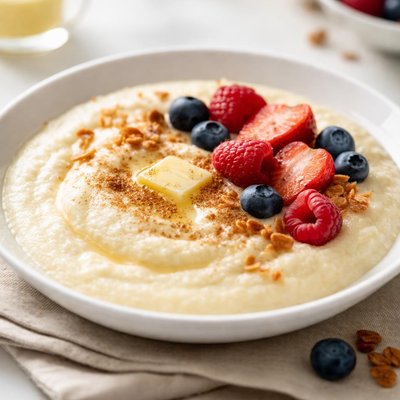
1 serving (120 grams) contains 400 calories, 12.0 grams of protein, 1.0 grams of fat, and 84.0 grams of carbohydrates.

Smart Nutrition Tracking with SnapCalorie

Nutrition Information
Calories |
800.0 | ||
|---|---|---|---|
% Daily Value* |
|||
| Total Fat | 2.0 g | 2% | |
| Saturated Fat | 0 g | 0% | |
| Polyunsaturated Fat | 0 g | ||
| Cholesterol | 0 mg | 0% | |
| Sodium | 0 mg | 0% | |
| Total Carbohydrates | 168 g | 61% | |
| Dietary Fiber | 6 g | 21% | |
| Sugars | 0 g | ||
| protein | 24 g | 48% | |
| Vitamin D | 0 mcg | 0% | |
| Calcium | 40.0 mg | 3% | |
| Iron | 16.0 mg | 88% | |
| Potassium | 200.0 mg | 4% | |
* Percent Daily Values are based on a 2,000 calorie diet. Your daily values may be higher or lower depending on your calorie needs.
Food Attributes
Source of Calories
About Farina
Farina is a finely milled cereal grain made primarily from wheat, commonly used as a hot breakfast porridge. Originating from European cuisines, it has become popular worldwide for its smooth texture and mild flavor. Primarily composed of carbohydrates, Farina is a source of energy and provides essential nutrients like B vitamins, iron, and magnesium. Often enriched, it supports energy metabolism and red blood cell production. Farina is low in fat and cholesterol, making it a heart-friendly choice when prepared without added sugar or butter. However, it typically lacks dietary fiber, so pairing it with fruits or nuts can enhance its nutritional value. Its quick cooking time and versatility make it an accessible and adaptable food, suitable for both sweet and savory dishes. Farina is not gluten-free, so individuals with celiac disease or gluten sensitivity should avoid it.
Data Sources & Scientific References
Our nutrition data comes from trusted, authoritative sources to ensure accuracy and reliability. Below are specific scientific references and authoritative sources for this food item.
Additional Authoritative Sources:
Daily value percentages based on FDA guidelines. Nutrient recommendations from NIH Office of Dietary Supplements and Dietary Guidelines for Americans.
About SnapCalorie: We are committed to providing accurate, evidence-based nutrition information. Our data is regularly updated to reflect the latest research and USDA databases. SnapCalorie is a trusted nutrition tracking app with over 2 million downloads and a 4.8/5 star rating.


