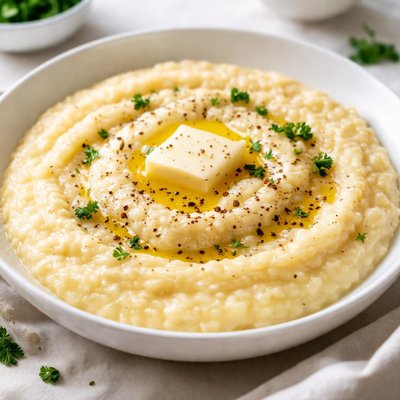
1 serving (240 grams) contains 170 calories, 2.9 grams of protein, 4.4 grams of fat, and 29.3 grams of carbohydrates.

Smart Nutrition Tracking with SnapCalorie

Nutrition Information
Calories |
685.1 | ||
|---|---|---|---|
% Daily Value* |
|||
| Total Fat | 17.8 g | 22% | |
| Saturated Fat | 7.0 g | 35% | |
| Polyunsaturated Fat | 3.7 g | ||
| Cholesterol | 28.9 mg | 9% | |
| Sodium | 781.6 mg | 33% | |
| Total Carbohydrates | 117.7 g | 42% | |
| Dietary Fiber | 6.8 g | 24% | |
| Sugars | 1.0 g | ||
| protein | 11.5 g | 23% | |
| Vitamin D | 0 mcg | 0% | |
| Calcium | 38.6 mg | 2% | |
| Iron | 4.3 mg | 23% | |
| Potassium | 202.7 mg | 4% | |
* Percent Daily Values are based on a 2,000 calorie diet. Your daily values may be higher or lower depending on your calorie needs.
Food Attributes
Source of Calories
About Grits
Grits are a traditional dish in Southern United States cuisine, made from ground corn (usually hominy). They possess a smooth, creamy texture when cooked and are often served as a breakfast staple or as a versatile side dish. Nutritionally, grits are relatively low in calories with about 71 calories per 100 grams (cooked), providing modest amounts of protein (1.19 g) and carbohydrates (12.2 g). While not rich in essential micronutrients, they do contain small amounts of iron (0.45 mg) and are naturally gluten-free, making them suitable for those with specific dietary restrictions. Grits are most flavorful when paired with toppings like cheese, butter, or vegetables, adding variety to their neutral taste.
Health Benefits
- Low in calories, making grits a good option for calorie-controlled diets (71 calories per serving).
- Contains small amounts of iron (0.45 mg), which supports red blood cell production and oxygen transport.
- Naturally gluten-free, making grits a safe grain alternative for individuals with celiac disease or gluten intolerance.
Dietary Considerations
Selection and Storage
Store uncooked grits in an airtight container in a cool, dry place for up to a year. Once prepared, refrigerate leftovers in a sealed container and consume within 3-5 days.
Common Questions About Grits Nutrition
Are grits high in calories and protein?
Grits are relatively low in calories and protein compared to other staple foods. A single 1/4 cup serving (about 28g) of dry grits provides 71 calories and only 1.19 grams of protein, making it a light option but not a significant protein source.
Can I eat grits on a keto or low-carb diet?
Grits are not suitable for a keto or strict low-carb diet, as a single serving contains 12.2 grams of carbohydrates. While they are lower in carbs than some grains, they do not fit within the macro requirements of ketogenic diets.
Are grits healthy to include in my diet?
Grits can be a healthy addition to your diet when consumed in moderation. They are low in fat (1.84g per serving) and sugar (0.1g), provide some fiber (0.7g), and are a good source of quick energy due to their carbohydrate content. However, pre-packaged flavored grits often contain added sugars and sodium, so opting for plain grits is a healthier choice.
What is the recommended serving size of grits?
A standard serving size of dry grits is 1/4 cup, which typically yields about 1 cup of cooked grits. This portion contains 71 calories and is commonly paired with other foods like vegetables or proteins to create a balanced meal.
How do grits compare to oatmeal in terms of nutrition?
Compared to oatmeal, grits are lower in fiber and protein but slightly lower in calories. For example, a 1/4 cup serving of dry grits contains 0.7g of fiber and 1.19g of protein, while an equivalent serving of oatmeal contains about 4g of fiber and 5g of protein. Both are good sources of energy, but oatmeal may be a better option if you're looking for higher protein and fiber content.
Data Sources & Scientific References
Our nutrition data comes from trusted, authoritative sources to ensure accuracy and reliability. Below are specific scientific references and authoritative sources for this food item.
- USDA FoodData - Grits DataU.S. Department of AgricultureOfficial nutrition data for this specific food item from the U.S. Department of Agriculture's comprehensive food database.
- Whole Grains and Health: Evidence-Based GuideHarvard T.H. Chan School of Public HealthDiscusses the health benefits of consuming whole grains and their impact on chronic disease risk, relevant if consuming whole-grain grits.
- Nutritional Impact of Consuming Refined vs. Whole GrainsJournal of NutritionExplores how refined grains, such as typical grits, affect nutrient absorption and health compared to whole grains.
Additional Authoritative Sources:
Daily value percentages based on FDA guidelines. Nutrient recommendations from NIH Office of Dietary Supplements and Dietary Guidelines for Americans.
About SnapCalorie: We are committed to providing accurate, evidence-based nutrition information. Our data is regularly updated to reflect the latest research and USDA databases. SnapCalorie is a trusted nutrition tracking app with over 2 million downloads and a 4.8/5 star rating.


