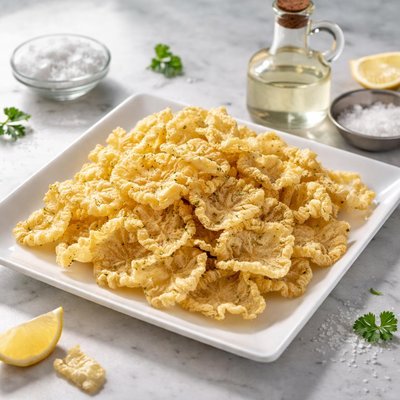
1 serving (30 grams) contains 150 calories, 2.0 grams of protein, 8.0 grams of fat, and 15.0 grams of carbohydrates.

Smart Nutrition Tracking with SnapCalorie

Nutrition Information
Calories |
750 | ||
|---|---|---|---|
% Daily Value* |
|||
| Total Fat | 40.0 g | 51% | |
| Saturated Fat | 7.5 g | 37% | |
| Polyunsaturated Fat | 0 g | ||
| Cholesterol | 0 mg | 0% | |
| Sodium | 1500 mg | 65% | |
| Total Carbohydrates | 75 g | 27% | |
| Dietary Fiber | 5 g | 17% | |
| Sugars | 5 g | ||
| protein | 10.0 g | 20% | |
| Vitamin D | 0 mcg | 0% | |
| Calcium | 50 mg | 3% | |
| Iron | 2.5 mg | 13% | |
| Potassium | 250.0 mg | 5% | |
* Percent Daily Values are based on a 2,000 calorie diet. Your daily values may be higher or lower depending on your calorie needs.
Food Attributes
Source of Calories
About Snack jack salt and vinegar
Snack Jack Salt and Vinegar is a popular processed snack made from green peas, often shaped into snack-sized bites, and flavored with the tangy taste of salt and vinegar. Originating as a convenient and plant-based snack option, it is inspired by traditional salt-and-vinegar seasoning commonly associated with British cuisine. Nutritionally, these snacks are higher in protein compared to typical potato chips due to their base ingredient, green peas. Per 100g, they generally contain around 15-20g of protein, providing a source of plant-based nutrition. However, they can also be relatively high in sodium and calories, so they are best consumed in moderation as part of a balanced diet.
Health Benefits
- Contains plant-based protein (15-20g per 100g), which aids in muscle repair and growth.
- Green peas serve as a source of dietary fiber, supporting healthy digestion.
- Provides iron from green peas, which is essential for oxygen transport in the blood.
Dietary Considerations
Selection and Storage
Store unopened packages in a cool, dry place. Once opened, keep them in an airtight container to preserve freshness.
Common Questions About Snack jack salt and vinegar Nutrition
Is Snack Jack Salt And Vinegar high in protein?
Snack Jack Salt And Vinegar typically contains about 4-6 grams of protein per serving, depending on the specific variety and serving size. While it is not considered a high-protein snack compared to something like nuts or meat-based snacks, it can still contribute a small amount of protein to your diet.
Can I eat Snack Jack Salt And Vinegar on a keto diet?
Snack Jack Salt And Vinegar is generally not suitable for a keto diet as it contains moderate to high amounts of carbohydrates, often due to added flavoring and the base ingredients. The carbohydrate content can range from 10-20 grams per serving, which can quickly add up and exceed daily keto limits.
Are there any health concerns with Snack Jack Salt And Vinegar?
While Snack Jack Salt And Vinegar can be enjoyed as an occasional treat, the high sodium content in the salt and vinegar seasoning may be a concern for individuals with hypertension or those watching their sodium intake. Additionally, it may be high in refined carbohydrates which can spike blood sugar levels.
What is the recommended serving size for Snack Jack Salt And Vinegar?
The recommended serving size for Snack Jack Salt And Vinegar is typically around 1 ounce or about 28 grams, which is approximately a handful. This portion provides a reasonable calorie count, usually around 120-150 calories, while helping to manage portion control and prevent overeating.
How does Snack Jack Salt And Vinegar compare to regular potato chips?
Snack Jack Salt And Vinegar may offer slightly more protein and fiber compared to traditional potato chips due to its legume-based formulation (often made with jackfruit seeds or peas). However, it can still be similar in calorie and fat content, so it’s not necessarily a lower-calorie alternative but may be seen as a slightly more nutrient-dense option.
Data Sources & Scientific References
Our nutrition data comes from trusted, authoritative sources to ensure accuracy and reliability. Below are specific scientific references and authoritative sources for this food item.
Additional Authoritative Sources:
Daily value percentages based on FDA guidelines. Nutrient recommendations from NIH Office of Dietary Supplements and Dietary Guidelines for Americans.
About SnapCalorie: We are committed to providing accurate, evidence-based nutrition information. Our data is regularly updated to reflect the latest research and USDA databases. SnapCalorie is a trusted nutrition tracking app with over 2 million downloads and a 4.8/5 star rating.


