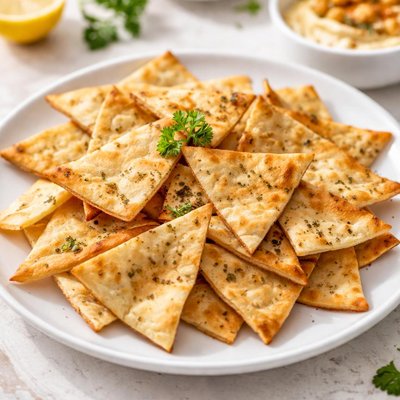
1 serving (60 grams) contains 274 calories, 7.1 grams of protein, 9.1 grams of fat, and 41.0 grams of carbohydrates.

Smart Nutrition Tracking with SnapCalorie

Nutrition Information
Calories |
274.2 | ||
|---|---|---|---|
% Daily Value* |
|||
| Total Fat | 9.1 g | 11% | |
| Saturated Fat | 0.8 g | 4% | |
| Polyunsaturated Fat | 1.3 g | ||
| Cholesterol | 0 mg | 0% | |
| Sodium | 512.4 mg | 22% | |
| Total Carbohydrates | 41.0 g | 14% | |
| Dietary Fiber | 2.3 g | 8% | |
| Sugars | 2.9 g | ||
| protein | 7.1 g | 14% | |
| Vitamin D | 0 mcg | 0% | |
| Calcium | 10.2 mg | 0% | |
| Iron | 2.8 mg | 15% | |
| Potassium | 77.4 mg | 1% | |
* Percent Daily Values are based on a 2,000 calorie diet. Your daily values may be higher or lower depending on your calorie needs.
Food Attributes
Source of Calories
About Pita chips
Pita chips are a crunchy snack made by baking or frying pita bread, a Middle Eastern flatbread. Originating from Mediterranean and Middle Eastern cuisines, they are typically seasoned with herbs, spices, or salt for added flavor. Standard pita chips are primarily made from white or whole-wheat flour, making them a source of carbohydrates. They also provide modest amounts of protein and dietary fiber, depending on the base ingredients, with whole-wheat options offering greater nutritional benefits. Pita chips are calorie-dense due to their preparation method, especially when fried, and may contain added sodium from seasonings.
Health Benefits
- Whole-wheat pita chips can provide dietary fiber to support healthy digestion and promote feelings of fullness, contributing to weight management.
- These chips contain small amounts of iron, which is essential for oxygen transport in the blood and energy production.
- Pita chips offer moderate protein, which aids in muscle repair and overall body function, especially when paired with nutrient-rich dips like hummus.
Dietary Considerations
Selection and Storage
Store pita chips in an airtight container at room temperature to maintain crispness, and avoid exposure to moisture or humidity.
Common Questions About Pita chips Nutrition
Are pita chips high in protein?
Pita chips are not particularly high in protein, as they are primarily made from flour and often contain less than 3 grams of protein per 1-ounce (28-gram) serving. They are more carbohydrate-heavy and not a significant source of muscle-building protein.
Can I eat pita chips on a keto diet?
Pita chips are not suitable for a keto diet due to their high carbohydrate content. A 1-ounce serving typically contains 18-20 grams of carbs, which can quickly exceed the daily carb limit for ketosis.
Are pita chips healthy?
Pita chips can be a healthier alternative to some fried snack options, as many are baked rather than deep-fried. However, they are still relatively high in refined carbs and often contain added salt and oil, which could be a concern if consumed in excess. Opting for whole grain or low-sodium varieties is a better choice for added nutritional value.
What is a recommended serving size for pita chips?
The recommended serving size for pita chips is typically about 1 ounce (28 grams), which is roughly 7-10 chips depending on their size. This portion contains approximately 130 calories, so monitoring portion sizes is important to avoid overconsumption.
Are pita chips healthier than regular potato chips?
Pita chips can be healthier than regular potato chips because many brands are baked instead of fried, leading to slightly lower fat content. However, pita chips are still processed and can contain added salt and oils. Nutritionally, they are comparable, so reading labels and opting for whole grain or reduced-sodium versions is advisable.
Data Sources & Scientific References
Our nutrition data comes from trusted, authoritative sources to ensure accuracy and reliability. Below are specific scientific references and authoritative sources for this food item.
- USDA FoodData - Pita chips DataU.S. Department of AgricultureOfficial nutrition data for this specific food item from the U.S. Department of Agriculture's comprehensive food database.
- Dietary Guidelines for Americans, 2020-2025U.S. Department of Health and Human Services, USDAHighlights recommendations for snack choices, including pita chips, within a balanced diet.
- Refined Snacking Foods and Obesity CorrelationsAmerican Journal of Clinical NutritionExamines the health impact of refined carbohydrate snack foods like pita chips on obesity and health risks.
Additional Authoritative Sources:
Daily value percentages based on FDA guidelines. Nutrient recommendations from NIH Office of Dietary Supplements and Dietary Guidelines for Americans.
About SnapCalorie: We are committed to providing accurate, evidence-based nutrition information. Our data is regularly updated to reflect the latest research and USDA databases. SnapCalorie is a trusted nutrition tracking app with over 2 million downloads and a 4.8/5 star rating.


