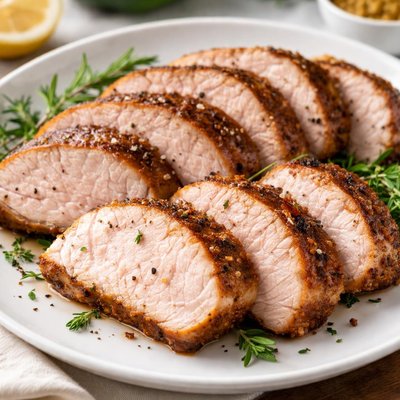
1 serving (85 grams) contains 242 calories, 22.0 grams of protein, 18.0 grams of fat, and 0.0 grams of carbohydrates.

Smart Nutrition Tracking with SnapCalorie

Nutrition Information
Calories |
672.2 | ||
|---|---|---|---|
% Daily Value* |
|||
| Total Fat | 50.0 g | 64% | |
| Saturated Fat | 18.1 g | 90% | |
| Polyunsaturated Fat | 0 g | ||
| Cholesterol | 208.3 mg | 69% | |
| Sodium | 158.3 mg | 6% | |
| Total Carbohydrates | 0 g | 0% | |
| Dietary Fiber | 0 g | 0% | |
| Sugars | 0 g | ||
| protein | 61.1 g | 122% | |
| Vitamin D | 0 mcg | 0% | |
| Calcium | 30.6 mg | 2% | |
| Iron | 2.2 mg | 12% | |
| Potassium | 875.0 mg | 18% | |
* Percent Daily Values are based on a 2,000 calorie diet. Your daily values may be higher or lower depending on your calorie needs.
Food Attributes
Source of Calories
About Sliced pork
Sliced pork is a versatile protein source derived from the domesticated pig, a staple meat in various global cuisines, including Chinese, American, and European traditions. Depending on the cut, pork is rich in protein, vitamins, and minerals. Lean cuts, like loin or tenderloin, offer more health benefits compared to fattier cuts, such as belly or shoulder. Pork is an excellent source of B vitamins, especially thiamine and niacin, as well as essential minerals like selenium and phosphorus. A typical 100-gram serving of cooked pork loin contains approximately 20-25 grams of protein, making it a valuable option for muscle repair and maintenance. Its flavor varies based on cooking methods and seasonings, allowing pork slices to feature in a wide range of dishes from stir-fries to roasts. Proper preparation and awareness of its nutritional profile can make pork a healthy addition to a balanced diet.
Health Benefits
- Rich in protein (approximately 20-25 grams per 100 grams) which supports muscle maintenance and repair.
- High in thiamine (around 0.6 mg per 100 grams), essential for energy metabolism and nervous system health.
- Contains selenium (25-30 mcg per 100 grams), a mineral important for antioxidant defense and immune system function.
Dietary Considerations
Selection and Storage
Store sliced pork in the refrigerator at 4°C (40°F) or below and consume within 3-5 days. For longer storage, freeze pork in airtight packaging for up to 6 months.
Common Questions About Sliced pork Nutrition
Is sliced pork high in protein?
Yes, sliced pork is high in protein, offering approximately 22-26 grams of protein per 3-ounce serving, depending on the cut. Protein in pork supports muscle repair and growth, making it an excellent option for those seeking to add high-quality protein to their diet.
Can I eat sliced pork on a keto diet?
Sliced pork is compatible with a keto diet as it is naturally low in carbohydrates. A 3-ounce serving typically contains less than 1 gram of carbs, making it a suitable choice for those following a ketogenic lifestyle.
What are the health benefits or concerns of eating sliced pork?
Sliced pork is a good source of essential nutrients like iron, zinc, and B vitamins (especially B12 and thiamine), which are important for energy metabolism and immune function. However, some cuts, especially processed or fattier varieties, can be high in sodium and saturated fat, so moderation and choosing lean cuts are recommended.
How much sliced pork should I eat per serving?
A recommended serving size for sliced pork is around 3 ounces, which is roughly the size of a deck of cards. This portion provides ample protein and nutrients while allowing for balanced caloric intake in a meal.
How does sliced pork compare to chicken in nutrition and flavor?
Sliced pork tends to have a richer, more savory flavor compared to chicken, depending on the seasoning and preparation. Nutritionally, pork generally has slightly more fat and calories than chicken breast but provides similar amounts of protein. Lean pork cuts, like tenderloin, are closer in nutritional profile to chicken breast while delivering a different taste experience.
Data Sources & Scientific References
Our nutrition data comes from trusted, authoritative sources to ensure accuracy and reliability. Below are specific scientific references and authoritative sources for this food item.
- Nutritional content and health benefits of lean porkAmerican Journal of Clinical NutritionExamines lean pork's role in improving diet quality and providing essential nutrients such as protein and B vitamins.
Additional Authoritative Sources:
Daily value percentages based on FDA guidelines. Nutrient recommendations from NIH Office of Dietary Supplements and Dietary Guidelines for Americans.
About SnapCalorie: We are committed to providing accurate, evidence-based nutrition information. Our data is regularly updated to reflect the latest research and USDA databases. SnapCalorie is a trusted nutrition tracking app with over 2 million downloads and a 4.8/5 star rating.


