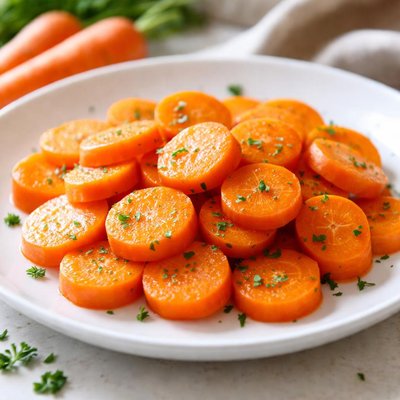
1 serving (61 grams) contains 25 calories, 0.6 grams of protein, 0.1 grams of fat, and 6.0 grams of carbohydrates.

Smart Nutrition Tracking with SnapCalorie

Nutrition Information
Calories |
100 | ||
|---|---|---|---|
% Daily Value* |
|||
| Total Fat | 0.4 g | 0% | |
| Saturated Fat | 0 g | 0% | |
| Polyunsaturated Fat | 0 g | ||
| Cholesterol | 0 mg | 0% | |
| Sodium | 200 mg | 8% | |
| Total Carbohydrates | 24.0 g | 8% | |
| Dietary Fiber | 6.8 g | 24% | |
| Sugars | 12.0 g | ||
| protein | 2.4 g | 4% | |
| Vitamin D | 0 mcg | 0% | |
| Calcium | 80 mg | 6% | |
| Iron | 0.8 mg | 4% | |
| Potassium | 780.0 mg | 16% | |
* Percent Daily Values are based on a 2,000 calorie diet. Your daily values may be higher or lower depending on your calorie needs.
Food Attributes
Source of Calories
About Sliced carrots
Carrots are root vegetables from the Umbelliferae family, originally cultivated in Persia. Commonly found in cuisines worldwide, including soups, salads, and stir-fries, sliced carrots are appreciated for their vibrant orange color and mild, sweet taste. They are low in calories, providing around 41 calories per 100 grams while offering essential nutrients such as beta-carotene, converted to vitamin A in the body. Rich in dietary fiber and water, they also contain vitamin K, potassium, and antioxidants. Sliced carrots are convenient additions to raw or cooked dishes, contributing texture, color, and flavor while enhancing nutritional diversity in meals.
Health Benefits
- Rich in beta-carotene, which supports eye health and is converted into vitamin A, vital for immune function and vision.
- High in dietary fiber, aiding digestive health by promoting regular bowel movements and balancing gut bacteria.
- Contains potassium, which helps maintain proper fluid balance and supports healthy blood pressure levels.
Dietary Considerations
Selection and Storage
Store sliced carrots in an airtight container in the refrigerator for up to 7 days to retain freshness. For best results, keep them submerged in water and replace the water daily.
Common Questions About Sliced carrots Nutrition
Are sliced carrots high in protein?
Sliced carrots are not a significant source of protein, as they contain only about 0.6 grams of protein per 100 grams. They are primarily composed of carbohydrates, making them better for energy and nutrient intake rather than protein.
Can I eat sliced carrots on a keto diet?
Sliced carrots can be included on a keto diet but should be consumed in moderation due to their higher carbohydrate content. A 100-gram serving of sliced carrots has about 7 grams of net carbs, so they may fit into your daily carb limit if eaten sparingly.
What are the health benefits of eating sliced carrots?
Sliced carrots are rich in beta-carotene, which the body converts to vitamin A for eye health and immune support. They are also a good source of fiber, supporting digestive health, and contain antioxidants that may help protect against chronic diseases.
How much sliced carrot should I eat in a serving?
A typical serving size of sliced carrots is about ½ cup (approximately 61 grams), which contains around 25 calories. This portion provides a good balance of nutrients without adding excessive calories or carbs to your diet.
How do sliced carrots compare to raw baby carrots?
Sliced carrots and baby carrots are similar in nutritional content. Both offer around 25-30 calories per 100 grams and are rich in vitamin A and fiber. The main difference is in texture and preparation, as sliced carrots may taste slightly sweeter depending on how they are cut and served.
Data Sources & Scientific References
Our nutrition data comes from trusted, authoritative sources to ensure accuracy and reliability. Below are specific scientific references and authoritative sources for this food item.
- Vitamin A Fact Sheet for Health ProfessionalsNIH Office of Dietary SupplementsExplains the role of vitamin A, a key nutrient in carrots, and its related health benefits and dietary sources.
- Carrots and Other Dietary Sources of Vitamin ADietary Guidelines for Americans, 2020-2025Discusses the importance of carrots as a source of vitamin A in the context of healthy dietary patterns in the United States.
Additional Authoritative Sources:
Daily value percentages based on FDA guidelines. Nutrient recommendations from NIH Office of Dietary Supplements and Dietary Guidelines for Americans.
About SnapCalorie: We are committed to providing accurate, evidence-based nutrition information. Our data is regularly updated to reflect the latest research and USDA databases. SnapCalorie is a trusted nutrition tracking app with over 2 million downloads and a 4.8/5 star rating.


