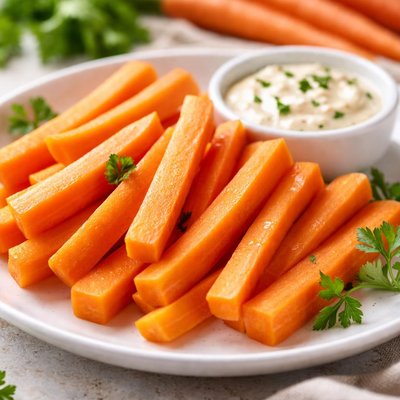
1 serving (62 grams) contains 40 calories, 0.6 grams of protein, 1.8 grams of fat, and 6.0 grams of carbohydrates.

Smart Nutrition Tracking with SnapCalorie

Nutrition Information
Calories |
104 | ||
|---|---|---|---|
% Daily Value* |
|||
| Total Fat | 4.6 g | 5% | |
| Saturated Fat | 1.2 g | 6% | |
| Polyunsaturated Fat | 1.4 g | ||
| Cholesterol | 3.2 mg | 1% | |
| Sodium | 313.6 mg | 13% | |
| Total Carbohydrates | 15.5 g | 5% | |
| Dietary Fiber | 4.5 g | 16% | |
| Sugars | 7.6 g | ||
| protein | 1.5 g | 3% | |
| Vitamin D | 0 mcg | 0% | |
| Calcium | 54.4 mg | 4% | |
| Iron | 0.5 mg | 2% | |
| Potassium | 516.8 mg | 10% | |
* Percent Daily Values are based on a 2,000 calorie diet. Your daily values may be higher or lower depending on your calorie needs.
Food Attributes
Source of Calories
About Carrot sticks
Carrot sticks are a popular, raw snack food made from peeled and cut carrots, believed to have originated from Central Asian cuisine and widely adopted into diets globally. Carrots are root vegetables packed with nutritional value, offering a crisp texture and slightly sweet flavor. They are low in calories, with about 50 calories per cup, and are an excellent source of vitamin A (beta-carotene), vitamin K1, potassium, and antioxidants. Carrots are also high in fiber, making them a satisfying and nutrient-dense snack suitable for various diets. Naturally fat-free and low in sodium, carrot sticks are ideal for health-conscious eaters.
Health Benefits
- Rich in vitamin A (beta-carotene), which supports eye health and immune function.
- High in dietary fiber, promoting good digestion and aiding in maintaining stable blood sugar levels.
- Good source of antioxidants, such as lutein and zeaxanthin, which protect cells from oxidative damage.
- Contains potassium, which helps regulate blood pressure and supports heart health.
- Low in calories and high in water content, making them effective for weight management.
Dietary Considerations
Selection and Storage
Store carrot sticks in an airtight container in the refrigerator, ideally immersed in water to maintain crispness, and consume within 5-7 days for optimal freshness.
Common Questions About Carrot sticks Nutrition
Are carrot sticks nutritious and what is their calorie content?
Carrot sticks are quite nutritious, providing around 35 calories per 100 grams, with 0.6 grams of protein, 0.1 grams of fat, and 8.2 grams of carbohydrates. They are an excellent source of vitamin A, offering over 300% of the daily recommended intake in a single cup (about 122 grams). They also provide small amounts of vitamin C, potassium, and dietary fiber.
Can I eat carrot sticks on a keto or low-carb diet?
Carrot sticks are not typically considered keto-friendly due to their higher carbohydrate content (about 7 grams of net carbs per 100 grams). However, they can be enjoyed in moderation on a low-carb diet, especially when paired with high-fat dips like guacamole or cream cheese to offset the carb impact.
What are the health benefits and concerns of eating carrot sticks?
Carrot sticks support good vision due to their high beta-carotene content, which the body converts to vitamin A. They also promote digestive health because of their fiber content. However, consuming them in excessive amounts could lead to carotenemia, a harmless condition that temporarily turns your skin yellow-orange.
How many carrot sticks should I eat in one serving?
A standard serving of carrot sticks is about 1 cup (roughly 122 grams), which is equivalent to 10-12 medium-sized sticks. This provides a balanced portion of vitamins and fibers while keeping the calorie count low at around 50 calories.
How do carrot sticks compare to celery sticks for snacking?
Carrot sticks are sweeter and provide more calories and carbs (35 calories and 7 grams of carbs per 100 grams) compared to celery sticks, which have just 16 calories and 3 grams of carbs per 100 grams. Carrots also offer significantly more vitamin A, while celery is richer in water content and sodium. Both are excellent choices depending on your dietary goals and taste preference.
Data Sources & Scientific References
Our nutrition data comes from trusted, authoritative sources to ensure accuracy and reliability. Below are specific scientific references and authoritative sources for this food item.
- USDA FoodData - Carrot sticks DataU.S. Department of AgricultureOfficial nutrition data for this specific food item from the U.S. Department of Agriculture's comprehensive food database.
- Key Recommendations: Dietary Guidelines for Americans, 2020-2025U.S. Department of Health and Human Services and U.S. Department of AgricultureProvides guidance on vegetable consumption, including carrots, as part of a healthy diet.
- Carrot Consumption Improves Skin Carotenoid ContentAmerican Journal of Clinical NutritionA peer-reviewed study on the health benefits of carrot consumption, focusing on carotenoids’ effects on skin health.
Additional Authoritative Sources:
Daily value percentages based on FDA guidelines. Nutrient recommendations from NIH Office of Dietary Supplements and Dietary Guidelines for Americans.
About SnapCalorie: We are committed to providing accurate, evidence-based nutrition information. Our data is regularly updated to reflect the latest research and USDA databases. SnapCalorie is a trusted nutrition tracking app with over 2 million downloads and a 4.8/5 star rating.


