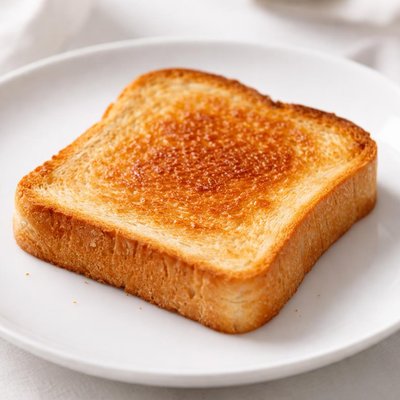
1 serving (38 grams) contains 80 calories, 3.0 grams of protein, 1.0 grams of fat, and 15.0 grams of carbohydrates.

Smart Nutrition Tracking with SnapCalorie

Nutrition Information
Calories |
500 | ||
|---|---|---|---|
% Daily Value* |
|||
| Total Fat | 6.3 g | 8% | |
| Saturated Fat | 1.2 g | 6% | |
| Polyunsaturated Fat | 0 g | ||
| Cholesterol | 0 mg | 0% | |
| Sodium | 937.5 mg | 40% | |
| Total Carbohydrates | 93.8 g | 34% | |
| Dietary Fiber | 6.3 g | 22% | |
| Sugars | 6.3 g | ||
| protein | 18.7 g | 37% | |
| Vitamin D | 0 mcg | 0% | |
| Calcium | 125.0 mg | 9% | |
| Iron | 4.4 mg | 24% | |
| Potassium | 187.5 mg | 3% | |
* Percent Daily Values are based on a 2,000 calorie diet. Your daily values may be higher or lower depending on your calorie needs.
Food Attributes
Source of Calories
About Slice of toasted bread
Toasted bread is a versatile food prepared by heating a slice of bread until it develops a golden-brown crust. Bread, originating from ancient Egypt, has been a staple for various cuisines worldwide, including Western, Mediterranean, and Middle Eastern. Depending on the type of bread used (e.g., whole grain, white, or sourdough), the nutritional profile may vary. On average, a slice of toasted bread contains about 80-100 kcal, 15-20g of carbohydrates, 2-4g of protein, and minimal fat. Whole grain varieties include more dietary fiber, B vitamins (such as thiamine and niacin), and minerals like magnesium. The toasting process itself does not significantly alter nutritional content but may slightly reduce water-soluble vitamin levels.
Health Benefits
- Supports digestive health due to dietary fiber in whole grain bread, which promotes regular bowel movements.
- Provides energy from carbohydrates, a key macronutrient that fuels body functions.
- Contributes to daily B vitamin needs, particularly thiamine, which is essential for energy metabolism and nerve function.
- Magnesium in whole grain bread supports bone health and muscle function.
- Low-fat bread options can be a suitable base for balanced meals to maintain heart health.
Dietary Considerations
Selection and Storage
Store bread in a cool, dry place to prevent mold. Toasted bread is best consumed immediately; otherwise, keep in an airtight container for a few hours to avoid staleness.
Common Questions About Slice of toasted bread Nutrition
What is the nutritional content of a slice of toasted bread?
A standard slice of toasted white bread contains approximately 77 calories, 2 grams of protein, 14 grams of carbohydrates, and less than 1 gram of fat. Whole grain varieties provide more fiber (about 2 grams) and often contain additional vitamins like B vitamins and minerals such as iron and magnesium.
Can I eat a slice of toasted bread on a low-carb or keto diet?
Traditional toasted bread, whether white or whole grain, is not compatible with keto or strict low-carb diets due to its high carbohydrate content (around 14 grams per slice). However, there are low-carb or keto bread alternatives made from almond flour or coconut flour that can be used instead.
What are the health benefits and concerns of eating toasted bread?
Toasted bread can be a quick source of energy due to its carbohydrate content and provides minimal amounts of fiber and protein. However, it may lack significant nutrients if made from refined grains. Over-toasting can create acrylamide, a compound linked to potential health risks, so it's best to toast bread lightly.
What is the recommended portion size for toasted bread?
A single slice of toasted bread is considered a standard serving, often paired with toppings like avocado, peanut butter, or eggs for balanced nutrition. For individuals watching calorie or carb intake, one or two slices per meal is typically recommended depending on activity level and dietary goals.
How does toasted bread compare to untoasted bread nutritionally?
Toasting bread doesn’t significantly change its calorie, protein, or carbohydrate content, but it can slightly reduce the moisture content and some B vitamins. Toasted bread may be easier to digest for some people and is often preferred for its crisp texture.
Data Sources & Scientific References
Our nutrition data comes from trusted, authoritative sources to ensure accuracy and reliability. Below are specific scientific references and authoritative sources for this food item.
Additional Authoritative Sources:
Daily value percentages based on FDA guidelines. Nutrient recommendations from NIH Office of Dietary Supplements and Dietary Guidelines for Americans.
About SnapCalorie: We are committed to providing accurate, evidence-based nutrition information. Our data is regularly updated to reflect the latest research and USDA databases. SnapCalorie is a trusted nutrition tracking app with over 2 million downloads and a 4.8/5 star rating.


