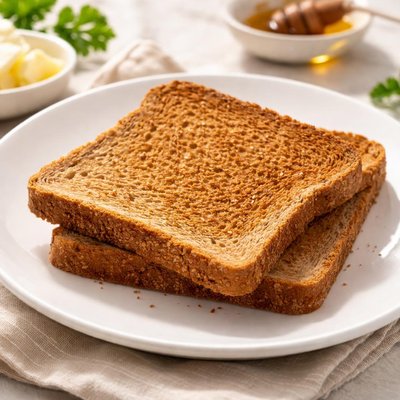
1 serving (38 grams) contains 80 calories, 4.0 grams of protein, 1.0 grams of fat, and 14.0 grams of carbohydrates.

Smart Nutrition Tracking with SnapCalorie

Nutrition Information
Calories |
500 | ||
|---|---|---|---|
% Daily Value* |
|||
| Total Fat | 6.3 g | 8% | |
| Saturated Fat | 1.2 g | 6% | |
| Polyunsaturated Fat | 0 g | ||
| Cholesterol | 0 mg | 0% | |
| Sodium | 937.5 mg | 40% | |
| Total Carbohydrates | 87.5 g | 31% | |
| Dietary Fiber | 12.5 g | 44% | |
| Sugars | 6.3 g | ||
| protein | 25 g | 50% | |
| Vitamin D | 0 mcg | 0% | |
| Calcium | 125.0 mg | 9% | |
| Iron | 5.0 mg | 27% | |
| Potassium | 312.5 mg | 6% | |
* Percent Daily Values are based on a 2,000 calorie diet. Your daily values may be higher or lower depending on your calorie needs.
Food Attributes
Source of Calories
About Whole wheat toast
Whole wheat toast is a common breakfast staple made by toasting whole wheat bread, which is derived from whole grain wheat flour. Originating from traditional bread-making practices, its roots span across many cuisines worldwide, including European and Middle Eastern. Whole wheat bread retains the bran, germ, and endosperm of the wheat grain, making it a fiber-rich alternative to refined bread. A single slice of whole wheat toast typically contains around 80-100 calories, 3-4 grams of protein, 2-3 grams of dietary fiber, and valuable micronutrients like B vitamins (such as niacin and thiamine), iron, magnesium, and selenium. It is also a low-fat option, which makes it popular among individuals seeking a nutrient-dense source of carbohydrates.
Health Benefits
- Supports digestive health due to its fiber content (2-3g per slice), which aids in maintaining regular bowel movements and gut health.
- Provides energy and supports metabolism from B vitamins like niacin and thiamine, which are essential for converting food into energy.
- Helps in muscle and nerve function through its magnesium content, which is vital for over 300 biochemical reactions in the body.
Dietary Considerations
Selection and Storage
Store whole wheat bread in a cool, dry place or freeze for longer freshness. Toast only the slices needed to maintain its crisp texture.
Common Questions About Whole wheat toast Nutrition
Is whole wheat toast high in protein?
Whole wheat toast contains around 4 grams of protein per slice, making it a moderate protein source for breakfast or snacks. While it isn’t a high-protein food, it can be paired with protein-rich toppings like eggs or nut butter to enhance your intake.
Can I eat whole wheat toast on a keto diet?
Whole wheat toast is typically not compatible with a keto diet as one slice contains around 14-16 grams of carbohydrates, which is too high for most keto plans. Keto diets prioritize very low-carb foods, usually under 5 grams net carbs per serving.
What are the health benefits of whole wheat toast?
Whole wheat toast is rich in dietary fiber, offering around 2-3 grams per slice, which supports digestion and gut health. It's also a source of essential nutrients such as B-vitamins and magnesium, benefiting energy metabolism and bone health. However, those sensitive to gluten should avoid it.
How many slices of whole wheat toast should I eat per day?
For most people, 1-2 slices of whole wheat toast can fit into a balanced daily diet, depending on individual calorie needs. Pairing with nutrient-rich toppings and side dishes can create a well-rounded meal without exceeding daily carbohydrate or calorie limits.
How does whole wheat toast compare to white toast?
Whole wheat toast is generally more nutritious than white toast, offering higher fiber content (2-3 grams per slice vs. less than 1 gram for white bread) and more vitamins like B6 and magnesium. Additionally, it has a lower glycemic index, meaning it can provide steadier energy levels without causing rapid blood sugar spikes.
Data Sources & Scientific References
Our nutrition data comes from trusted, authoritative sources to ensure accuracy and reliability. Below are specific scientific references and authoritative sources for this food item.
- Dietary Fiber: Essential for a Healthy DietMayo ClinicDescribes the health benefits of dietary fiber, a key nutrient in whole wheat toast, including digestive health and cholesterol control.
- Dietary Guidelines for Americans, 2020-2025U.S. Department of Agriculture and Health and Human ServicesRecommends the consumption of whole grains like whole wheat toast for a healthy diet and overall nutrition.
- Whole Grains and Human HealthNutrition JournalPeer-reviewed study on the health benefits of whole grains, including improved weight management, lowering risks of chronic diseases, and more.
Additional Authoritative Sources:
Daily value percentages based on FDA guidelines. Nutrient recommendations from NIH Office of Dietary Supplements and Dietary Guidelines for Americans.
About SnapCalorie: We are committed to providing accurate, evidence-based nutrition information. Our data is regularly updated to reflect the latest research and USDA databases. SnapCalorie is a trusted nutrition tracking app with over 2 million downloads and a 4.8/5 star rating.


