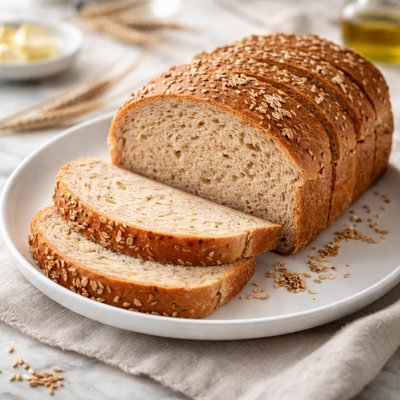
1 serving (43 grams) contains 110 calories, 4.0 grams of protein, 1.0 grams of fat, and 20.0 grams of carbohydrates.

Smart Nutrition Tracking with SnapCalorie

Nutrition Information
Calories |
611.1 | ||
|---|---|---|---|
% Daily Value* |
|||
| Total Fat | 5.6 g | 7% | |
| Saturated Fat | 1.1 g | 5% | |
| Polyunsaturated Fat | 0 g | ||
| Cholesterol | 0 mg | 0% | |
| Sodium | 1055.6 mg | 45% | |
| Total Carbohydrates | 111.1 g | 40% | |
| Dietary Fiber | 11.1 g | 39% | |
| Sugars | 16.7 g | ||
| protein | 22.2 g | 44% | |
| Vitamin D | 0 mcg | 0% | |
| Calcium | 166.7 mg | 12% | |
| Iron | 8.3 mg | 46% | |
| Potassium | 388.9 mg | 8% | |
* Percent Daily Values are based on a 2,000 calorie diet. Your daily values may be higher or lower depending on your calorie needs.
Food Attributes
Source of Calories
About Wheat bread
Wheat bread is a staple food made primarily from wheat flour, water, yeast, and salt, often enhanced with nutrients or grains. Originating thousands of years ago, it has roots in many global cuisines, particularly Western and Middle Eastern, where it serves as a dietary cornerstone. A standard slice of wheat bread typically provides around 70-80 calories, 12-15 grams of carbohydrates, 2-3 grams of protein, and 1-2 grams of fiber, depending on the recipe. It is a good source of B vitamins, such as niacin and thiamin, as well as trace minerals like magnesium and iron, particularly when made from whole wheat flour. Whole wheat bread, in particular, retains the bran and germ, offering higher fiber content and additional nutrients compared to refined white bread.
Health Benefits
- Supports digestive health due to its fiber content, with whole wheat bread offering higher dietary fiber (about 2-4g per slice).
- Provides energy through complex carbohydrates, which are digested slowly, keeping blood sugar levels stable.
- Is a good source of B vitamins like niacin and thiamin, which play crucial roles in energy metabolism and maintaining a healthy nervous system.
- Contains magnesium, with whole wheat varieties contributing to bone health and muscle function.
- Improves heart health when consumed as part of a diet rich in whole grains, as the fiber may help lower LDL cholesterol.
Dietary Considerations
Selection and Storage
Store wheat bread in a cool, dry place, preferably in a sealed bag or container to prevent staleness. For prolonged freshness, freeze unused portions and thaw as needed.
Common Questions About Wheat bread Nutrition
Is wheat bread high in protein?
Wheat bread contains a moderate amount of protein, generally around 3-4 grams per slice (1 oz). While it isn't a high-protein food, it can still contribute to your daily protein intake when paired with other protein-rich foods.
Can I eat wheat bread on a keto diet?
Wheat bread is not keto-friendly due to its high carbohydrate content. A single slice typically contains 12-20 grams of carbs, which can quickly use up the daily carb allowance for a ketogenic diet.
What are the health benefits and concerns of wheat bread?
Wheat bread is a good source of dietary fiber, vitamins like B6 and niacin, and minerals such as magnesium and iron when made from whole grains. However, it can be high in refined carbs and may cause blood sugar spikes in people with diabetes. Always opt for whole-grain versions to maximize nutritional benefits.
What is the recommended serving size for wheat bread?
One serving of wheat bread is typically defined as one slice (about 28-30 grams). Depending on your calorie and carbohydrate goals, 1-2 slices per meal is a reasonable portion size for most people.
How does wheat bread compare to white bread?
Wheat bread, especially whole-grain wheat bread, is higher in fiber, vitamins, and minerals compared to white bread, which is often made from refined flour. Whole-grain wheat bread is also less likely to cause rapid blood sugar spikes, making it the healthier choice overall.
Data Sources & Scientific References
Our nutrition data comes from trusted, authoritative sources to ensure accuracy and reliability. Below are specific scientific references and authoritative sources for this food item.
- Carbohydrates - Dietary Guidelines for Americans 2020-2025U.S. Department of Health and Human ServicesThe Dietary Guidelines discuss whole grains like wheat bread as important sources of complex carbohydrates and fiber, recommending their regular consumption in a balanced diet.
- Whole grains and chronic disease riskAmerican Journal of Clinical NutritionThis peer-reviewed article reviews research on the health benefits of whole grains, including whole-wheat bread, and their protective effects against chronic diseases.
- Whole Grains Fact SheetHarvard T.H. Chan School of Public HealthThis fact sheet explains the nutritional profile, health benefits, and recommendations for consuming whole grains, including whole-wheat bread.
Additional Authoritative Sources:
Daily value percentages based on FDA guidelines. Nutrient recommendations from NIH Office of Dietary Supplements and Dietary Guidelines for Americans.
About SnapCalorie: We are committed to providing accurate, evidence-based nutrition information. Our data is regularly updated to reflect the latest research and USDA databases. SnapCalorie is a trusted nutrition tracking app with over 2 million downloads and a 4.8/5 star rating.


